How Long Are Border Waits Today? Numbers by Crossing
The Auto-Moto Association of Serbia (AMSS) named August 15 the peak of the summer traffic changeover. Horgos and Kelebija report 20-minute waits, Gradina and Presevo up to half an hour on entry.

How long are the border waits today? At most crossings, between 20 and 30 minutes. That is far short of the multi-hour lines that formed at the busiest points earlier this summer, but the figure only holds for the moment it was measured, and today is a day when conditions shift by the hour.
The Auto-Moto Association of Serbia (AMSS) has marked August 15 as the peak of the August traffic wave. In its daily road report, the association says today brings “another major changeover of tourists on all the main routes across the country” and is urging drivers to take extra care. Heavier traffic is expected not only at the border itself but on the roads leading up to it.
Wait Times by Crossing
Delays for passenger vehicles by crossing look like this:
- Horgos: 20 minutes entering and 20 minutes leaving the country
- Kelebija: 20 minutes each way
- Gradina: 30 minutes entering Serbia, 20 minutes leaving
- Presevo: 30 minutes entering, 20 minutes leaving
- Gostun: 20 minutes each way
- Spiljani: 20 minutes each way
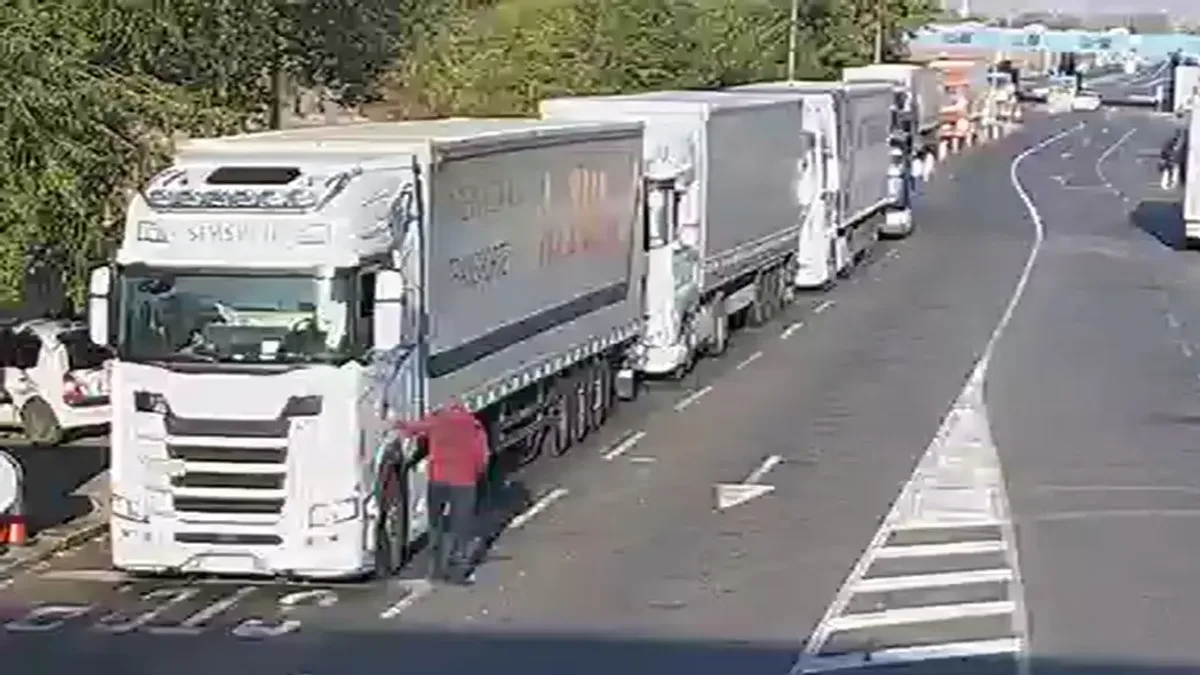
Freight trucks are not held up at the crossings, so today’s lines have nothing to do with cargo traffic.
What Is Happening in the North
At Batrovci, three terminals were operating this morning, with the longer wait on the Croatian side, around half an hour. At Horgos 1, two to three of the seven lanes into Serbia were open, which shows there is spare capacity and that the number of open lanes shifts with the flow of vehicles.
Toward Hungary, four crossings run around the clock: Horgos 1, Horgos 2, Kelebija and Backi Vinogradi. All four operate 24 hours a day, so a trip can be rerouted if the line at one of them grows.
Why Is Today So Busy?
Because two waves are overlapping. August 15 is the traditional day for the tourist changeover, when some people head home from the coast while others are just setting out. Tomorrow is the Assumption of Mary (Velika Gospojina), one of the most important holidays in Greece, where it is also known as the small Easter, and hundreds of thousands of people leave Athens, Thessaloniki and other big cities for the islands, holiday homes and hometowns. Traffic jams are expected across Greece’s roads, worst of all in Halkidiki.
If your route heads south, expect traffic to build up even after you cross the border. A half-hour crossing does not mean the rest of the road is clear.
Before You Set Out
AMSS advises drivers to check road conditions before setting out and to allow extra travel time, since the picture at the border shifts through the day. Traffic volume rises toward evening and over the weekend, so a morning reading says little about what a crossing will look like at six in the evening.
Our advice is one simple step before you leave: check the current state of the crossing you have chosen, then decide which route to take. If it makes no difference to you whether you enter at Horgos or Kelebija, that call is best made half an hour before the crossing, not a day in advance.
One more practical point. The 20-minute wait times refer to the crossing itself, not the approach to it. The line in front of the barrier is part of the math, so if you are aiming to reach your destination by a certain hour, build in a buffer. Today is the day that buffer pays off.