Putin Admits Fuel Shortage as Drones Hit More Refineries
The Russian president publicly acknowledged a fuel deficit for the first time as Ukrainian drones set ablaze refineries in Krasnodar region and Yaroslavl.

- Putin for the first time publicly admitted a fuel deficit, but rejected Ukrainian proposals to halt deep strikes.
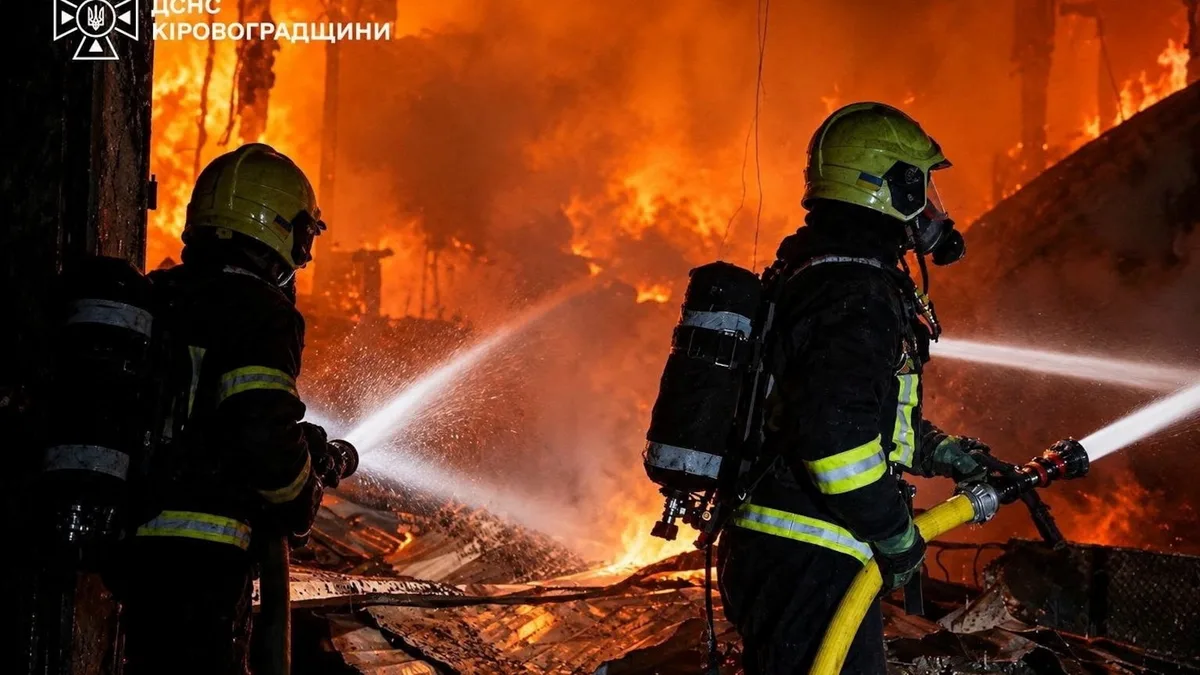
- Drones set ablaze the refinery in Slavyansk-na-Kubani, with a capacity of about 4 million tons of crude a year, where one person was killed.
- Fuel rationing has been introduced in 55 of 83 Russian regions, and Irkutsk capped purchases at 50 liters per vehicle a day.
- More than twenty strikes on refineries have been carried out since March, and an estimated 20 percent of Russia's refining capacity is out of service.
For Serbia, whose energy arithmetic still runs through the Russian oil chain via NIS, a company now under US sanctions, any shift on Russia’s fuel market is not a distant abstraction but a signal that spills over into prices and supply channels across the region. That is precisely why it matters that Vladimir Putin, for the first time since Ukrainian drones began systematically targeting refineries, publicly admitted that Russia is going through what he called a certain deficit of fuel and that a difficult period lies ahead.
The admission came the same weekend that Ukrainian drones, on the night of June 27 to 28, set fire to two refineries deep inside Russian territory. In Slavyansk-na-Kubani, in the Krasnodar region east of occupied Crimea, debris from downed drones sparked a blaze at a refinery with a capacity of close to 4 million tons of crude a year, one of the largest plants in southern Russia. Local authorities said one person was killed and another wounded in a nearby village. A refinery in the Yaroslavl region, about 700 kilometers from the Ukrainian border, was also hit, illustrating the reach of a campaign Kyiv calls long-range sanctions.
Why is Putin conceding a weakness he long denied?
The logic of that admission is twofold. On one hand, the Kremlin can no longer hide what citizens see at the pumps, since fuel rationing has been imposed in 55 of Russia’s 83 regions, and in Irkutsk purchases are capped at fifty liters per vehicle a day at state-run stations. Once queues and limits become routine, silence from the top costs more than an admission. On the other hand, Putin immediately framed the concession so that it would not read as a retreat, insisting that the strikes have no effect on the situation at the front and rejecting Ukrainian proposals for a mutual halt to deep strikes on energy infrastructure.
This is a carefully calibrated move. By acknowledging the problem at home, the Russian president simultaneously signals that it will not change his war calculus, trying to preserve an image of control for the domestic audience while diminishing, for Kyiv and Western chancelleries, any sense that a vulnerable point has been found. He also pledged to strengthen the protection of oil facilities and boost fuel output, an admission that existing air defenses have not stopped the Ukrainian aircraft.
How deep is Russia’s energy crisis?
The numbers say more than the statements. Since March, more than two dozen strikes on refineries have been carried out, hitting eight of Russia’s ten largest plants, with estimates that roughly 20 percent of the country’s total refining capacity is out of service. The Slavyansk-na-Kubani refinery is not only a source of fuel for the domestic market but also a hub for exporting petroleum products through Black Sea ports, including fuel oil, naphtha and marine fuel, so every stoppage hits both budget revenue and export flows.
Kyiv has defined its strategy clearly. Volodymyr Zelensky announced that he had authorized a deep-strike operation led by the Security Service of Ukraine, aimed at keeping pressure on the Russian economy continuous rather than delivered in isolated bursts. For Belgrade, which watches both global oil prices and the fate of NIS, this is a reminder that the war is increasingly being fought on Russian refining plants as much as along the front line.
Will admitting a fuel deficit push Moscow to change its stance on negotiations, or will the Kremlin keep insisting the strikes have no effect while the lines at the pumps grow longer?