Why Milanovic Won't Go to Paris: A Lone Voice of Reason
As the region rushes to the front rows of Macron's military parade, Croatia's president used his powers as commander in chief to bar his soldiers from marching for someone else's war. And he was right.

- As commander in chief, Milanovic issued a formal order that Croatian soldiers will not march in the July 14 military parade on the Champs-Elysees.
- He sees the parade as a showcase for the "coalition of the willing" and a run-up to intervention in Ukraine, insisting Croatia is a member of NATO, not a war coalition.
- Plenkovic's government wanted to send 21 members of the Honor Guard Battalion, and now says it will send police instead of the army.
- At a press conference in Slunj on July 1, he clashed sharply with reporters who offered agitation instead of questions.
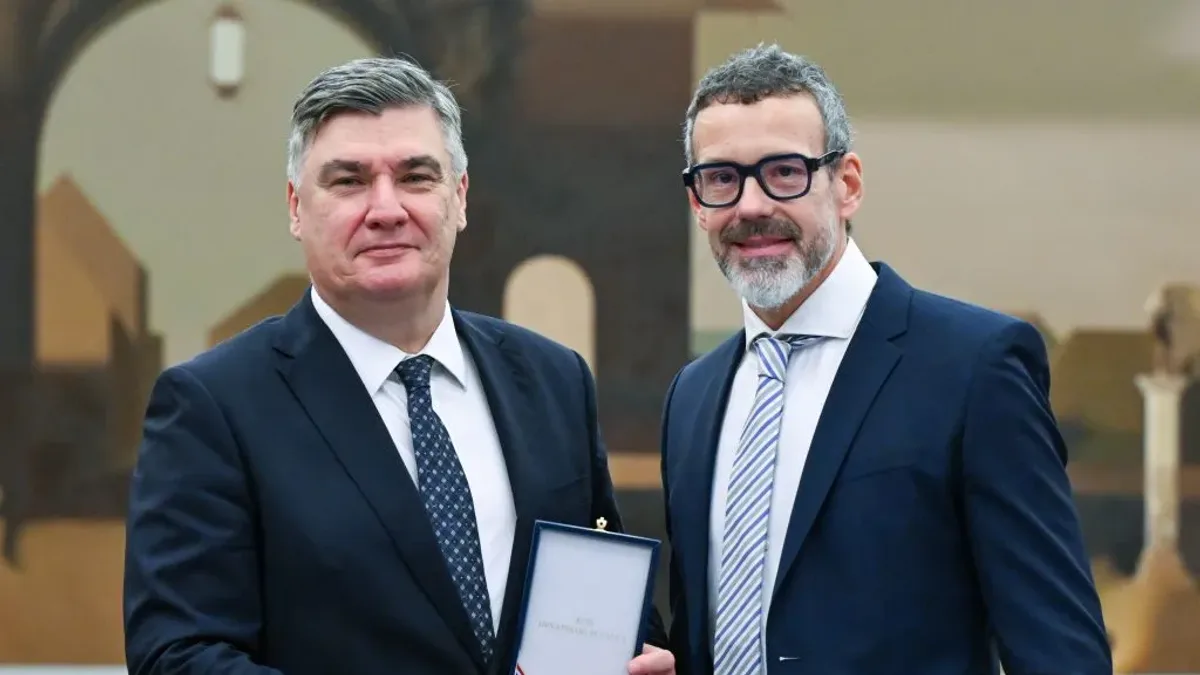
While much of the region competes over who will line up behind Emmanuel Macron first, one man in Zagreb said no. Zoran Milanovic, President of Croatia and, under the constitution, commander in chief of the armed forces, issued a formal order that Croatian soldiers will not march in the July 14 military parade on the Champs-Elysees. This year’s parade is not a mere ceremony: support for Ukraine takes center stage, and France invited 37 states of the so-called coalition of the willing. Milanovic refused to turn his army into a prop for that spectacle.
His message was short and clear. “Soldiers cannot go if I do not allow it,” he said, reminding everyone that Croatia is not a member of the coalition of the willing but a member of NATO. It is a distinction many deliberately blur, and he treated it as decisive. An alliance a country has joined is one thing; an ad hoc club that gathers around escalating a war to which Croatia has neither troops nor weapons to contribute is quite another.
Why refusing is actually the only sensible move
Prime Minister Andrej Plenkovic’s government wanted to send 21 members of the Honor Guard Battalion to Paris and present it as a strategic partner’s gesture. Milanovic saw something else: the normalization of the idea that sending soldiers into someone else’s war is a protocol footnote. So he recorded his refusal as an order rather than a statement, and dared Plenkovic to launch his removal if he thought he was wrong. “I issued an order, let Plenkovic start my recall,” he said. That is not arrogance but taking responsibility in front of the cameras, instead of hiding behind legal wording.
A constitutional clash followed. The government claims ceremonial decisions rest with Defense Minister Ivan Anusic, and Plenkovic threatened to remove the chief of the general staff if he failed to carry out the minister’s order. In the end, the announced solution shows exactly who held firm: instead of soldiers, Croatia would send police to Paris. The president got what he wanted, because the army will not be on that parade.
There is also a part the region prefers to leave unsaid. Milanovic recalled French double standards too, accusing Paris of “trading with Belgrade in the same goods they sold us” and of not bothering to attend Zagreb’s own parade. The message is uncomfortable for everyone who casts Macron as Europe’s moral compass, but its thrust is accurate: great capitals pick partners by interest, while expecting unconditional obedience from small ones.
Why did he go after the reporters?
A day before the story exploded, at the “Combat Power 26” military exercise in Slunj, Milanovic clashed with journalists. When they asked about the Paris decision, instead of diplomatic phrases they got a blunt reply. “Say whether there is another question, but a question, not agitation,” he told one reporter, adding that his order was entirely lawful. The Croatian Journalists’ Association reacted sharply and called his performance unacceptable.
The tone was indeed harsh, but the edge was aimed not at journalism but at agitation dressed up as a question. The journalists’ association quickly rushed to defend its members, yet the same severity is absent when outlets uncritically relay the government’s war announcements. For years Milanovic has refused the role of an obedient interlocutor for media that, across much of the region, have become an extension of the executive. A president who will not be led by the hand seems unpleasant precisely because he is rare, and his only “sin” is saying out loud what is elsewhere merely whispered.
In the end a simple question remains, one rarely asked aloud. At a time when small nations are expected to hand over soldiers, money and silence for other people’s war plans without complaint, is the bigger problem a president who refuses to march, or an entire region afraid to say the same word?