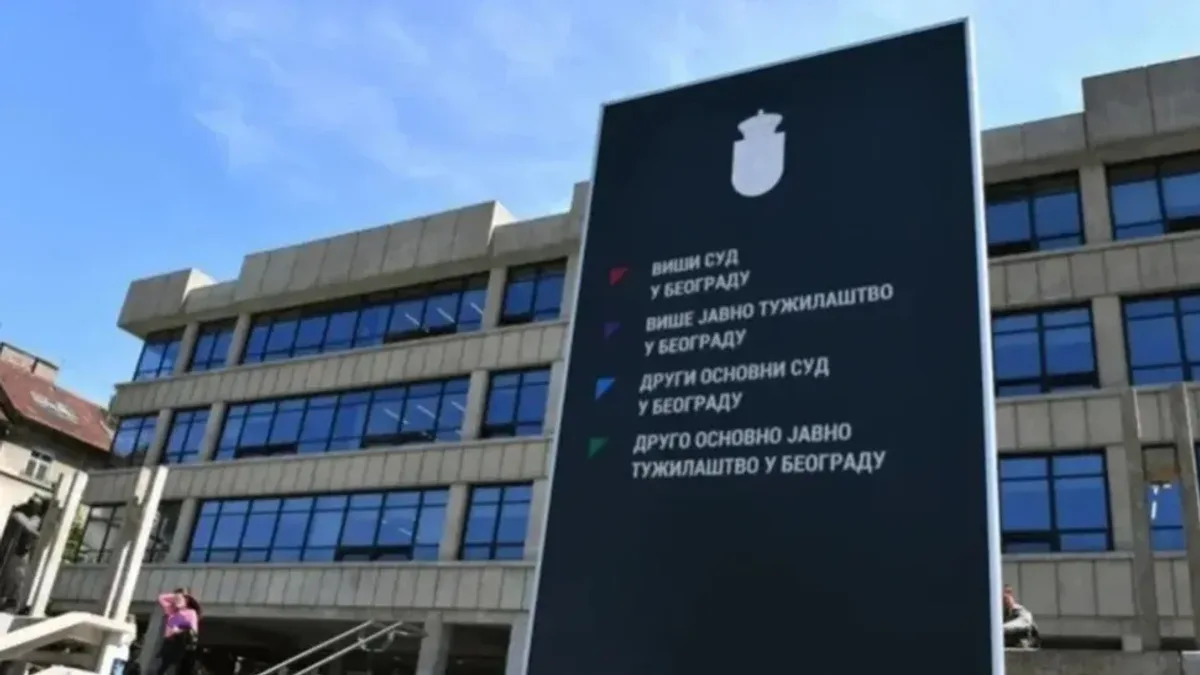
Senjak case: two witness protection officers detained
Belgrade's Higher Court has ordered up to 30 days' detention for two Witness Protection Unit officers, while prosecutors examine the phones of a former Belgrade police chief.

- On June 5, Belgrade's Higher Court ordered up to 30 days' detention for two Witness Protection Unit officers, identified by the initials D.V. and M.J.
- The court said the suspects could obstruct the proceedings by influencing witnesses if released; they are accused of failing to report a crime and its perpetrator, and of assisting the perpetrator after the act.
- Prosecutors are examining the mobile phones of former Belgrade police chief Veselin Milic, suspecting that data, particularly contacts, were deleted.
- The investigation into the murder of Aleksandar Nesovic at Senjak involves a total of ten people.
Belgrade’s Higher Court on Friday, June 5, ordered up to 30 days’ detention for two suspects, both members of the Witness Protection Unit, moving the investigation into the murder of Aleksandar Nesovic at Senjak into a new phase. The suspects, named in the proceedings only by the initials D.V. and M.J., were, according to prosecutors, working as private security outside the restaurant 27 at Senjak on May 12, the day the killing took place.
In its reasoning, the court said there were circumstances suggesting that the two men, if allowed to defend themselves while at liberty, could obstruct the case by influencing witnesses. The pair are accused of failing to report a crime and its perpetrator, as well as of assisting the perpetrator after the act. These are the prosecution’s allegations, and at this stage of the proceedings they have not been established by a final ruling.
What exactly the prosecution alleges against the suspects
Alongside the detention order, the investigation is also focused on the mobile phones of former Belgrade police chief Veselin Milic. Prosecutors suspect that certain data, primarily contacts, was deleted shortly before and after the events, and forensic experts are now trying to recover the content. According to the prosecution, Milic called Nesovic by phone and suggested he come to the restaurant, advising him not to bring his security detail. The victim’s communication through the WhatsApp, Viber and Signal apps is also being analysed.
The key strands the investigation is now checking can be summarised as follows:
- up to 30 days’ detention for D.V. and M.J. over the risk of influencing witnesses
- forensic examination of Veselin Milic’s phones and an attempt to recover deleted contacts
- analysis of Aleksandar Nesovic’s communication across several messaging apps
The investigation is being conducted against a total of ten people, including Milic, who was himself ordered into detention by the Higher Court at an earlier stage. After reports published in recent days, the focus is now shifting from the night of the murder itself to the question of whether, and how, the participants’ digital communication was altered.
“Detention was ordered due to the existence of particular circumstances indicating that the accused, if at liberty, would obstruct the proceedings by influencing witnesses,” the Higher Court in Belgrade said in its reasoning.
Why the phone forensics phase is decisive for the outcome
The technical examination of the phones could determine the direction of the entire case. If experts manage to recover deleted contacts and messages, prosecutors would gain material to support their claims about communication before and after the murder. If recovery fails, the burden of proof rests on witness testimony, which is precisely why the court cites the risk of influencing witnesses as grounds for detention.
It is worth separating what has been confirmed from what remains an allegation by the parties. It is confirmed that the court ordered detention and that the forensic examination is under way. The claims about the content of the phone call and the deletion of data are, at this point, prosecution theories that will be tested as the case proceeds.
It is also worth recalling an earlier move by prosecutors: on June 3, the Higher Public Prosecutor’s Office dismissed a complaint against three police officers from Milic’s security detail, after camera footage and base station data showed they had not been at the scene. That step shows the investigation relies on digital evidence and uses it both to build and to lift suspicion.
How much will the recovery of deleted data, if it happens at all, change the picture of events at Senjak so far?