German Gas Storage Below 60%, TTF at 87.245 Euros
Gazprom says Europe withdrew a record amount of gas from storage on November 6, and German storage fill fell below 60%. The December TTF opened at 87.245 euros.
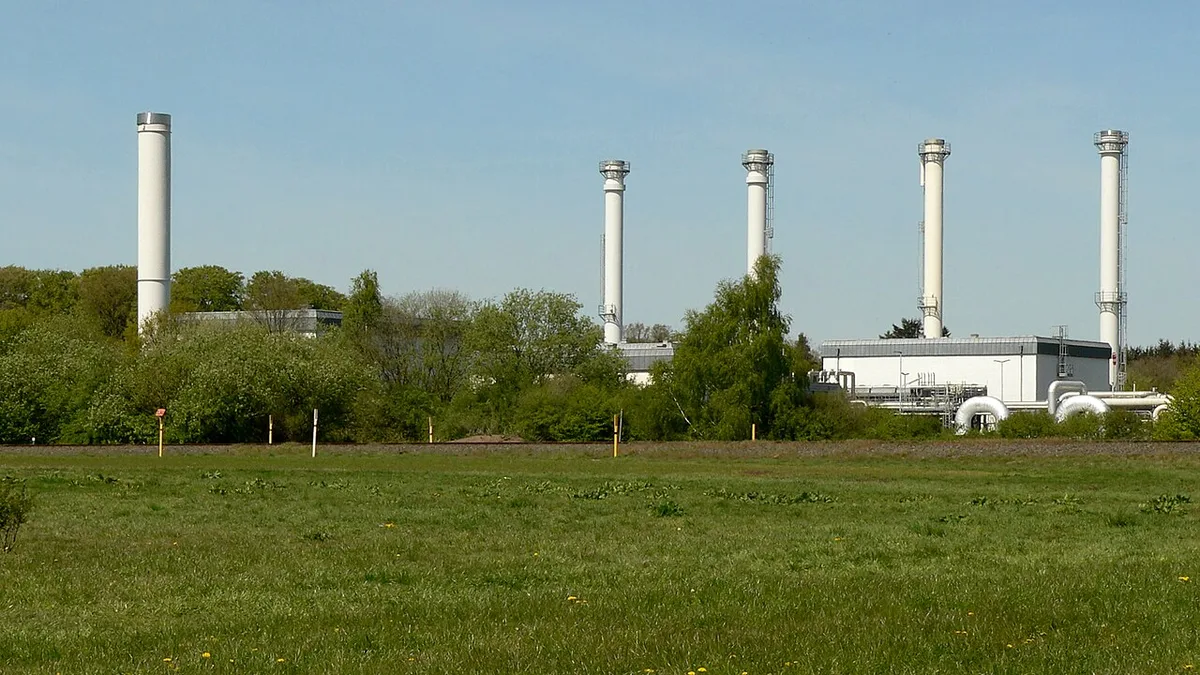
Gas withdrawals from underground storage in Europe on November 6 set a record for that date: at 23.9%, or 83 million cubic meters, they exceeded the previous daily maximum. The figure comes from a statement by Russia’s Gazprom, which cites the Gas Infrastructure Europe association, and was carried by the news agency RIA Novosti. The text as relayed gives no total for the volume withdrawn, only the difference from the earlier record.
On Monday morning, November 9, the December TTF futures contract on the Amsterdam exchange opened at 87.245 euros per megawatt-hour, or about 920 euros per 1,000 cubic meters (converted at 10.5 MWh per 1,000 cubic meters).
How full are German gas storage sites?
Gazprom says storage fill in Germany, which has the largest storage capacity in the European Union, has dropped below 60%. The company calls it an “exceptional situation for the first week of November since measurements began.”
European storage was also filled more slowly than in earlier years at the start of the withdrawal season: fill stood at 74.9%, which, according to figures Gazprom cites, is the lowest level recorded so far. The record daily withdrawals were not limited to November 6. Gazprom logged them on the following days:
- October 28 and 29
- November 1, 2, 4 and 5
- November 6, when the previous maximum was exceeded by 83 million cubic meters
Gazprom attributes the run to cold weather in Europe.
How has the gas price moved?
Exchange gas prices last Friday, according to the same statement, topped 1,200 dollars per 1,000 cubic meters, the first time since December 20, 2022. Oil was cheaper that same morning: at 9:30 Brent fell 1.72% to 96.628 dollars a barrel, and US light crude WTI fell 1.21% to 89.707 dollars.
Alongside the cold snap, the situation is shaped by the conflict in the Middle East and an EU Council decision to phase out imports of Russian energy. The ban on Russian liquefied natural gas (LNG) deliveries under long-term contracts begins in January 2027. The ban on pipeline gas, according to the source, takes effect in November, but the year is not given. Measures on short-term contracts already apply.
What does Gazprom warn about, and what should readers keep in mind?
The company says rapid withdrawals speed up the depletion of reserves and raise the risk to reliable supply for consumers during the winter. That is Gazprom’s assessment, and Gazprom is a party with its own interest in the market. It has not been confirmed by any independent source available to us. Gazprom takes its withdrawal and fill figures from Gas Infrastructure Europe, but we have not checked them against that association’s original database.
The next measurable point is how fill in German storage moves over the coming days, since Gazprom’s statement does not give the exact percentage below 60%, only that the threshold has been crossed.