BMW Driver Freed on Bail, Family Fears He Will Flee
The BMW driver (50) suspected in the April crash that killed a pedestrian (28) at a Novi Sad boulevard junction has been released on bail after three months. The victim's family fears he will leave Serbia.

- The suspected BMW driver (50) has been released from custody on bail after three months behind bars.
- The crash happened on April 6 at around 10 p.m. at the corner of Bulevar oslobodjenja and Bulevar cara Lazara.
- A pedestrian (28) died after the toppled traffic light fell on him.
- The higher court warned that any breach of conditions would forfeit the bail to the state budget and return the suspect to custody.
The family of a pedestrian killed in a traffic accident in Novi Sad says it fears the suspected driver will leave Serbia before the court case is over. The Higher Court in Novi Sad lifted the custody order for the BMW driver, M. T. (50), and set bail after he had spent three months in detention. Relatives of the victim spoke about the ruling on July 11.
The suspect faces charges of a serious offense against public traffic safety, which carries a prison sentence. His guilt has not been established by a final verdict and, until the proceedings conclude, the presumption of innocence applies. What the family questions is not the course of the investigation, but the assessment that a suspect at liberty will not try to avoid trial.
What happened at the corner of two boulevards
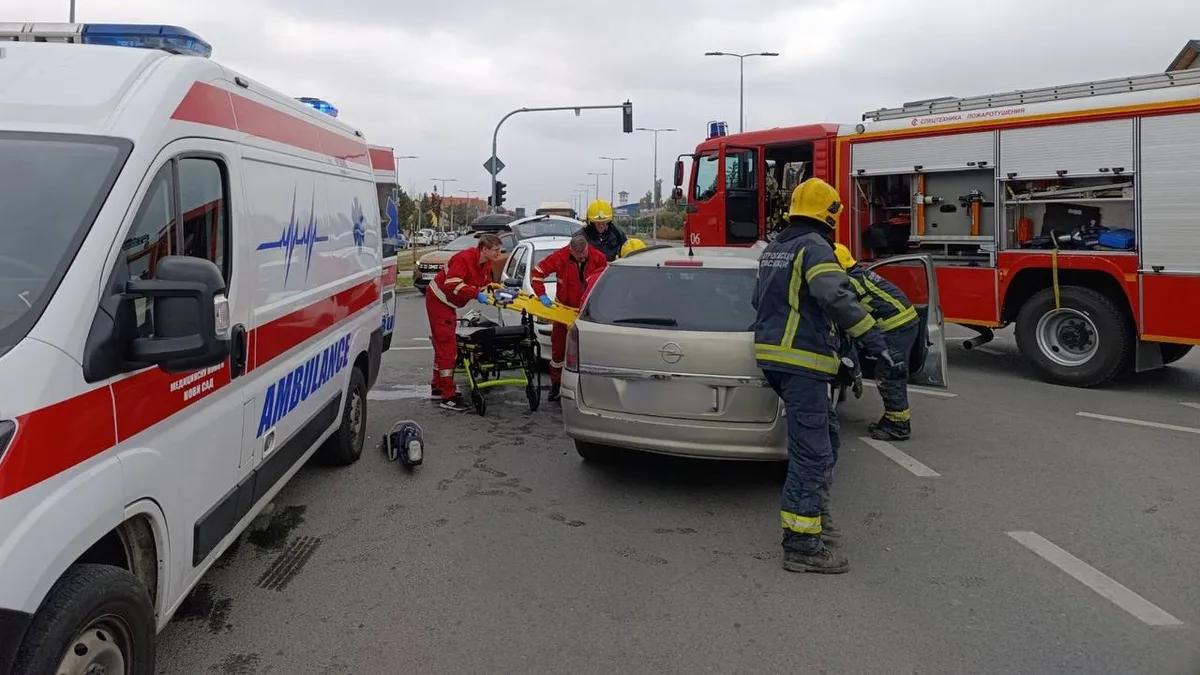
According to what is known from the investigation so far, the crash occurred on April 6 at around 10 p.m. at the junction of Bulevar oslobodjenja and Bulevar cara Lazara, one of the busiest points in the city. The BMW reportedly lost control, crossed onto an area meant for pedestrians and knocked down a traffic light pole. The structure fell on a pedestrian (28), who was taken to intensive care with severe injuries and later died.
A second person was also injured and was treated while conscious. The traffic light that fell on the young man became a symbol of the tragedy, which local residents marked with candles at the scene. The city later announced additional changes to the signaling on that stretch, where citizens had warned of the danger before.
After three months in custody, the court concluded that the suspect’s presence could be secured by a less severe measure. Along with bail, courts as a rule also impose a ban on leaving one’s place of residence and the seizure of a passport, in an effort to reduce the risk of flight. The Higher Court in Novi Sad warned that, if the suspect breaches the set measures, the posted bail will go to the state budget and he will be returned to custody.
Can bail actually prevent someone from fleeing the country?
That is exactly the question troubling the family the most. Bail is a legally prescribed measure that keeps a suspect free, but ties him to the proceedings financially and legally. In practice, when a passport has been seized and a duty to report introduced, the room to leave the country narrows, though families of victims often do not see it as a sufficient guarantee.
The victim’s relatives stress that the security measures would have made the most sense had they been applied from the first day. Their fear is simple: that the suspect, once out of custody, might use the chance to move beyond the reach of the Serbian judiciary before a verdict is handed down. The court, for its part, frames bail precisely as an instrument meant to prevent that possibility, with a clear threat of a return to detention.
For now it is clear only that the trial still lies ahead, and that responsibility for the young man’s death will be established in the courtroom, not in public. Until then, a question that always resurfaces in such cases remains open, and neither families nor the judiciary have an easy answer to it: how much can bail really replace custody when relatives fear the suspect will flee?