Two Detained Over Threats to President and Journalist
Two men were questioned by prosecutors in Belgrade over threats posted on social media, one aimed at Serbia's president, the other at a journalist. Detention has been sought for both.

- Two men, S.S. from Kragujevac and M.F. from Sabac, were detained and questioned by prosecutors on Monday, July 27.
- S.S. is accused of threatening the life of Serbia's president in a social media post.
- M.F. is suspected of threatening a journalist, specifically a member of the journalist's family.
- Prosecutors have proposed detention of up to 30 days for both men.
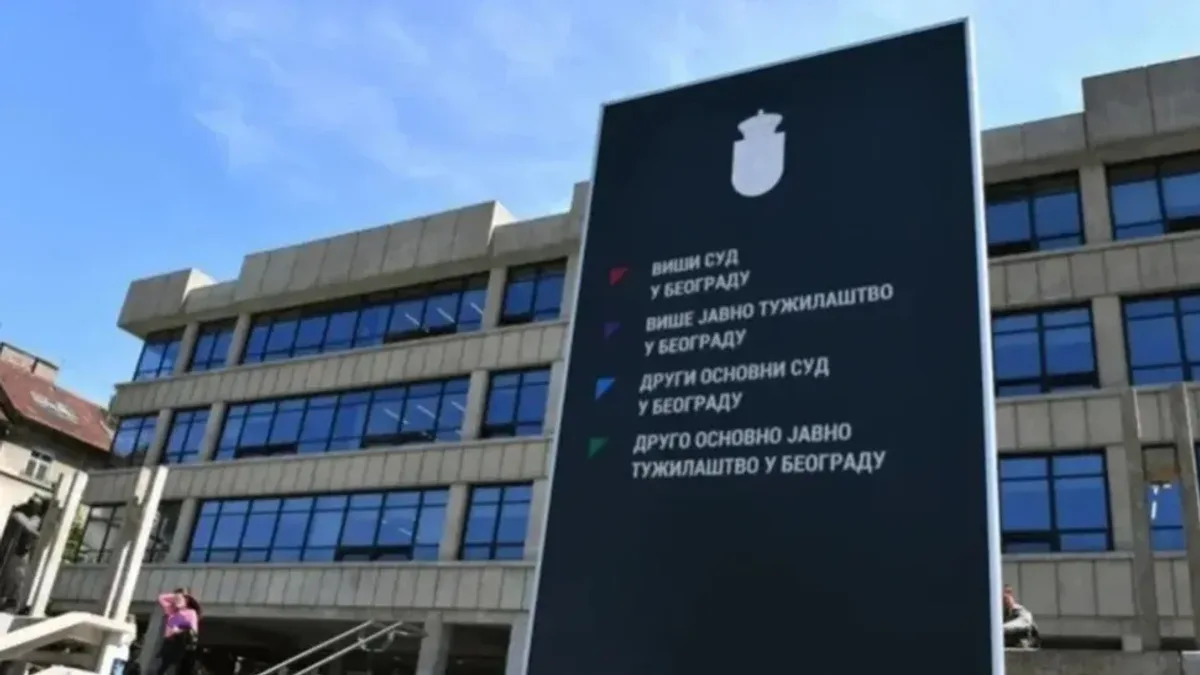
Two men were detained and questioned on Monday, July 27, over threats that investigators say they posted on social media. One of them, S.S. from Kragujevac, is accused of threatening the life of Serbia’s president. The other, M.F. from Sabac, is suspected of threatening a journalist. Both cases are being handled by the Special Department for High-Tech Crime at the Higher Public Prosecutor’s Office in Belgrade.
After their arrest the suspects were brought in for questioning, and prosecutors then asked the pre-trial judge at the Higher Court in Belgrade to order detention. That decision rests with the court, and until it is made no guilt has been established. At this stage both men remain suspects.
What the suspects are accused of
According to the investigation, S.S. published content on a social media profile that was interpreted as a threat to the life of Serbia’s president. During questioning he exercised his legal right to remain silent and gave no statement.
M.F. from Sabac is suspected of using the same type of platform to direct threats at a journalist, more precisely at a member of the journalist’s family. Unlike the first suspect, he presented a defense to the prosecutor.
The fact that both cases ended up before the same prosecutor’s office, and specifically its Special Department for High-Tech Crime, is no coincidence. Threats posted online leave a digital trail that can be tied fairly easily to a specific account and device, so such proceedings are increasingly treated as offenses committed in the online space. That does not change the legal classification: a threat sent from a keyboard is treated like any other.
Why is a threat a crime regardless of the target?
Criminal law recognizes a threat to life and limb as an offense no matter who it is aimed at. The target may be a state official, a journalist, a neighbor or a complete stranger, and the seriousness of the offense is judged by how credible and grave the threat is, not by who is on the receiving end.
In the case of a head of state and a journalist there is an added layer. Threats against public officials touch on the security of institutions, while threats against journalists strike directly at press freedom and the public’s right to be informed. Both domestic and international frameworks have warned for years that intimidating a journalist harms not only the individual but also the work they do. That is why such cases are taken seriously, whether the threat was made in public or in a private message.
What stays the same in both cases is that the court, not the prosecution, will decide on detention and later on any responsibility. A request for detention is a procedural measure, usually justified by the risk of tampering with evidence, flight or repeat offending, and it is not in itself proof of guilt.
For both proceedings, the key now is what the forensic examination of the digital traces will show and how the court will assess the alleged threats. Should a threat posted on social media carry the same weight as one spoken face to face?