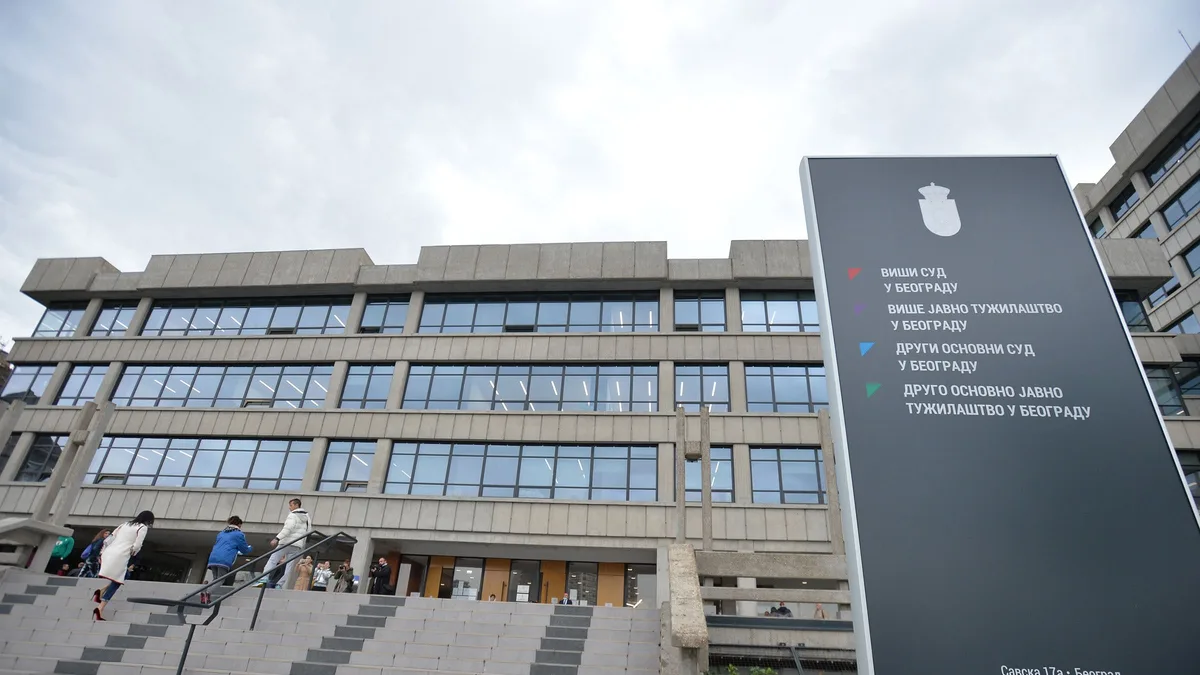
Belgrade court orders 30-day detention over Vucic threats
A Belgrade High Court judge ordered up to 30 days of detention for a Kragujevac man suspected of posting death threats against the president on Facebook. A second suspect received house arrest.

- A pre-trial judge at the High Court in Belgrade ordered up to 30 days of detention on July 28 for S. S. from Kragujevac.
- He is suspected of endangering safety by posting Facebook content threatening the president with death.
- He remained silent when questioned by the Special Department for High-Tech Crime.
- A second suspect, M. F., was placed under house arrest instead.
A pre-trial judge at the High Court in Belgrade ordered up to 30 days of detention on July 28 for S. S. from Kragujevac. He is suspected of endangering safety, an offence under the Serbian Criminal Code, after allegedly posting content on Facebook threatening President Aleksandar Vucic with death. The ruling came a day after the suspect was arrested and questioned.
The case is being handled by the Special Department for High-Tech Crime at the High Public Prosecutor’s Office in Belgrade. During questioning, S. S. remained silent, exercising his legal right not to present a defence. Every defendant holds that right, and its use cannot be held against him.
Prosecutors requested detention immediately after the questioning, and the court ruled on that request the following day. Endangering safety carries a heavier sentencing range when the threat targets a senior state official. At this stage the case rests on reasonable suspicion, not on established guilt.
Why did the court order detention?
In its reasoning, the court said detention was ordered because of the risk that the suspect could repeat the offence within a short period. That is one of the statutory grounds for custody, and it is assessed against the circumstances of each case rather than applied automatically. A pre-trial judge must also weigh whether a lighter measure would be enough to secure the proceedings.
Detention at this stage runs for a maximum of 30 days from the moment of arrest. The defence may appeal to a chamber that rules quickly, though an appeal does not suspend the order. If the investigation is extended, prosecutors can seek an extension of the measure, which the court again decides.
Digital forensics is central to the pre-trial phase. The high-tech crime unit works to establish which device and which account published the disputed content, and whether that account was under the suspect’s control at the time. Without those findings, an indictment is difficult to sustain.
The second suspect received a lighter measure
The second suspect, M. F., was ordered not to leave his home, a form of house arrest. He is accused of posting a threatening video clip on Facebook relating to a person close to the editor and journalist identified as D. J. V. Unlike S. S., he did present a defence when questioned.
The difference between the two rulings shows that courts do not apply an identical standard to every suspect in comparable cases. A ban on leaving the home secures the defendant’s presence without sending him to a detention unit, and it can be paired with electronic monitoring. Judges choose it when they judge it sufficient to prevent flight or repeat offending.
Both cases remain at the investigation stage. Prosecutors have yet to decide whether to file indictments, and until a final verdict both men are presumed innocent. Threats aimed at public figures on social networks increasingly end up before the high-tech crime department, largely because a digital trail is hard to erase.
Should a social media post lead to custody, or is a lighter measure enough while the investigation runs its course?