EPS and Azerbaijan's SOCAR to Build 500 MW Gas Power Plant in Nis
EPS and Azerbaijan's SOCAR signed the key terms in Baku for a roughly 500 MW gas power plant in Nis, with completion targeted for 2030.

- EPS and Azerbaijan's SOCAR signed the key terms in Baku for a gas power plant in Nis.
- The facility will have a capacity of about 500 MW of electrical and roughly 150 MW of thermal energy.
- The project is due for completion by 2030, with annual gas consumption of about 600 million cubic meters.
- The terms were signed by Dusan Zivkovic (EPS) and Rovsan Nadzaf (SOCAR), with Azerbaijani President Ilham Aliyev present.
Elektroprivreda Srbije, Serbia’s state power utility, and Azerbaijan’s oil and gas concern SOCAR have signed the key terms in Baku for a new gas power plant in Nis, with a capacity of about 500 MW of electrical and roughly 150 MW of thermal energy. It ranks among the largest announced investments in Serbia’s power generation capacity in the past decade.
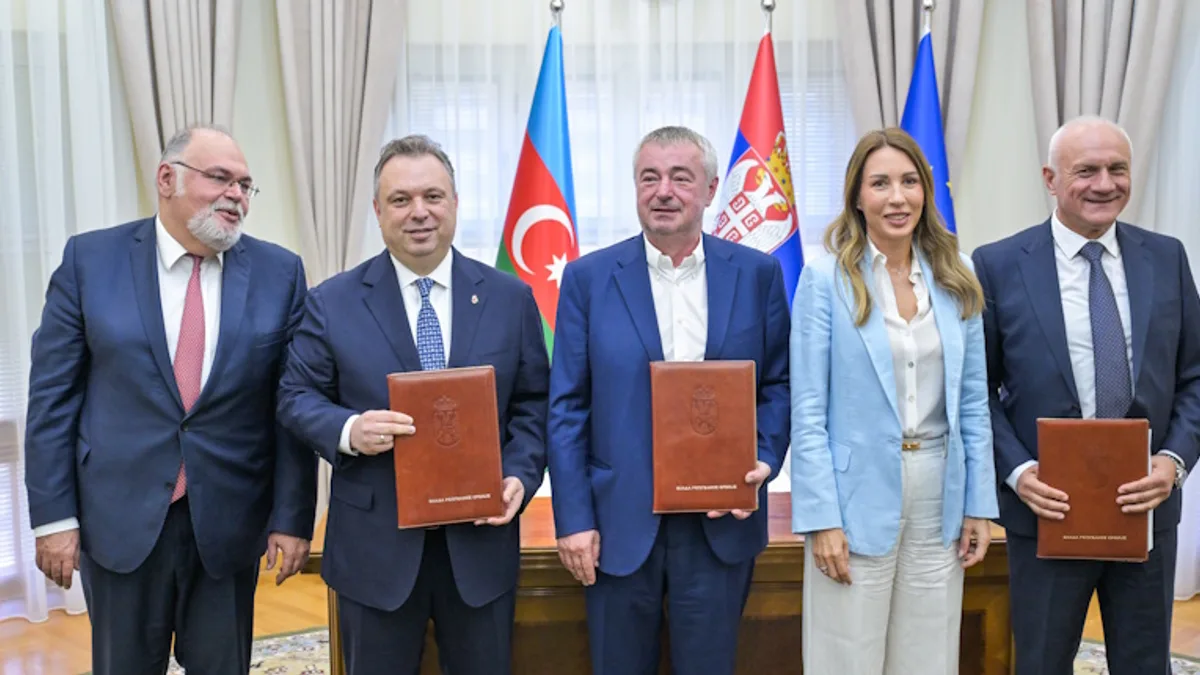
The document was signed by EPS director general Dusan Zivkovic and SOCAR president Rovsan Nadzaf, with Azerbaijani President Ilham Aliyev present. The signing of key terms precedes a final contract and sets the framework for cooperation between the two companies before the project moves into detailed design and financial structuring.
What exactly does Serbia’s power system gain?
The Nis gas plant is designed as a cogeneration facility, meaning it produces electricity and heat at the same time. Its electrical capacity stands at about 500 MW and its thermal capacity at roughly 150 MW, opening the possibility that the plant could also supply district heating in that part of southern Serbia.
Key parameters of the project, under the signed terms:
- Electrical capacity: about 500 MW
- Thermal capacity: about 150 MW
- Completion deadline: by 2030
- Annual gas consumption: about 600 million cubic meters
The estimated annual consumption of roughly 600 million cubic meters is a significant line in the gas import balance, since Serbia sources most of its natural gas from imports. New capacity of this size shifts a generation mix that for decades has leaned mainly on coal-fired thermal plants and hydropower.
Why is SOCAR the partner, and what does that mean for EPS?
SOCAR is Azerbaijan’s state oil and gas concern and one of the region’s key gas suppliers via the Trans Adriatic Pipeline. Bringing such a partner into a generation project in Serbia links the question of gas supply with the question of building the plant in a single commercial arrangement, which reduces fuel procurement risk for the future facility.
By signing the key terms of the contract, the two companies define the framework for building a gas power plant in Nis with a capacity of around 500 megawatts, with completion targeted for 2030.
For EPS, which has historically held most of its output in lignite-fired thermal plants, a gas plant represents source diversification and capacity that can be switched on and off faster than coal blocks. That matters in a period when renewables, wind and solar, are entering the grid in greater volume and require flexible balancing capacity.
The next stage is the move from key terms to a final contract, which has yet to define the financial structure, each side’s ownership stake and the construction timeline. Only then will the total investment figure and the split between EPS and SOCAR become clear.
Should the new gas capacity in Nis serve as a transitional solution until renewables expand more widely, or as a long-term backbone of generation?