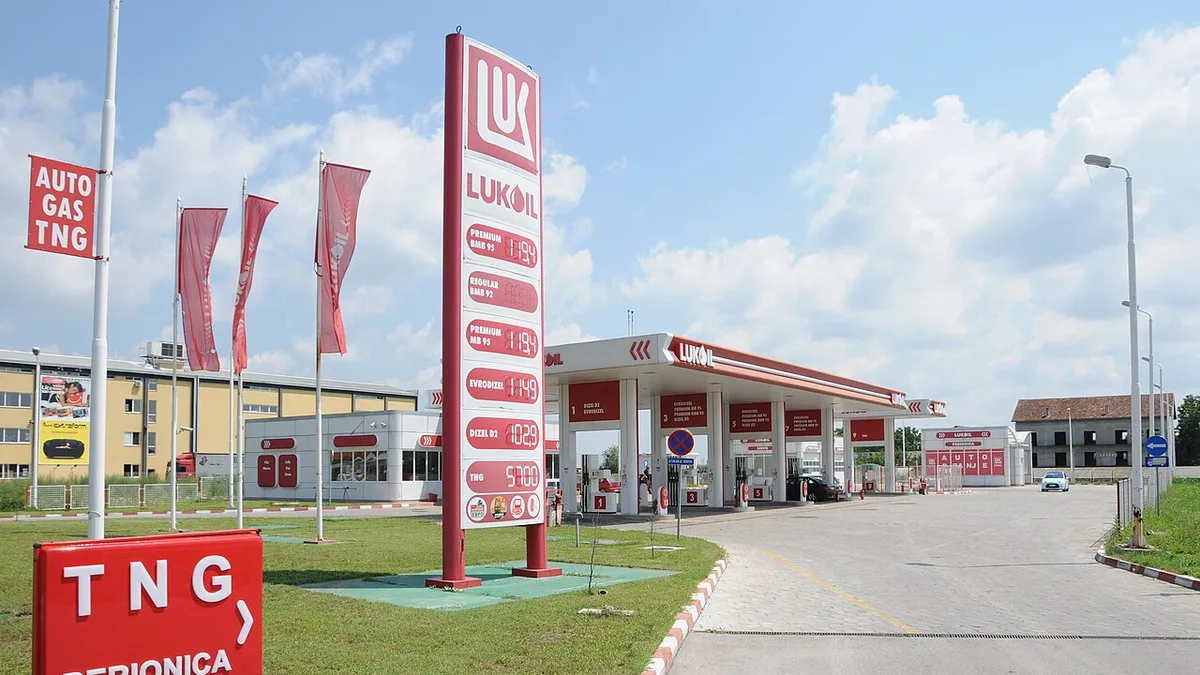
Montenegro Diesel Jumps 14 Cents to 1.81 Euros as Crude Tops $90
A crude oil surge past $90 a barrel has spilled from the exchanges onto the pumps. Montenegro raised every fuel grade at midnight, while Moldova warns its gasoline reserves will last just 18 days.

- Eurodiesel in Montenegro rose 14 cents to 1.81 euros a liter at midnight, the largest single jump for the grade this year.
- Moldova has said its gasoline reserves will last just 18 days, and diesel only 8 days.
- The average price of gasoline in the United States has again passed $4 a gallon.
- The wave was triggered by crude oil climbing past $90 a barrel amid tensions around the Strait of Hormuz.
Eurodiesel in Montenegro costs 1.81 euros a liter from midnight, 14 cents more than the day before, the largest single-day increase for the grade this year. The rise is not an isolated move by Podgorica. On the same night the average price of gasoline in the United States again passed $4 a gallon, and Moldova announced that its strategic gasoline reserves will last only another 18 days. The shared trigger is the same: crude oil that has climbed past $90 a barrel on the exchanges.
Montenegro’s Ministry of Energy and Mining raised every fuel grade. Eurosuper 98 rose 7 cents to 1.75 euros, eurosuper 95 climbed 8 cents to 1.72 euros, and heating oil went up 12 cents to 1.70 euros a liter. The new prices hold until July 27, when the next revision follows. Podgorica sets prices through a two-week formula tied to exchange quotations, so the recent oil rally spilled onto the displays with a lag of just a few days.
Who pays for the surge on the exchange
Crude has topped $90 a barrel in recent days, following attacks on tankers in the Strait of Hormuz and tension around the shipping lane that carries a fifth of the world’s oil exports. The rise does not stop at the trading screens. Refining margins, transport and distribution each add their share, and at the end of the chain stands the consumer who sees the same difference at the pump. For diesel, which carries the weight of road and farm transport, the increase feeds fastest into the price of everything else.
Moldova’s case shows the other side of the same pressure. Reserves of 18 days for gasoline and eight for diesel leave little room to bargain with suppliers when prices rise. A country with no domestic production and thin stocks cannot cushion the increase, and absorbs it in full. That is the difference between a market that can afford to wait and one that buys at the daily price, however high.
In the United States, crossing the $4-a-gallon line carries political weight, because fuel is one of the most visible measures of the cost of living. When three separate markets, southeastern Europe, the eastern edge of the continent and North America, record a rise on the same day, the source is plainly not local but tied to the exchange.
How long will the pumps track the exchange?
Fuel pricing formulas across the region are tied to oil movements with a one-to-two-week lag. That means if the barrel stays above $90, the next round of revisions could bring a further increase rather than a return to the old level. If, on the other hand, tension around the Strait of Hormuz eases, the exchange usually reacts faster than the pumps, so any decline would arrive with the same lag as the rise did.
For consumers in the region paying close to 1.81 euros for diesel, two figures are worth watching: the price of the barrel and the date of the next revision. The first tells you where the pressure comes from, the second when you will feel it on your bill. How much will this increase cost you over a month, and do you change how you drive once diesel passes the line you consider too high?