Teklas CEO Visits Leoni Plant in Kraljevo After Layoffs
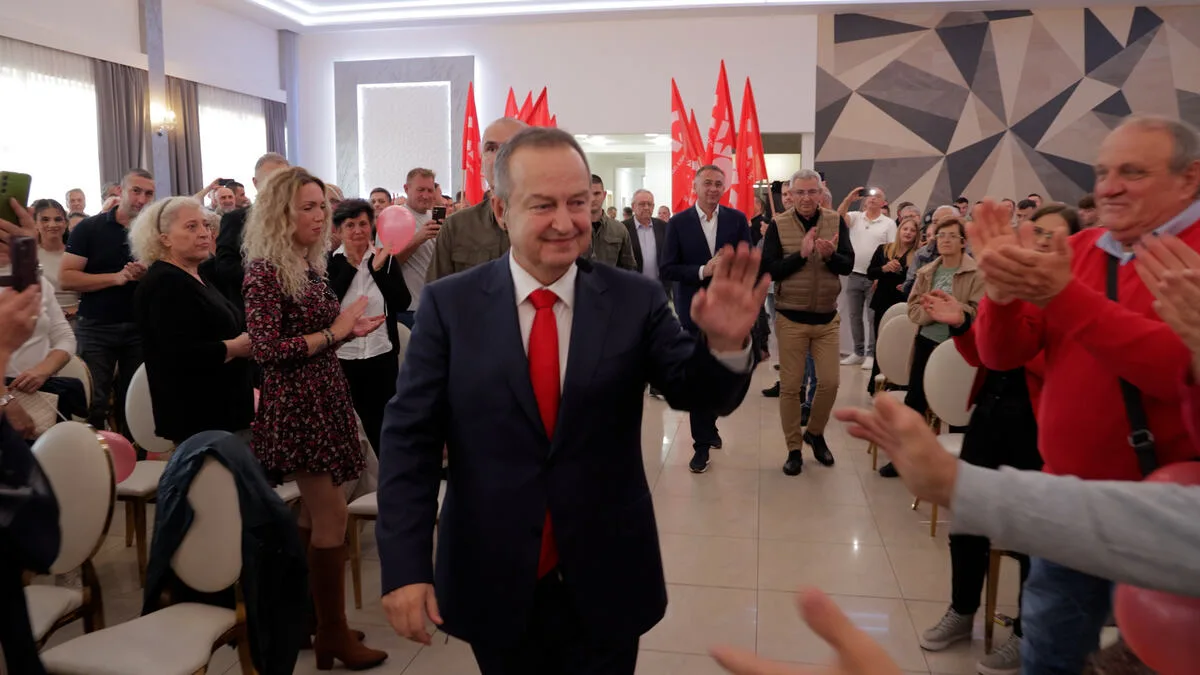
Economy Minister Adrijana Mesarovic and Teklas CEO Nebi Anil toured the Leoni plant in Kraljevo, a factory workers have been leaving throughout the year and where layoffs hit in late April.

According to a former employee, the Leoni plant in Kraljevo has lost between 300 and 500 workers since January. On August 6, Deputy Prime Minister and Economy Minister Adrijana Mesarovic walked into that same plant, accompanied by Nebi Anil, CEO of Turkish company Teklas.
According to the minister, the visit had one goal: to explore whether the two companies could cooperate in a way that would open new jobs. Leoni’s Kraljevo plant makes wiring harnesses for premium class vehicles, the kind of component that goes into a car before it even takes shape. Teklas operates in Serbia in Vladicin Han and Vranje, both in the south of the country.
What was announced, and what wasn’t
Mesarovic posted about the visit on Instagram.
With Mr Nebi Anil, CEO of the global company Teklas, which operates successfully in Vladicin Han and Vranje, I toured the Leoni production plant in Kraljevo with the aim of establishing potential cooperation that could open new jobs. Thanks to the responsible economic policy of President Aleksandar Vucic, Serbia is today one of the most attractive investment destinations in this part of Europe. We continue creating conditions for new investment, a stronger industry and further economic growth for our country.
The post did not contain a single figure. It gave no scope for the possible cooperation, no investment amount, no number of jobs under discussion, and no timeline for when a deal might be reached. In wiring harness production, business is measured in the number of contracted vehicle platforms and years of serial production, so the gap between an announcement and a signed contract is measurable, and it was not published here.
What the year looked like at the Kraljevo plant
The visit does not come to a quiet plant. The timeline leading up to it looks like this:
- Leoni had earlier closed its plant in Malosiste, near Doljevac
- since January, between 300 and 500 people have left the Kraljevo factory, according to a former employee, through mutually agreed terminations or non-renewed contracts
- in late April, 50 workers were laid off
- a member of parliament claimed another 200 layoffs were ready to follow
MP Verica Milanovic of the SRCE party raised that claim before the National Assembly.
Employees told us that 50 workers were laid off. Another 200 layoffs are ready.
Zivojin Miladinovic, a former Leoni worker, also spoke about the departures.
The situation is very serious. We’ll see what happens in the period ahead.
At the time, the company’s response was brief: the Kraljevo plant had increased productivity since the start of the year and continued operating on schedule. Leoni has not disclosed its headcount, then or since, so the outflow cannot be turned into a percentage.
Why does Teklas’s visit to the Kraljevo plant matter?
Because it is the first time someone else has been brought into that hall. Until now, two parallel narratives have surrounded the Kraljevo factory: workers and opposition MPs spoke of shrinking work and possible relocation of production, while the company insisted it was operating on schedule. The arrival of a foreign manufacturer from the same industry, accompanied by the economy minister, is the first move that belongs to neither story.
Teklas and Leoni serve the same industry but sit at opposite ends of Serbia. Vladicin Han and Vranje are in the south, Kraljevo is in central Serbia, and for a company looking to expand capacity that means a new labor pool and new logistics. What form the cooperation might take, whether shared use of the plant, taking over part of its capacity, or something else entirely, the Ministry of Economy did not say.
For Kraljevo the consequence is simple and can be named: a factory that had been losing people since January now has a second potential employer in the same building. Whether that stops workers from leaving will be seen at the first verifiable data point, an official investment announcement or a headcount for the Kraljevo plant, which Leoni has yet to publish.