Drought Sinks Hydropower, Agriculture Up Over 15 Percent
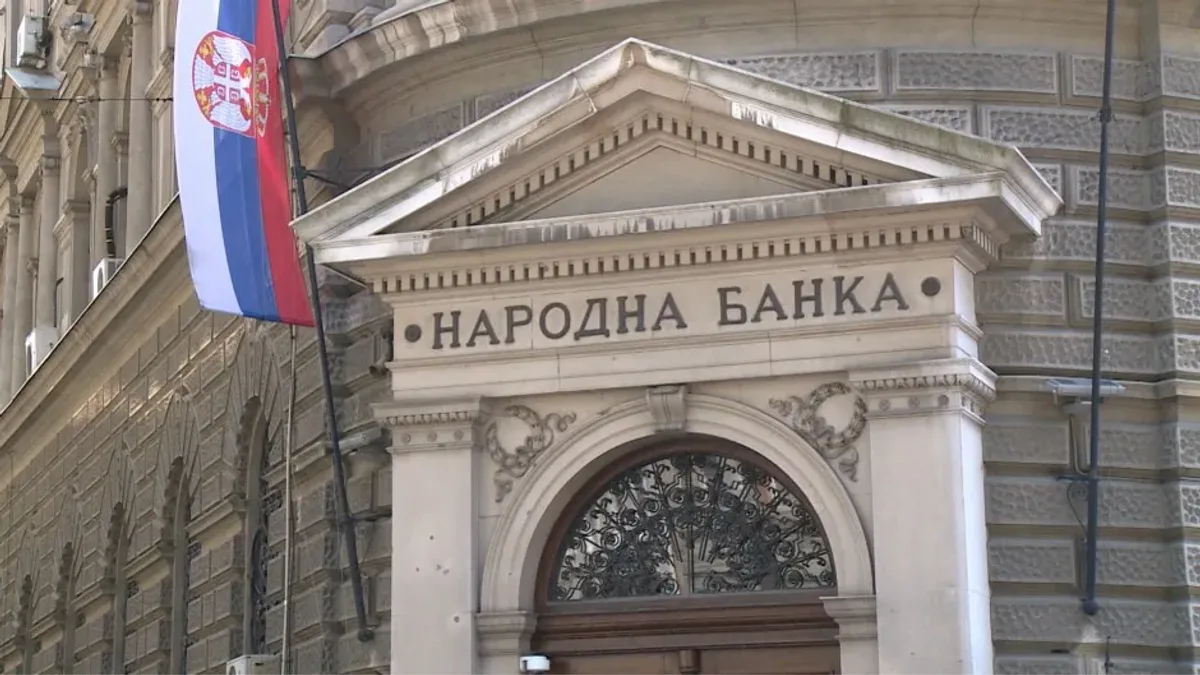
Ivan Nikolic of the National Bank of Serbia says the drought has not seriously hurt the economy: agriculture grew more than 15 percent in the second quarter, while hydropower output is falling.

Agricultural production in Serbia is up 11 to 12 percent year on year in the first half of this year, and more than 15 percent in the second quarter alone. That figure came from Ivan Nikolic, chairman of the Council of Governors of the National Bank of Serbia (NBS), speaking to Radio Television of Serbia about how much this year’s drought has actually cost the domestic economy.
His conclusion runs counter to the impression left by a summer of wildfires and water restrictions in the news.
“Extreme heat and drought have not seriously hurt the domestic economy so far,” Nikolic said, adding that the agricultural year still looks good. Asked about the warmer summer, he compared it with the previous one: “A somewhat warmer summer is, I would say, a subjective feeling. Last year was just as hot, maybe even hotter.”
How much has the low water level cut power output?
The channel through which the drought is hitting hardest right now is energy. Hydropower plants make up a third of Serbia’s generation mix, so low water levels are pulling down output at Elektroprivreda Srbije (EPS) directly, and dragging the industrial result down with it. In this part of the economy, a dry year does not show up as higher prices on the shelf, it shows up as fewer kilowatt hours from the cheapest source.
Even so, industry is posting growth of around 1 percent, even though Nikolic had forecast stagnation for this year. He singled out Stellantis as a positive surprise, whose Kragujevac plant carries the largest share of Serbia’s goods exports.
“It essentially generates the largest part of our goods exports, precisely the part that comes from manufacturing,” Nikolic said, adding that after weak activity early in the year, he expects construction to deliver a new positive push in the second half. He was talking about the sources of 3.6 percent growth, in other words about the structure behind it, not a single driver.
He gave his overall assessment without softening it and without dramatizing it:
“If we were to give some overall assessment of this phenomenon’s effect on our current situation, I think it is still satisfactory, I would not call it critical or problematic.”
That assessment covers the current situation, not how the whole year will turn out. Energy remains an open item until water levels recover.
Food prices down 7 percent are keeping inflation below target
This year’s drought is, paradoxically, helping the price picture. Food prices are down around 7 percent year on year, thanks to high yields of fruit and vegetables, and that, in Nikolic’s assessment, is the key reason inflation in Serbia is close to the lowest in Europe.
The picture shifts in the fall for technical reasons. The base from September last year was lower, because a regulation capping trade margins was in effect at the time, so year on year inflation will come out somewhat higher. “I believe inflation will certainly not exceed four percent year on year by the end of the year,” Nikolic said, noting that this is also the central bank’s target range.
Last week the NBS kept its key interest rate unchanged, as it has for some time now. His explanation was brief: “For a long time, but that is because the risks that exist both around us and in our domestic market are very high.” He does not rule out easing monetary policy by the end of the year if year on year inflation stays close to the 3 percent target, but caution is also being driven by energy prices on the exchanges: gas is up around 100 percent year on year, and oil around 35 percent, and that is feeding through into the cost of domestic production.
Europe: zero instead of 1.1 percent
On the European numbers, two readings do not line up.
- A study by Triodos Bank estimates that the European Union’s GDP growth, because of droughts, wildfires and heat waves, will come in around zero, instead of the expected 1.1 percent.
- Nikolic puts EU growth, revised down, at around 1 percent, and sees a broader cause: European economic activity has been stagnating for a while, especially in Germany, Italy and France.
The difference is not just a decimal point. The first estimate treats the weather as the main reason growth is not materializing, the second treats it as an add on to stagnation that was already underway in the bloc’s three largest economies.
The concrete losses, however, are the same in both readings. EU grain producers are facing losses of around 2 billion euros, and France is hit hardest, where wildfire damage is estimated at 10 to 15 billion euros.
What to watch for in September
Nikolic considers the drop in hydropower temporary. The reason is meteorological: rain has been forecast over the Alps, which is key to the Danube’s inflow, so he expects the situation to turn around as early as September.
How much room there is for recovery is shown by the water level itself. The Danube dropped to minus 155 centimeters at Bezdan this summer, as we reported, and river traffic and hydropower plants run on the same curve: less water means less cargo per vessel and less electricity produced.
The next checks are clear: monthly industrial production data and EPS output for August, and fall inflation measured against a lower base from last year. Until then, the numbers show a split picture, agriculture up more than 15 percent and energy as the tightest bottleneck.