Germany to Halve Western Balkans Work Visa Quota to 25,000
The quota under the Western Balkans scheme falls from 50,000 to 25,000 permits a year. Sources disagree on the timing, and Serbia's share is not public.
Germany’s annual work permit quota under the Western Balkans scheme is set to be cut in half, from 50,000 to 25,000. The scheme, often called the Western Balkans Rule in the media, makes it easier for workers from the region’s six economies to come to Germany, and Serbia is the largest of them. Sources disagree on whether the decision has already been made and when it would take effect.
Biznis Kurir reports that the German federal government has adopted the decision and that the quota is halved from January 1, 2027. Danas is more cautious: citing German media announcements, it writes that the government could halve the number of visas from next year, with no date given. Because of that gap, the quota figure stays in this text, while the deadline should be read as an announcement until official confirmation appears.
Why is Berlin cutting the quota?
The stated reason is rising unemployment in Germany. The cut is part of the coalition agreement between the Christian Democrats (CDU) and the Social Democrats (SPD). According to RTS correspondent in Germany Nenad Radicevic, it was supposed to take effect at the start of this year, but the plan was dropped under pressure from the construction industry.
Under this scheme, a worker does not have to go through recognition of qualifications, as in the regular regime. A confirmation from a German employer that a job awaits is enough. Radicevic explained that the job comes first and a relocation visa is then issued on that basis, even when the person has no formal qualifications. Mihailo Gajic, head of the Research and Analytics Unit at NALED, told RTS that this was one of the simplest ways to find work in Germany:
It was enough to get a job offer from an employer, without going through the fairly long and slow procedure of having diplomas recognized or education re-evaluated. It was the easiest way for people to come and work in Germany relatively quickly, but other programs for hiring skilled workers remain, which is especially important for Serbia when we talk about health workers.
How many visas does Serbia get under the scheme?
Here the sources diverge again. According to figures cited by Danas, around 15,000 visas a year go to Serbian citizens. Bojan Stanic of the Serbian Chamber of Commerce (PKS) speaks of a range of 10,000 to 15,000 workers. Gajic, on the other hand, warns that no reliable number exists:
We do not know exactly what numbers will apply to Serbia, because the quota covers all six economies of our region. Although there are some unofficial quotas by country, they have not been made public. We cannot say how many fewer potential permits there will be for citizens of Serbia.
In other words, the total quota is being halved, and how much of that falls on Serbia is unknown.
What does the German construction industry say?
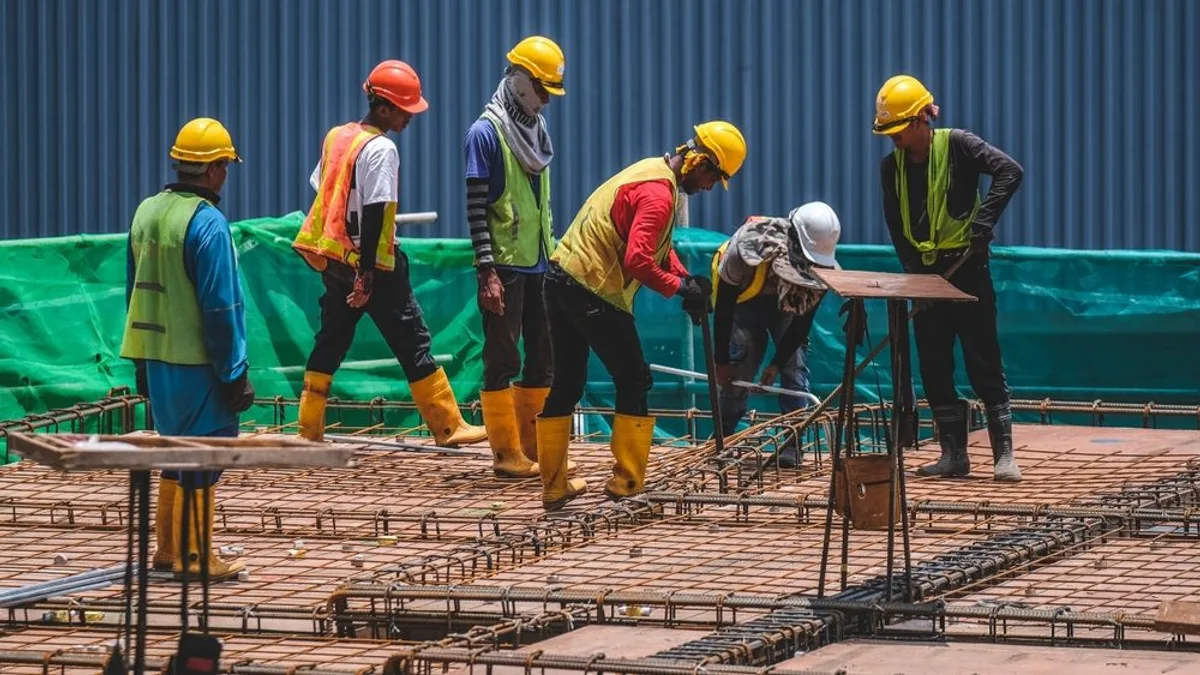
According to the German Construction Industry Federation (ZDB), about 30 percent of the visas under this scheme go to construction. Of the workers who arrive this way, 98 percent have a job and 58 percent are skilled workers or specialists. ZDB Managing Director Feliks Paklepa said:
In construction, every seventh employee holds a foreign passport. For the construction industry, this scheme is the most successful model for attracting skilled workers from third countries. We are clearly warning about the consequences of halving the quota. By the end of the year, around 8,000 workers could be eliminated from the construction industry.
Paklepa added that the people who come under this scheme are people who work, not welfare recipients, and that the coalition itself set up the model:
This same coalition established this model in 2016, and they should not tear down their own successful model.
Radicevic also points to the consequences for infrastructure. In his words, construction companies fear for their projects:
They believe it will endanger many infrastructure projects. One of the reasons for slow infrastructure construction is a labor shortage that has lasted at least two decades. Germany very much needs construction workers despite the fact that unemployment has risen.
Radicevic said the following about how likely the cut is:
It would not surprise me if it happened now. All analyses have shown that 98 percent of people who come through these visas keep working, practically nobody ends up on welfare, on the back of the state. On the contrary, practically all of them contribute through taxes and social contributions.
What does this mean for the labor market in Serbia?
Danas’s interviewees assess the consequences differently. Economics professor Mihail Arandarenko says the decision is political rather than economic, because from the point of view of the German economy it is irrational. For domestic firms, he says, it may be welcome:
This could be good news for our firms, since we have this “hydraulic” way of going abroad, with construction workers, drivers and so on, who are in demand in Germany. Now that will get a bit harder. It is good news for our firms, but not for workers. Admittedly, workers from this region can now get attractive wages here too. When this model was introduced in Germany, wages in the Western Balkans were low and anti-worker labor laws prevailed. Now wages have risen across the region.
Arandarenko also said Germany still needs workers: “Germany still urgently needs workers for these jobs.” He described the effect on both sides this way: “For German employers it will mean harder and more expensive hiring of workers from the region, and for workers from here it will mean more complicated and more expensive bureaucracy.” He concluded that “this measure will not have some kind of tectonic impact on our labor market, although it may affect workers’ wages in Serbia to some extent.”
Bojan Stanic of PKS looks at both remittances and politics:
If fewer workers leave from here, that means fewer remittances. But this does not affect us as much as the fact that we did not get a road map to the EU. The German government is trying to curry favor with voters given that the AfD won in some states.
Stanic also believes that 10,000 to 15,000 workers is not a number that would noticeably shake the Serbian labor market or raise unemployment.
Sasa Torlakovic, president of the Construction Workers’ Union, says that some workers who do not go to Germany will go to other Western European countries, because “nobody wants to let a good worker go, neither in Serbia nor in Germany.” On the difference in pay, he said:
As for our workers, you can already earn a similar wage here as there. The only difference is that there everything is declared, while here they put a little more than the minimum wage on the account and pay the rest in cash. If a worker goes there alone, he does not make big money. But if he goes with his family, the child is taken care of, the wife works, and then the whole second salary can be saved. That is a different story.
One question remains open, raised by Arandarenko: whether workers who came under this scheme will move to the standard regime for hiring foreigners. For now, the sources confirm the quota figures, the unemployment rationale and the construction industry’s resistance.