Serbia Budget Deficit in September: 106.2 Billion Dinars
Weekly Radar reports, citing unnamed sources, that Serbia's September budget gap exceeds the first eight months combined. Official figures arrive after the election.

Serbia’s central budget ran a deficit of 106.2 billion dinars (about 903 million euros) in September, according to the weekly Radar. That is roughly eight billion dinars more than the deficit for the first eight months of 2026 combined. The figure is unofficial: Radar relies on unnamed sources it describes as well informed, and the Ministry of Finance has not yet published its September result. We found no response from the ministry to these claims.
With September added, the cumulative deficit rises from 98.4 billion to 204.6 billion dinars (about 1.74 billion euros). At the end of September 2025 it stood at 645 million euros, so by Radar’s calculation this year’s deficit is 2.7 times larger.
What did the Ministry of Finance publish on October 5?
On October 5, the ministry said the August deficit was about 0.6 billion dinars and that the eight-month result was 98.4 billion dinars (about 838 million euros), which is 78 billion dinars better than planned. We covered that figure earlier. Radar notes that the announcement came a day before its issue went to print.
Official budget execution data for September is expected in early November, about ten days after the parliamentary elections on October 25.
Where does the growth in spending come from?
According to Radar, budget expenditure in September was 296.6 billion dinars (about 2.5 billion euros), 65.6% more than in September 2025. Revenue over the same comparison rose from 1.43 to 1.62 billion euros, an increase of 12.8%.
Radar says the deficit was driven decisively by transfers of 81.1 billion dinars to mandatory social insurance organizations. That money was paid out for various one-off benefits, a month before the election.
For the first nine months, Radar records revenue of 15.7 billion euros, against 13.9 billion in the same period of 2025, the same 12.8% increase. Expenditure over nine months was 17.5 billion euros, roughly a fifth more than a year earlier. Finance Minister Sinisa Mali, who is serving in a caretaker capacity, justified the budget revision a month ago by saying revenue would exceed plans. Revenue did grow, but spending has risen faster since the start of the year, by about 20%.
How much did two extraordinary payments soften the gap?
Radar singles out two payments that narrowed the difference between revenue and spending. On August 18, the National Bank of Serbia (NBS) paid 33.7 billion dinars into the budget, which is 70% of the surplus revenue shown in its 2025 final accounts. The next day, as Radar reports, Governor Jorgovanka Tabakovic explained the payment this way:
“I called Sinisa. Come on, Sinisa, when do you want me to transfer this money? ‘It’s fine, it’s fine, it’s fine, there’s enough.’ And then yesterday I made a surprise and transferred 33 billion, why should what belongs to the budget sit with us.”
Radar offers a comparison: in 2022 the NBS paid nothing into the budget, while last year and this year it paid almost 290 million euros each time.
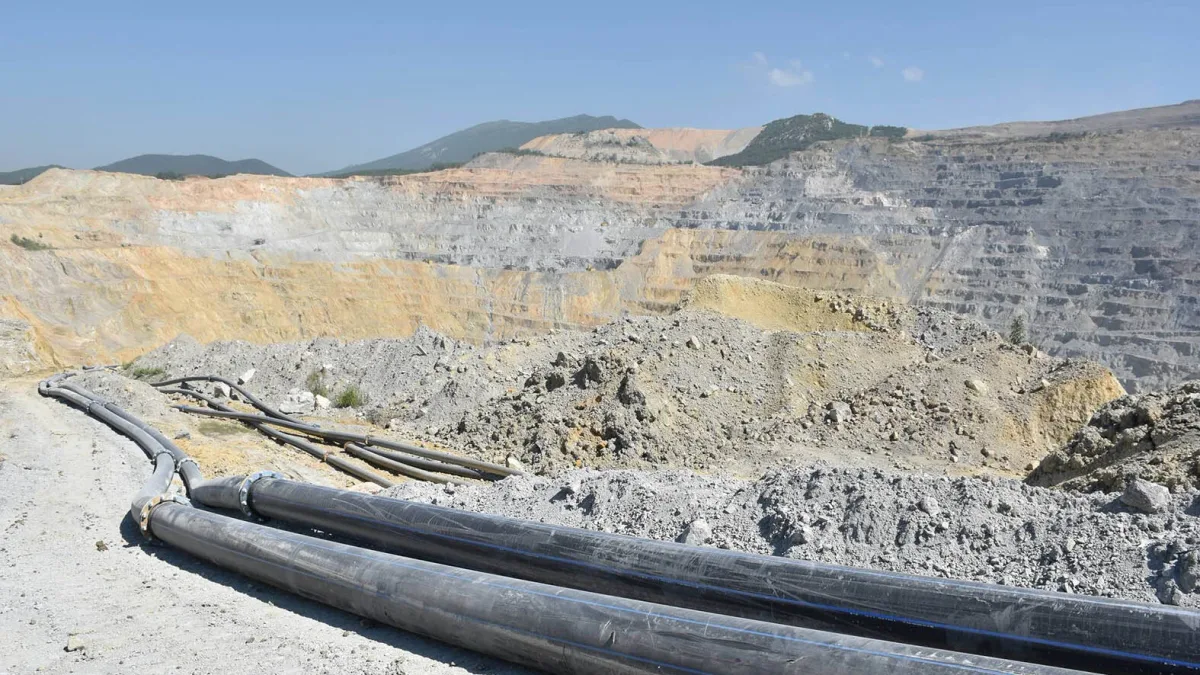
The second payment arrived on September 24, when Serbia Zijin Copper paid the state its first dividend, 10.26 billion dinars (about 87 million euros). The state holds 37% of the company, and the majority owner is China’s Zijin International Mining Company Limited. According to Radar, Mali expects at least as much again from it by the end of the year, and 25 billion dinars in total in the best case. Radar adds that from 2020 to 2025 the company reported net profit of more than a billion and a half euros, so had profit been shared regularly by ownership stake, the state would have received 563 million euros so far.
Without the NBS and Serbia Zijin Copper payments, the deficit would already exceed 2.1 billion euros, Radar says.
How does this year’s deficit compare with earlier years?
Radar states that since 2021 the deficit at the end of September has never exceeded 785 million euros. After the first nine months of 2022 the budget was in surplus by 900 million euros, and two years later by 1.2 billion. Before the 2020 pandemic, Serbia’s budget never showed a deficit at the end of September: the surplus was about 220 million euros in 2016, a record 550 million in 2017, and about 420 million in both 2018 and 2019.
Radar sees a recurring pattern in December. By the end of November 2025 the deficit was 678 million euros, and December alone added 1.63 billion. A year earlier, the December deficit of 1.2 billion euros was twice the total of the previous eleven months, and in 2023 the deficit stood at about 400 million euros by the end of November, followed by 1.1 billion in the final month.
On that basis, Radar calculates that the full-year 2026 deficit would exceed three billion euros even if December spending matches December 2024 or 2025, and most of the facilities for Expo 2027 must be finished by the end of the year.