Belgrade Heating by Consumption: 14,000 Dinars, Not 7,000
The district heating price is not rising, but billing now follows actual consumption. One building manager says 7,000 dinars could become 14,000, while another building reports savings.
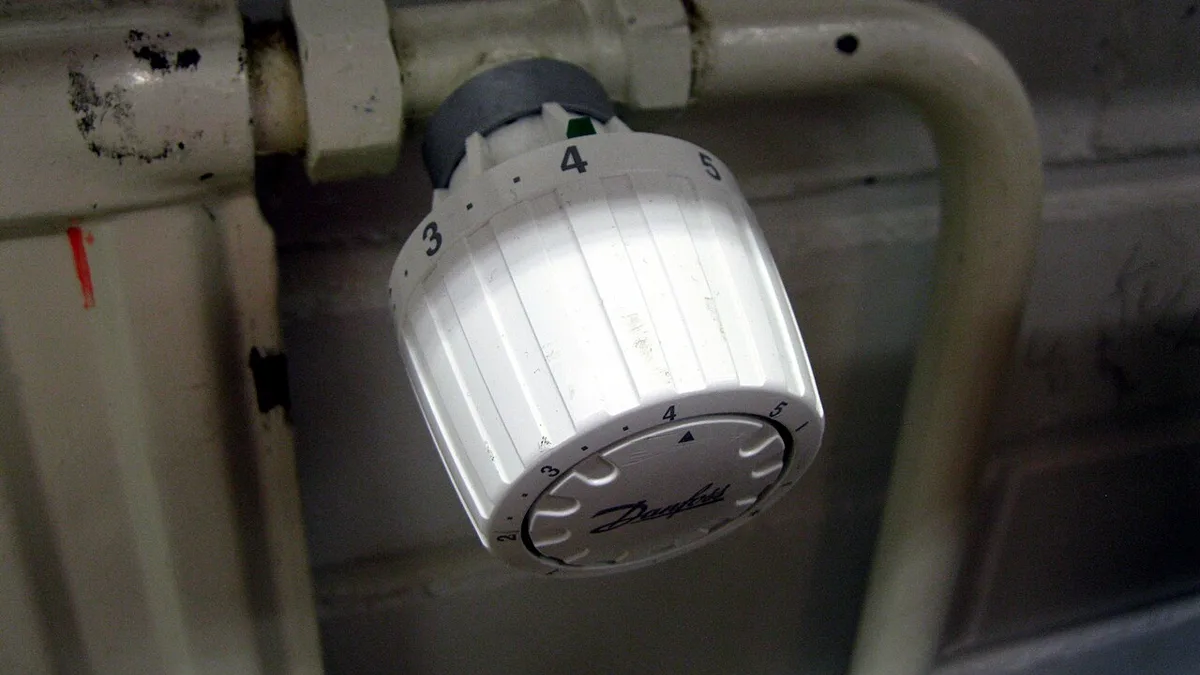
District heating in Belgrade will not get the nine percent price rise, because the city did not give its consent, but building managers warn that bills could still go up: this season, heating is billed by consumption, and that counts for more than the size of the apartment. Euronews Serbia reported their estimates.
Belgrade Power Plants asked for an average nine percent increase from October 1. For the 2026/27 season they proposed a variable charge of 7.76 dinars per kilowatt-hour and a fixed charge of 7,494.86 dinars per kilowatt per year, both before VAT. The company’s director, Vanja Vukic, confirmed there will be no price rise, since the City of Belgrade, as the founder, did not accept the proposal. By law the heating season starts on October 15, and earlier when temperatures are low.
What changes in billing by consumption?
Until now, a large share of the cost was tied to the apartment’s floor area. Under the new model, the thermal energy a building and an apartment actually use counts for more. Belgrade Power Plants supply the equipment and infrastructure and take the readings: they install heat meters, read consumption and submit the data for billing. According to Ljubisa Banovacki, a residents’ association president and building manager, this means no extra work for residents’ associations or professional managers.
Banovacki notes that the model is partly familiar. In earlier years, some residents’ associations were connected to a shared substation and consumption was split among all residents, for example in slab-type buildings with three entrances. The same principle is now being extended to individual buildings, and he expects most buildings in Belgrade to work this way.
The practical consequence: two buildings of the same size, but with different insulation and windows, can have different costs. The quality of the facade and windows thus becomes a line in the household budget.
How much could bills rise?
Banovacki names poor information as one of the biggest problems. In his words, even managers have not received enough concrete information.
“Residents are uninformed right now, and they will surely be surprised when they get the first consumption bill.”
Asked how much higher bills could be, Banovacki answered with an example from Infostan:
“It will be double, for sure. For example, if you used to pay for heating so that your Infostan bill was 10,000 dinars, of which 7,000 was heating, now heating alone can be 14,000 dinars, plus everything else”
This is his example and estimate, not an officially announced increase. By his calculation, the 7,000 dinars for heating on that bill (about 60 euros) would grow to 14,000 dinars (about 120 euros), on top of the other items.
He sees the greatest risk in old buildings with poor insulation and worn-out windows. Until now, he says, boiler room workers raised the temperature, consumption went up, and residents paid 150 dinars per square meter. Under billing by consumption, every temperature increase shows up on the bill.
“For such buildings, bills can even be three times higher than the 150 dinars per square meter they paid before”
Banovacki also points to a difference from electricity. Over the summer, residents pay only for system maintenance, so Infostan bills are lower, but unlike with electricity, they cannot pay in advance and build up credit for winter.
Are there buildings that save on heating by consumption?
The same manager cites the opposite example. In three connected buildings, one of which he manages, residents compared what they paid by consumption at the end of the heating season with what they would have paid under the old model of 150 dinars per square meter.
“It turned out that for a 50 square meter apartment, heating by consumption was roughly 30,000 dinars cheaper.”
The figure of about 30,000 dinars (about 255 euros) is Banovacki’s estimate, not an official number. He adds that one resident, an economist, calculated the costs for her apartment under the old and new models, which calmed the residents. Their building has a brick facade and is thermally insulated. The result, he warns, cannot be applied to every building: if in a building with 20 apartments half have windows that seal well and half do not, the energy efficiency problem remains.
Why does a professional manager talk about a hidden price rise?
Dejan Vujicic, a professional building manager, believes the model will be problematic in a large number of buildings. According to him, the vast majority of buildings do not have vertical pipes in shared hallways, so the consumption of individual apartments cannot be measured and is instead divided among apartments.
“This is the best way to drastically increase energy charges: a price rise sneaks in through the back door, and nobody sees it”
Vujicic also cites examples from neighboring countries: “I know of cases in some neighboring countries where people switched to metering by consumption, and when it backfired on them, they went back.” His assessment of a “hidden price rise” is the view of the interviewee, not a conclusion of Belgrade Power Plants or the City of Belgrade.
There is no real answer until the first bills under the new model arrive. Banovacki expects plenty of questions and resident dissatisfaction during the heating season, and managers say the actual effect will only be visible on those bills.