Serbia drug prices rise 7.8% despite lower copayments
According to RZS, medicines rose 7.8% year on year in September, while overall inflation was 4.1%. Two economists offer different explanations.
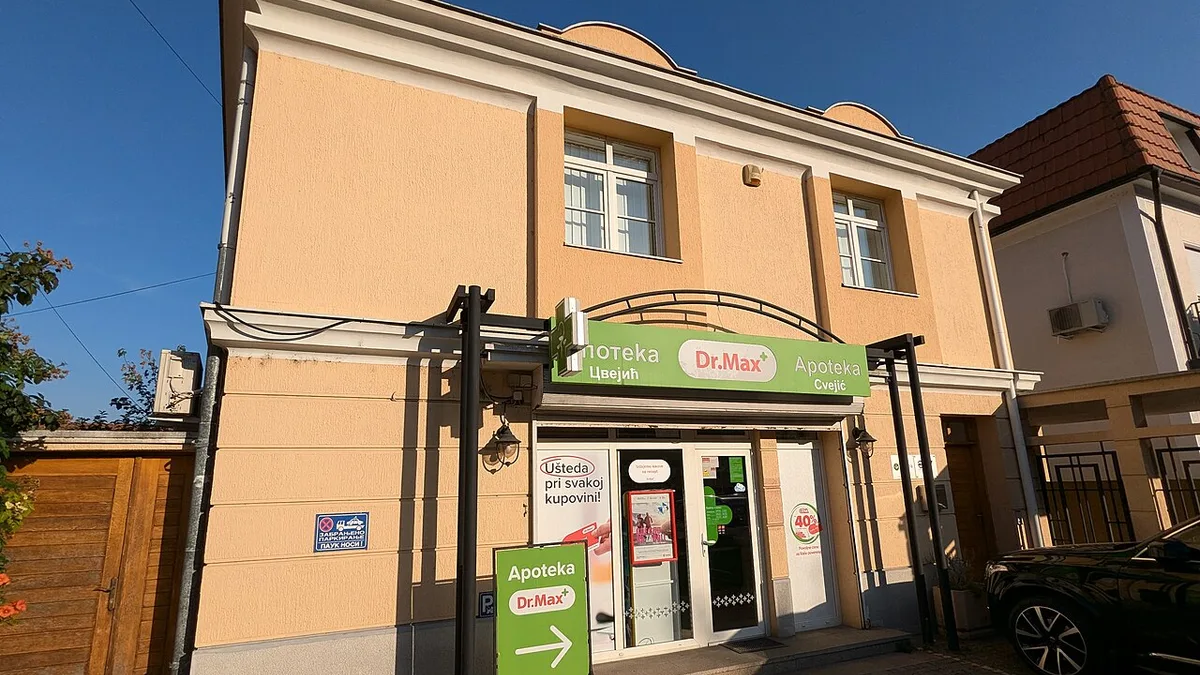
Medicines were 7.8% more expensive in September 2026 than in September 2025, according to the Statistical Office of the Republic of Serbia (RZS). Overall annual inflation, which we reported on October 12, was 4.1% in the same month, so drug prices rose almost twice as fast as average consumer prices. Compared with December 2025, medicines cost 5.1% more, while overall prices are up 3.3%.
The monthly picture is more modest: against August, the health group rose 0.2%, the same as overall prices. Besides medicines, RZS records higher prices for medical aids, imaging services and laboratory services.
What the state cut on August 1
On August 1, the copayment, meaning the amount a patient pays out of pocket, was reduced for 742 drugs dispensed at the expense of the Republic Health Insurance Fund (RFZO). The measure benefits about 2.5 million chronic patients, among them people treated for hypertension, diabetes, digestive diseases, osteoporosis and eye conditions. Drugs with a copayment of 50 to 90% were lowered to a maximum of 40%, and for drugs with a copayment of 10 to 45% it was cut further, in some cases to 10%.
Aleksandar Vucic announced over the summer that the prices of some drugs would fall from 5,000 or 6,000 dinars to 2,000, and that drugs for hypertension, diabetes and antibiotics would drop from 200, 300 and 600 dinars to between 50 and 180 dinars. Under that announcement, the lower copayment is limited to one year. Prime Minister Djuro Macut separately announced that from August 17 insured people receive 18 new drugs at the state’s expense, including 16 new oral anticoagulants, which are used to prevent stroke and treat thrombosis.
The measure concerns the amount patients pay for certain drugs, while the RZS data track the movement of drug prices.
Why are drug prices rising despite a lower copayment?
In its report on the first half of the year, RZS cites three causes of rising drug prices: higher import costs, more expensive active pharmaceutical ingredients on the world market, and strict procedures for price harmonization and import permits. The economists Nova ekonomija consulted offer two other explanations.
Economist Dragovan Milicevic says companies raised the prices of drugs outside List A, where prices are frozen, and that 220 drug suppliers operate in Serbia. His explanation runs like this:
“The government took one basket of drugs, the ones on List A, and cut the copayment that patients pay on them, with the state financing the rest. The prices of those drugs could not be changed, so the pharmaceutical companies decided to raise the prices of the drugs that are not in that group, to ‘extract’ their profit that way.”
Milicevic parts ways with RZS on one point: the office lists more expensive imports among the causes, while he argues that import costs have not changed. “The exchange rate is not changing, import costs are not changing, but domestic costs are. So this is pure ‘extraction’ of profit by pharmaceutical companies,” Milicevic told Nova ekonomija.
Economist Bozo Draskovic judges that the announcement itself was a political move, not an economic measure:
“That wasn’t really a measure, it was propaganda, the usual hoodwinking of citizens. Vucic didn’t present any model of financing it, any explanation of how it would be financed.”
In his words, the only thing the state should do in the pharmaceutical industry is ensure competition, not pursue “populist measures.”
How much did the state spend? The sources disagree
The amounts cited alongside these measures do not match. Infoera wrote on August 3 that the state set aside about 7.3 billion RSD (about 62 million euros) for the reduced copayment. Nova ekonomija reports Vucic’s announcement that 12.3 billion RSD (about 104.8 million euros) would be allocated for both measures, of which 80 million euros for the lower copayment and the rest for new prescription drugs. In another article the same outlet says the state set aside 3.7 billion RSD (about 31.5 million euros) for the 18 drugs.
The sources do not clarify whether these amounts cover the same set of measures. The euro conversion for the first and third amounts is ours, using the exchange rate implied by the ratio of 12.3 billion dinars to 104.8 million euros.