Serbian Eurobond Yield Falls to 5.19% After Election
The 10-year Eurobond yield dropped 17 basis points, Belex15 gained 0.23%, and the Australian miner behind the Rogozna project blamed the election for its share slide.
The yield on Serbia’s 10-year Eurobond fell by 17 basis points to 5.19% on Monday, October 26, the lowest level in seven weeks, Bloomberg reports. A falling yield means bond prices rose: investors are asking Serbia for less compensation for risk than they were a week ago. The move followed the October 25 parliamentary election, in which Vucic conceded defeat, and gave the market its first chance to price the new political picture.
How did the bonds react?
Serbia’s dollar bonds maturing in 2036 were among the best performers in emerging markets on Monday morning. Bloomberg Adria reports that government bond prices rose the day after Aleksandar Vucic conceded defeat. According to Bloomberg, he did so about 90 minutes after the polls closed.
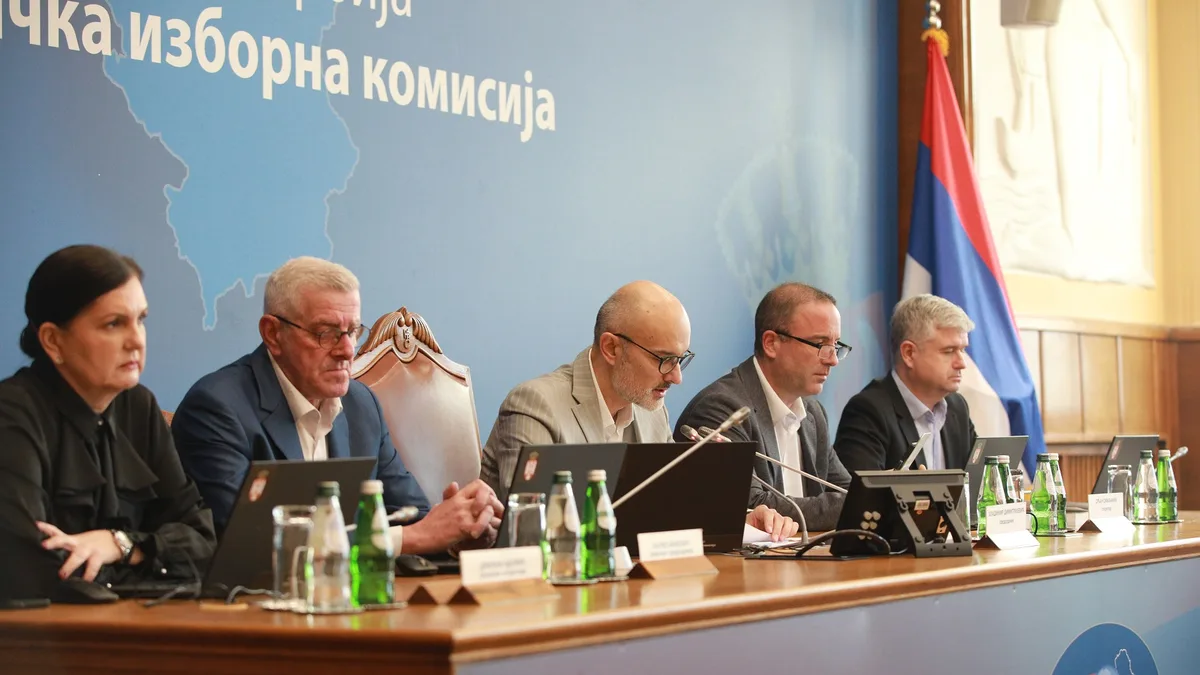
According to preliminary results released on Monday by the Republic Electoral Commission, the Student List won 52.54% of the vote and the “Aleksandar Vucic - United Serbia” list won 39.29%. We covered the results and the CeSID and Ipsos projections in our Politics section.
A similar change of power happened recently in Hungary, after Viktor Orban left office. Bloomberg Adria writes that shares of several companies tied to his government fell sharply there, while leading stocks on the Budapest exchange rose.
What did the Belgrade Stock Exchange show?
Turnover on the Belgrade Stock Exchange on Monday was about 54.06 million dinars (roughly 460,000 euros), and both indices closed the day higher, according to the exchange report carried by Tanjug:
- Belex15 rose 0.23%
- Belexline rose 0.11%
- the biggest gain came from Dunav Osiguranje, up 1.15%, which took first place on the list of gainers
Turnover was modest and the index moves small, so a single trading day says nothing about a change in trend. Bonds, unlike stocks, reacted more clearly.
How did Strickland Metals answer the Sydney exchange?
The sharpest drop came in Sydney. Strickland Metals, the Australian miner behind the Rogozna gold and base metals project in Serbia, fell on the Sydney exchange from 0.054 dollars, where the stock closed on October 23, to an intraday low of 0.036 dollars on October 26. That is a decline of up to 33%, but it is the day’s low, not the closing price. Trading volume over the period was much higher than usual.
The Australian Securities Exchange (ASX) sent the company a price query on October 26, asking whether any unreleased information explained the drop. The company replied that it knew of no such information and linked the price fall to the outcome of Serbia’s parliamentary election. It said the election result “may have influenced investor sentiment.” The reply was signed on the company’s behalf by company secretary Sleiman Majdoub, who confirmed that the company complies with its continuous disclosure rules.
The company had already reported difficulties in Serbia: on May 4, 2026, it announced it did not have final approvals for expanded drilling plans on the Shanac licence. The stock was worth about 0.24 dollars in February and about 0.10 in May, and on October 26 it dipped as low as 0.036.
What do analysts say about the new government?
According to Bloomberg, the Student List did not say, even on election night, who would be prime minister or what its governing priorities are. The new parliament could be constituted as early as next month.
Florian Biber, a professor of Southeast European studies at the University of Graz, told Bloomberg that a leaderless movement has limited reach once it takes power:
“A movement without a name can topple an autocrat, but a country cannot be run that way.”
Biber was speaking about a movement that grew out of protests and is coming to power without political experience. Until the new government publishes a program, the moves in bonds and stocks, in Belgrade as in Sydney, reflect investor expectations, not concrete policy.