

Serbia GDP Up 4% in Q3, Inflation Hits 4.1%
The economy grew 4 percent in the third quarter, but annual inflation jumped from 2.2 to 4.1 percent in a single month. Nine EU members have a higher rate, MAT reports.
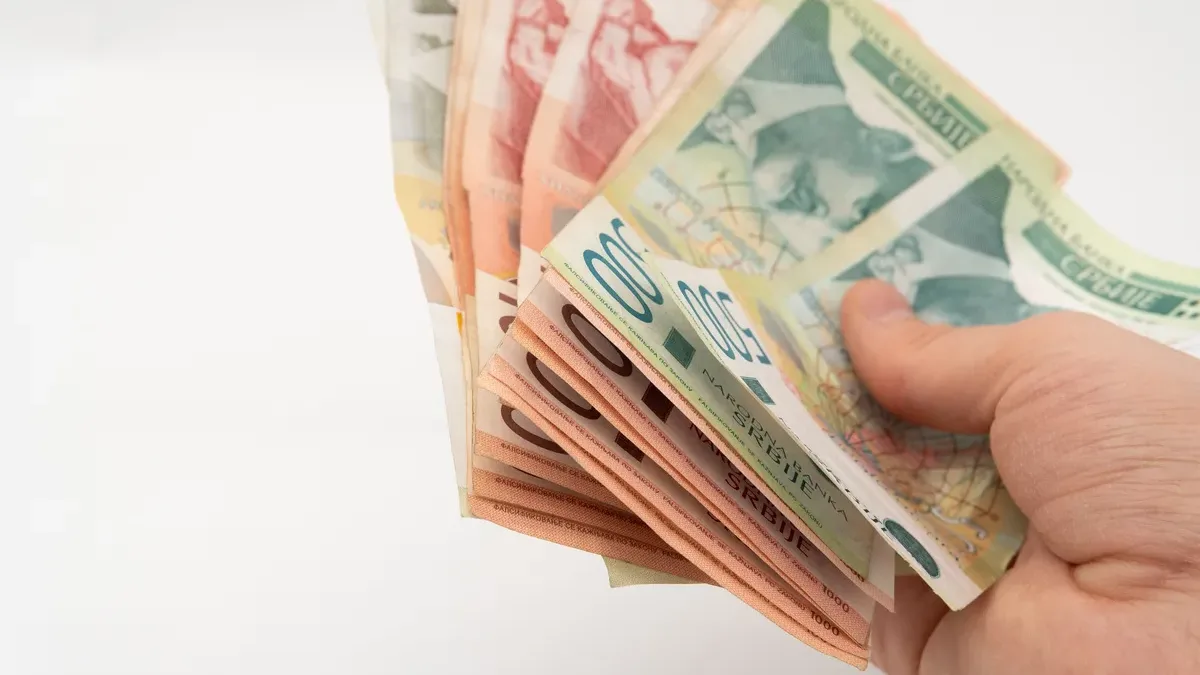
Inflation in Serbia reached 4.1 percent year on year in September, nearly double the 2.2 percent recorded in August, while the economy grew 4 percent over the same quarter. Both figures appear in the latest issue of the journal Macroeconomic Analysis and Trends (MAT), reported on November 6, 2026, which puts the third-quarter GDP estimate and the acceleration in prices in one place.
How much did GDP grow, and what drove it?
According to the flash estimate of the Statistical Office of the Republic of Serbia, cited by MAT, real gross domestic product in the third quarter of 2026 was 4 percent higher than in the same period last year. Growth over the first nine months is lower, as the journal states that “Serbia’s real GDP in the first nine months of 2026 grew year on year by about 3.6 percent”.
Services, trade and net taxes made the largest contribution. On the production side, other services, net taxes and wholesale and retail trade have grown the most since the start of the year, while agricultural output is up about 11 percent.
MAT places that growth alongside European economies:
- Eurozone GDP rose 1.3 percent year on year in the third quarter, according to preliminary Eurostat data
- eurozone growth rests on a few countries, among them Ireland, Spain and Sweden, while France and Italy stagnate or decline
- Germany recorded growth of 1.2 percent
Over the longer term, the journal cites Eurostat records: Serbia’s GDP grew 44.2 percent in real terms from 2015 to mid-2026, or 3.1 percent a year on average. That is 2.4 times faster than the European Union average, which MAT puts at roughly 1.3 percent a year.
Why did inflation jump from 2.2 to 4.1 percent?
Monthly inflation in Serbia was 0.5 percent in August and 0.2 percent in September. Year-on-year inflation over those two months was 2.2 and then 4.1 percent. Monthly price growth slowed, in other words, while the annual rate nearly doubled. MAT’s analysts offer an explanation:
“Inflation in September stood at 4.1 percent year on year, with its acceleration partly the result of a base effect from the previous year, owing to the application of the decree limiting retail margins.”
By this assessment, the acceleration is only partly the result of comparison with last year’s price level, when the decree capping retail margins was in force.
In the eurozone, September inflation was 3.8 percent. The journal also states that “in September, nine of the 27 EU member states had higher year-on-year inflation than Serbia”. They are Romania, Lithuania, Bulgaria, Cyprus, Luxembourg, Greece, Spain, Belgium and Croatia. The highest rates were recorded in three countries:
- Romania, 6.5 percent
- Lithuania, 6.1 percent
- Bulgaria, 5.6 percent
What do industry, exports and wages show?
Industrial output was up 3.2 percent year on year in September, and manufacturing 5.1 percent. Goods exports rose 8.9 percent in the first nine months of 2026, and exports covered 82.6 percent of imports, compared with 79.5 percent a year earlier. Capital and intermediate goods lead export growth, and motor vehicle production makes the largest single contribution.
According to Eurostat data, Serbia had the highest year-on-year real growth in retail trade turnover among European countries in September.
The average net wage in August was 117,282 dinars: 11.1 percent higher in nominal terms than a year earlier and 8.7 percent higher in real terms. The average gross wage was 161,953 dinars. Over the first eight months, net wages are up 11.4 percent nominally and 8.5 percent in real terms, while real growth for all of 2025 was 7.4 percent.
In July, the average consumer basket cost 111,032 dinars and the average net wage was 121,346 dinars, which is 9.3 percent above the basket. Against the minimum consumer basket, the average wage is higher by 111.8 percent. Belgrade, Kragujevac and Nis had purchasing power above the national average, Novi Sad was at the average, and net wages exceeded the average basket in Zajecar, Smederevo, Uzice, Kraljevo and Valjevo as well.


