Brent crude falls below $90, TTF gas down 21%
January Brent contracts slipped under $90 a barrel, and Dutch TTF gas is about 21% cheaper than on October 30. Markets are betting on a calmer US-Iran conflict.
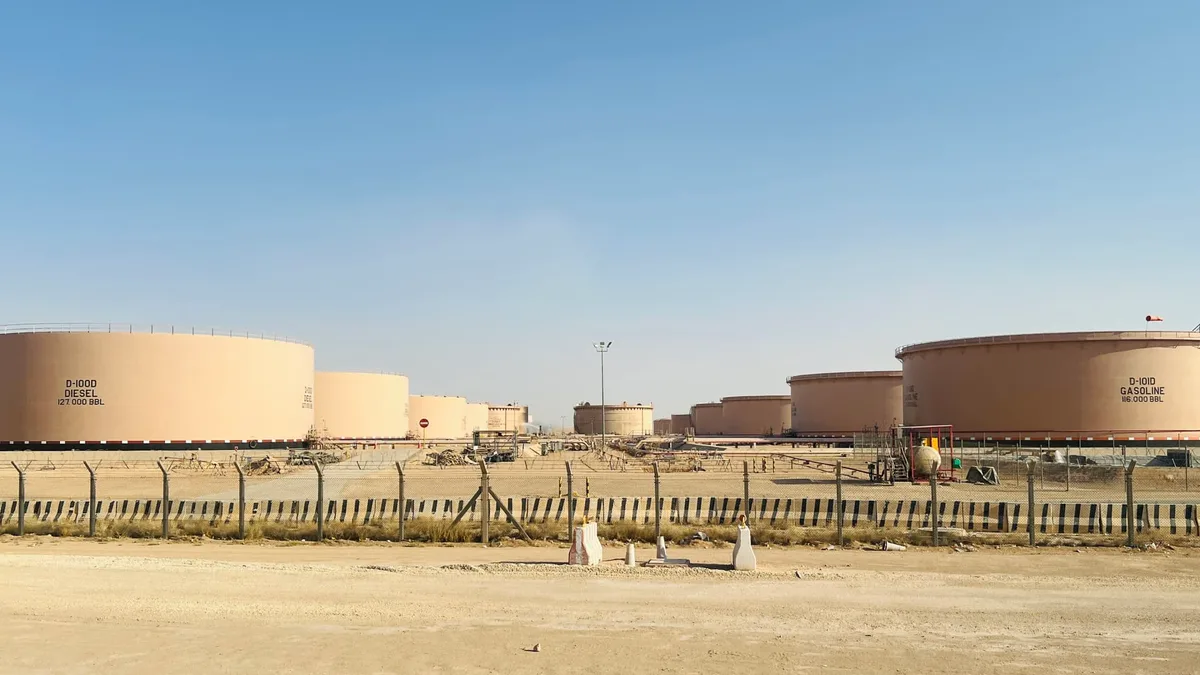
January contracts on Brent crude traded below $90 a barrel on the morning of Tuesday, November 10, something that has not happened since August. According to CNBC, at 5:33 a.m. New York time Brent stood at $90.14, down 2.65% from the day before. US benchmark WTI fell 2.4% to $84.78 a barrel.
Sources differ on the exact price and the size of the daily drop. Danas reports that Brent touched $89.3 at one point, a decline of a little over 3%, while CNBC logged a slightly higher price from an earlier hour. The gap comes from different measurement times, not a different trend: both outlets describe the same decline.
How far has oil fallen in the past week?
A week earlier, on November 3, Brent cost about $103 a barrel, according to Danas. The drop the day before Tuesday was sharp: Danas reports the price sliding from $98.3 to $92.5, nearly 6%, while Trading Economics puts the same day’s decline at 5.02%, to $93.38. We previously reported that Brent had fallen to $96 and TTF gas stood at 87.245 euros per megawatt-hour. Both prices have kept falling since.
For scale: per CNBC, Brent started 2026 at around $60 a barrel, climbed to $130 during the strikes in March and April, fell in June and July, then returned to those levels as the conflict looked increasingly entrenched. A price near $90 sits roughly between the start of the year and the peak.
What triggered the drop?
The trigger was a set of remarks by US President Donald Trump, who met Qatar’s prime minister, Sheikh Mohammed bin Abdulrahman Al Thani, at the White House on Monday. After the meeting he told reporters:
“We see momentum toward ending this conflict. I think it will be over pretty quickly.”
Trump added: “Iran is practically finished militarily.” On Truth Social he also wrote that Qatar, Saudi Arabia, the United Arab Emirates, Bahrain and Kuwait would “prefer the status quo,” meaning the continued naval blockade of Iran.
Danas, citing Bloomberg and Reuters, reports that markets are betting on a calmer conflict and a normalization of exports from the Persian Gulf. CNBC adds that the flow of crude through the Strait of Hormuz has largely recovered. Trump and Vice President J.D. Vance acknowledged, according to the same source, that disapproval of the war and high energy prices affected the Republicans’ results in last week’s US elections.
What are analysts saying?
ING analysts Eva Manthey and Warren Patterson said in a note on Tuesday that the market is stripping some of the risk premium out of prices:
“The market has continued to unwind some of the geopolitical risk premium built into prices over recent weeks, as expectations grow that the conflict between the US and Iran could head toward de-escalation.”
The same authors warn that they expect oil prices to stay sensitive to developments in the Middle East, since regional negotiations remain uncertain and risks to infrastructure persist.
Fereidun Fesharaki, chairman of consultancy FGE, took the opposite view, telling CNBC he sees no prospect of a peace deal:
“The gap between the two sides is so wide that it cannot be bridged.”
Fesharaki explained that the US demands all enriched nuclear material be removed from Iran, which in his assessment Iran’s government will not accept, just as it will not agree to the Strait of Hormuz being open to free oil flows as before the war. According to CNBC, analysts are split on how Washington will act after the Democrats’ election win, and some see escalation as a strong possibility despite the market’s initial reaction.
How much cheaper is gas on the TTF exchange?
On the Dutch TTF exchange, Europe’s gas price benchmark, the peak was recorded on October 30 at 103.9 euros per megawatt-hour. Trading closed yesterday at 82.4 euros, and on Tuesday the price was 81.7 euros, a drop of about 21% from October 30. Trading Economics shows about 80 euros on November 10, the lowest level in a month.
The lower price does not mean supply is secured. According to Trading Economics, EU gas storage is below 73% full, while the five-year average for this time of year is 90%. Disruptions in the Strait of Hormuz are keeping nearly 20% of the world’s liquefied gas exports from the Persian Gulf stuck, so the gas price remains tied to the same events as the oil price.