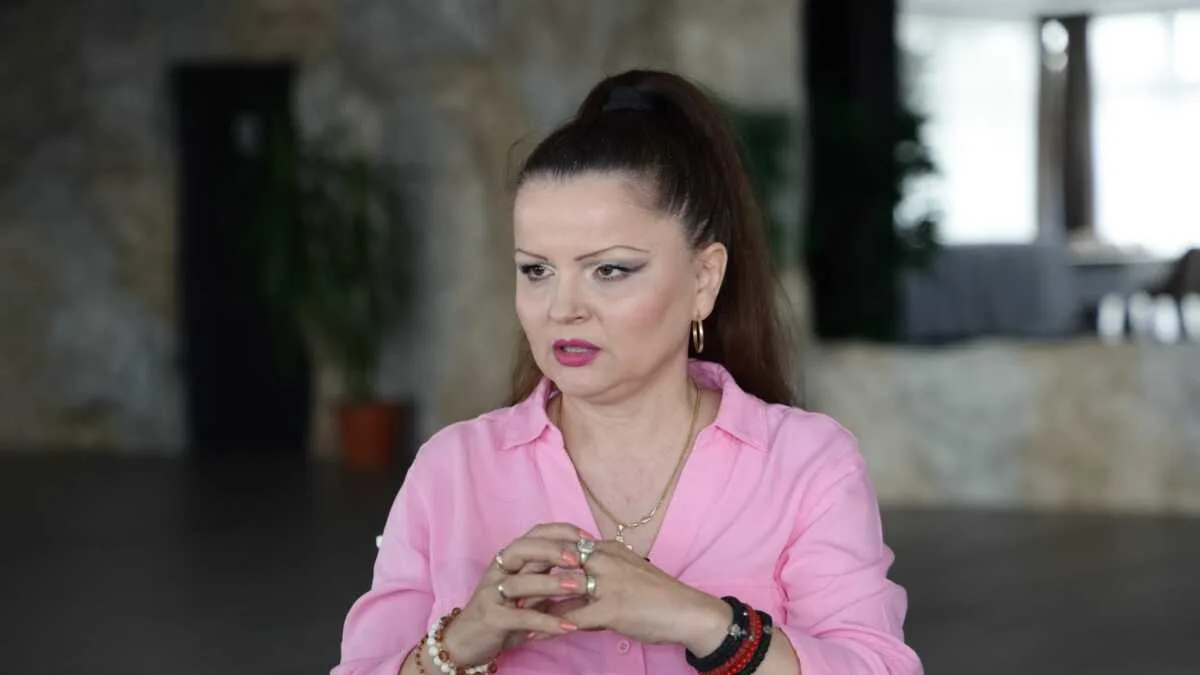
Snezana Djurisic in a school textbook sparks debate
Folk singer Snezana Djurisic appears in an eighth-grade music textbook as the performer of Odakle si, sele, and the authors defend the choice as professionally grounded and officially approved.

- Snezana Djurisic has been included in an eighth-grade music textbook published by Data Status.
- She appears in a lesson on newly composed folk music as the performer of Odakle si, sele, written by Radojka Zivkovic.
- The authors, Dr Sonja Marinkovic and Dr Slavica Stefanovic, former professors at the Faculty of Music, defend the choice as professionally grounded.
- The textbook was approved in 2025 by the Institute for the Advancement of Education, which sees nothing problematic in it.
These days Snezana Djurisic is not a subject for the entertainment pages but for the classroom. The folk singer has turned up in an eighth-grade music textbook published by Data Status, and that has set off a debate that refuses to die down: where exactly does folk tradition end and showbiz in the curriculum begin?
Djurisic appears in a lesson on newly composed folk music as the performer of Odakle si, sele, written by Radojka Zivkovic. Part of the criticism is aimed at the fact that her biography takes up roughly a third of a page, which some consider too much room for a single performer in material meant for younger pupils.
The textbook authors, Dr Sonja Marinkovic and Dr Slavica Stefanovic, former professors at the Faculty of Music, defend the choice as professionally grounded. In their view the biography is not an isolated case but part of a whole that follows the curriculum and covers the popular music of the twentieth century. Djurisic, they say, has exceptional vocal qualities and represents an entirely positive role model.
Does showbiz belong in a textbook?
The question that keeps returning throughout the debate is whether popular performers belong in teaching material at all. The authors answer that the eighth-grade syllabus already includes jazz, blues, pop, rock and folk music, and that alongside Djurisic the same context features names such as Bajaga, Zdravko Colic and Esma Redzepova.
The argument, then, is that this is not about slipping showbiz in through the back door, but about mapping the genres of an entire century. Critics, on the other hand, argue that spotlighting entertainment figures without a firmer pedagogical framework lowers educational standards and pushes commercial culture instead of lasting values.
The difference in reading is, in essence, a difference over what counts as representative. For some, newly composed folk music is a legitimate part of the cultural heritage children should learn about. For others, the line between folklore and showbiz has crossed to the wrong side.
What does the regulator say?
The dispute over the choice does not change the fact that the textbook did not appear outside proper procedure. The Institute for the Advancement of Education approved the edition in 2025 and sees nothing problematic in its content. The decision to include Djurisic formally passed an expert review before it ever reached the classroom.
That may be the most important part of the whole story. The debate is being waged publicly and emotionally, yet the material itself has the green light from the institution responsible for it. The question is no longer whether something was smuggled in, but whether the criteria for what enters textbooks match the expectations of part of the public.
For now each side is holding its ground. The authors stand behind their professional reasoning, the critics behind their sense that the line has shifted, and the regulator behind the approval it granted.
And what about you, do popular music and names like Snezana Djurisic belong in a textbook for eighth graders, or should that space be reserved for the classics and folklore alone?