Alceste is a woman: The Misanthrope at the BDP, Moliere checked out of the male canon
The premiere of Moliere's Misanthrope at the Belgrade Drama Theatre, directed by Jug Djordjevic and for the first time in Serbian theatre history with a woman in the lead, opens a debate on what a comedic classic can be when its centre is shifted into a female perspective.

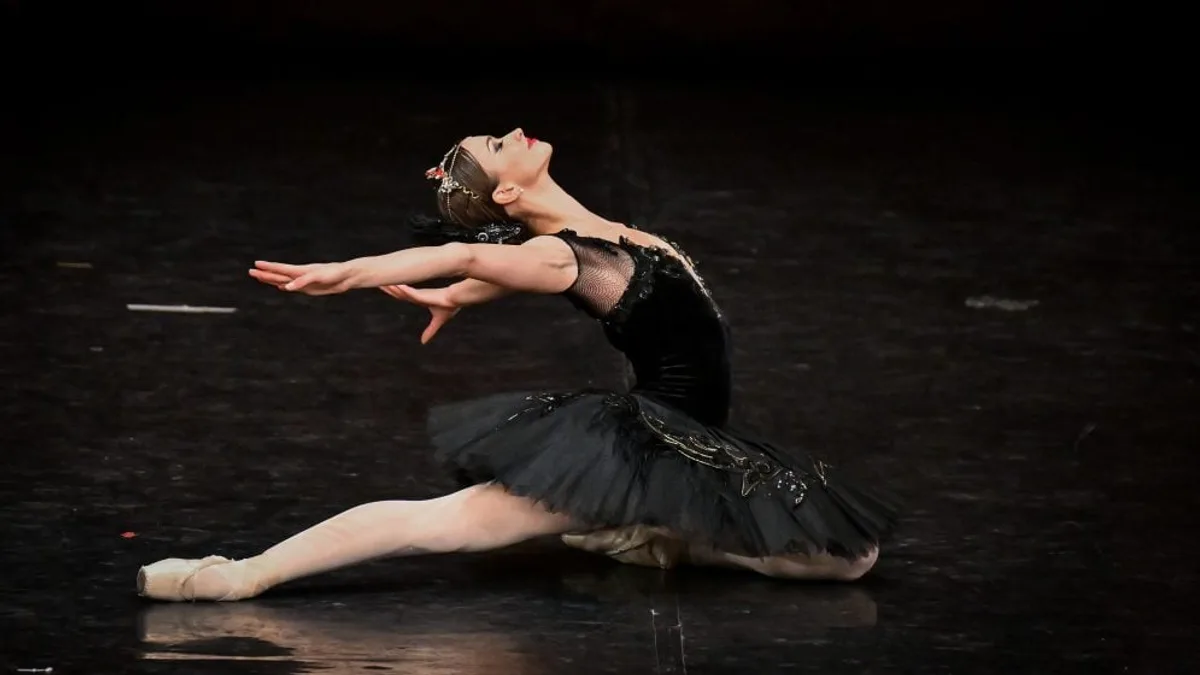
Toward the end of the first act, when Ljubinka Klaric as Alceste at the Belgrade Drama Theatre delivers her monologue against the conformism of the society she finds herself in, she delivers it not as the angry voice of a righteous man but in a register that is neither entirely cold nor entirely furious. It is the register of fatigue, not the brief kind that good rest can cure but the long kind that is the result of years of careful watching of how much one person can bear from the surroundings’ expectations. That Alceste is a woman has not happened before in the Serbian theatre canon, and the decision by director Jug Djordjevic to stage Moliere’s text so that the central voice comes from a female place does not, when seen in performance, feel like a mere change of gender label. The very dynamic of the 1666 philosophical comedy has shifted.
The premiere of The Misanthrope was given on 9 September last year on the small Predrag Pepi Lakovic stage, with reruns continuing through the end of June 2026. With an ensemble that, besides Klaric, includes Isidora Simijonovic as Celimene, Marija Pikic as Eliante, Ljubomir Bulajic, Amar Corovic, Stojan Djordjevic and Milos Lazarov, the production has been performed on average twice a month with continuous attendance above ninety per cent. That the reruns continue means the Belgrade audience has accepted Djordjevic’s approach, unusual in the Serbian theatrical framework, as a workable interpretation rather than a directorial extravagance.
What changes when Alceste shifts into a female voice
Moliere’s text, written as a courtly comedy for Louis XIV, has been performed across three centuries with Alceste as a misanthrope whose disgust at courtly manners is at once funny and moral. What goes out the door with that staging is the question of what social conventions mean to one who is in the system constantly seen as an outside element. In Djordjevic’s production, Alceste is a woman in surroundings that ask of her a particular way of speaking, walking, dressing, choosing a husband, choosing a circle, and which she consistently refuses. That converts the philosophical misanthropy of Moliere’s text into something that, in a contemporary context, resonates with discussions of female autonomy in patriarchal societies, but without direct political didacticism.
Klaric’s acting work brings the role with an attention that is strikingly musical. Her sentence is not forced, it does not build through forced emotional play but through measured tonal turns at the key moments of the monologue. When she speaks the famous line “I shall choose myself a desert”, which in traditional stagings arrives as a pathetic climax, she speaks it almost as informational source, the reason she has received open applause on that line. The acting ensemble around her builds a coherent production in which each character has a specific voice, but what carries the production is the central performance.
What about the set design
The set design Djordjevic conceived with designer Sanja Skokovic is sparer than Moliere’s text would typically demand. The small Pepi Lakovic stage is open all around, with a minimal number of props, one chair, one sofa, three fixed lights. Vera Obradovic’s costumes are contemporary, but not entirely, because Klaric wears a dress that is modern in cut but in colour and fabric returns to the 1970s. That decision places the production in an unspecified historical frame, neither in Moliere’s Versailles nor in contemporary Belgrade, but in a space that feels like a retrospect of middle-class women’s everyday life over the past fifty years.
The Belgrade Drama Theatre has, over the past five seasons under director Jug Radivojevic, clearly worked on opening its repertoire to younger directors, a decision that in a long-standing institution was relatively brave, as it followed a decade in which the BDP had a reputation as a house with a conservative repertoire profile. The Misanthrope is one of the proofs that the decision has worked, because the production is not only a house success but has received invitations to several regional festivals. Djordjevic plans to revive it for Sterijino Pozorje in 2027, if next year’s selector decides to include it in the competitive programme, but that decision has not yet been made. With The Misanthrope, Jug Djordjevic presents himself as a director who has something to say about the classics, not just bringing them to life, and that, in the Belgrade theatre context, is no small distinction.