Mungiu's second Palme: the Romanian New Wave is no longer new, but it is still a wave
Nineteen years after his first Palme d'Or for 4 Months, 3 Weeks and 2 Days, Cristian Mungiu won his second on Sunday in Cannes, this time for a film shot on a Norwegian fjord with American and Norwegian actors.
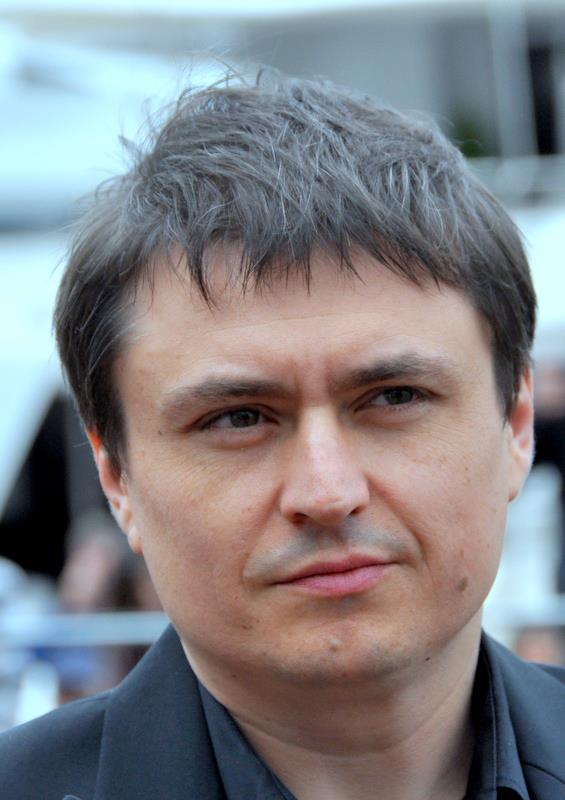
In the scene that produced the longest silence in the Cannes hall during the world premiere, Renate Reinsve sits in the cabin of a fjord while through the window her son can be seen playing with a puppy, and in her hands is the phone on which she is just reading the message that will change both her life and her son’s. The camera does not move for two minutes. Sebastian Stan, who in the film plays Renate’s father, a Baptist preacher who moved with his family from Romania to a Norwegian village, walks into the frame, sees the look on her face, says nothing, sits beside her. That, three days ago, is the reason Cristian Mungiu received the Palme d’Or on Sunday evening for the second time, after winning first in 2007 for 4 Months, 3 Weeks and 2 Days.
Fjord is a film about the Tanase family, which in 2018 moved from the outskirts of Bucharest to the Norwegian fishing town of Tromso, where Adrian, the father, took up a position as preacher in a Baptist community made up largely of Eastern European migrants. Nine-year-old daughter Maya, played in the later sequences by twenty-two-year-old Reinsve, grows up in a community that is simultaneously regarded as foreign by the majority Lutheran culture and estranged from its Romanian roots. Mungiu, who wrote the script over three years, has built a narrative that for its first two hours looks like a quiet domestic film about faith and identity, and in its final forty minutes becomes a moral drama about an individual’s choice at the moment when an entire community sacrifices one of its members for the survival of the collective.
Why Norway, why now
Mungiu has explained in interviews around the premiere that the film arose from his interest in the Romanian diaspora in Scandinavia, which over the past fifteen years has become one of the most numerous and economically successful groups of Romanian emigres. A large share of these migrants is religious and belongs to minority Christian communities, creating a double marginality, economic vis-a-vis the majority but also spiritual vis-a-vis the Lutheran majority and their own Orthodox milieu, from which they had earlier moved away. Sebastian Stan, born in Constanta and emigrated with his family at the age of eight first to Vienna and then to New York, worked with Mungiu for the first time. His acting biography in the Marvel franchise may not look obviously relevant to a film like Fjord, but Stan has in recent years steadily built a second, authorial career through roles in The Apprentice and A Different Man, evidently what drew Mungiu to him.
Reinsve, who won the best actress award in Cannes in 2021 for The Worst Person in the World by Joachim Trier, was not awarded for her performance here, but her role is central. That the Cannes jury, chaired by Park Chan-wook, did not award her, drew several comments in the critical community, as her performance has been described as the most subtle acting work of the year. The jury split the best actress award between Virginie Efira and Tao Okamoto for the film Suddenly, a decision defended on the need to diversify the palette of awarded performances.
Mungiu with Fjord belongs to the community of authors who defined the so-called Romanian New Wave, the generation of directorial poetics that in the first decade of this century brought international attention to the films of Corneliu Porumboiu, Cristi Puiu, Cristian Calanescu and Radu Jude. The wave has since lost its strict generic coherence, while individual authors, Mungiu and Jude above all, continue to work within the canon that generation established, others have shifted to television or European co-productions. Mungiu’s second Palme d’Or is therefore not just a personal confirmation but a signal that Romanian art cinema, nineteen years after its first Cannes peak, continues to produce work that at the highest level of festival recognition has no serious competition.
The film arrives in Serbian distribution at the end of June as part of the package handled by MCF MegaCom Film, the distributor that has this year acquired the rights to all eleven Cannes-awarded films. Fjord will screen at Cineplexx Usce and Big, while a screening at the Dom omladine, with an accompanying conversation with Mungiu and the audience, is announced for autumn.