Herzog Tasks Eisenkot With Forming Israel's Government
Eisenkot was recommended by 67 of 120 lawmakers, Netanyahu by 46. The Yashar leader has 28 days, with a possible 14-day extension, to find 61 votes.
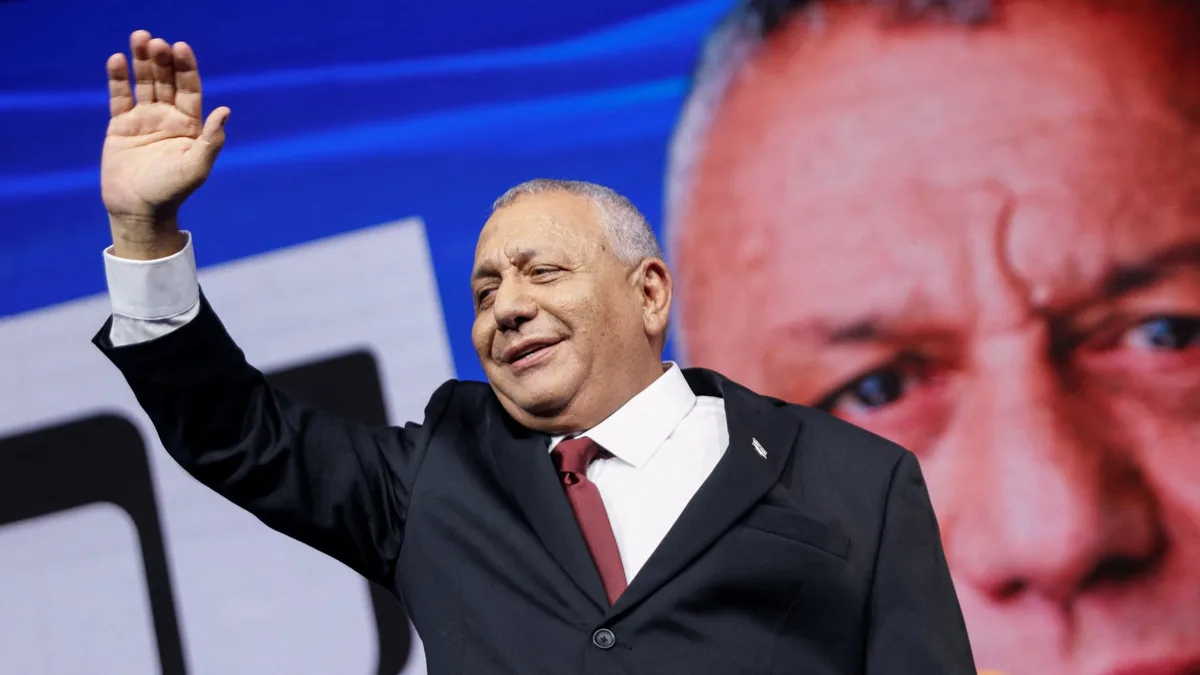
Israeli President Isaac Herzog has tasked Gadi Eisenkot, leader of the Yashar party, with forming the next government, passing over Prime Minister Benjamin Netanyahu. Eisenkot was recommended as prime minister of the 38th government by 67 of the 120 Knesset members, while Netanyahu was recommended by 46. Herzog told Eisenkot of his decision on Saturday evening, November 7, and will formally hand him the mandate at a ceremony on Sunday, November 8, the president’s spokesman said.
As we reported earlier, Eisenkot was the favorite after the consultations with parliamentary factions. The choice is now official, and this time Netanyahu did not get the first mandate.
What did the president’s office say?
The president’s office explained how the decision was reached. Its statement reads:
“The president’s decision was made at the end of the round of consultations with the Knesset factions, and after thorough discussions and additional checks with various figures from the political system over the past several days.”
The office added that, among others, the president met Prime Minister Netanyahu and Yashar chair Gadi Eisenkot and told them of his intention. Factions with a combined 67 lawmakers formally recommended Eisenkot, well above the threshold of 61 votes.
What election results led to this choice?
No side won a majority in the October 27 election. Eisenkot’s alliance of four parties won 48 seats, Netanyahu’s right-wing and religious bloc won 53, and Arab parties won a record 19, 11 of them for the Joint List. The recommendations still went to Eisenkot because parties led by Arabs backed him, even though he himself rules out a government with them.
How can Eisenkot reach 61 votes?
Eisenkot has 28 days to form a government, and Herzog can grant him another 14. If United Torah Judaism and Shas joined the coalition, he would have exactly 61 seats. He can form a government with fewer than 61 seats only if he wins a confidence vote in the Knesset.
His path is not simple. The Times of Israel reports that members of the harder-line wing of his alliance are publicly opposed to relying on the Arab parties Ra’am and the Joint List, and that many in the bloc campaigned on a promise to send both Netanyahu and the ultra-Orthodox parties into opposition.
If Eisenkot fails within the deadline, Herzog names another candidate, who could be Netanyahu. If he fails too, a majority in parliament can back a third candidate, who gets the final 14 days. If no government is formed even then, new elections are called within 90 days, and Netanyahu remains prime minister in a caretaker capacity.
What did Netanyahu and Eisenkot say?
Before Herzog’s decision, Netanyahu called for a national unity government in a pre-recorded video message and warned that a government formed by the opposition with the support of Arab parties would mean the collapse of the state:
“Such a government, dependent on Islamists, will destroy the State of Israel from within, as is happening in European countries, and far worse than that.”
In the same message he also warned against the “hasty swearing-in of a government with supporters of terror,” which is understood to refer to the Arab parties.
Shortly after Herzog’s announcement, Eisenkot called on X for the formation of an emergency national government:
“Now is the time to form an emergency national government. I will do everything so that we are worthy.”
Ahmad Tibi, a senior member of the Joint List, which has 11 seats, told Al Jazeera the decision was expected. He said they had feared the president would move toward a national unity government, meaning a power-sharing deal between Eisenkot and Netanyahu. Tibi believes Eisenkot is heading toward a minority government “with outside support from the Arab parties.” That, he added, would not be a “dream government” for the Arab parties, but their priority is to bring down the “government of Netanyahu, Itamar Ben-Gvir and Bezalel Smotrich.” Responding to Netanyahu’s message, which described them as “supporters of terrorists and terrorism,” Tibi said “Netanyahu is the biggest terrorist in Israel and the region.”
Nour Odeh, Al Jazeera’s correspondent in Ramallah, assessed that the president “took the predictable path,” since Eisenkot had the most recommendations. In her words, “the hard work is just beginning”: Eisenkot must assemble a government that can win the Knesset’s confidence, without breaking too many campaign promises and while surviving resistance from the right-wing bloc led by Netanyahu.
Who is Gadi Eisenkot?
Eisenkot was chief of the general staff of the Israeli army from 2015 to 2019. During the first eight months of the war in Gaza, which began in October 2023, he sat as an observer in Netanyahu’s war cabinet. Odeh noted that although he has explicitly said he does not want a government with Arab parties, he and they have “quite compelling reasons to get rid of Netanyahu.”