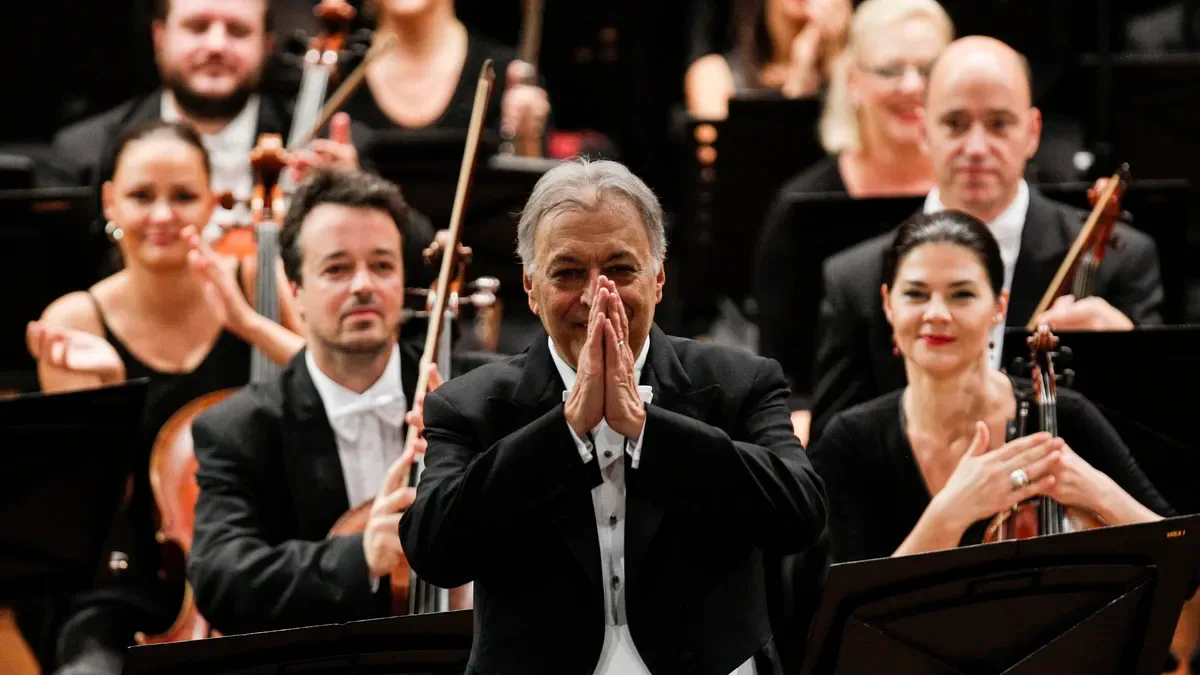
Carmina Burana With Over 120 Artists Wows Belgrade's MTS Hall
Carl Orff's staged spectacle, produced by ArtPartners, brought more than 120 performers to a sold-out hall, with two encores and three renditions of the famous O Fortuna.

- Carl Orff's Carmina Burana was performed on June 4 in a sold-out MTS Hall in Belgrade.
- The ArtPartners production gathered more than 120 artists, combining choir and ballet.
- The ETOILE ballet ensemble was led by Anatoly Handayevsky and Irina Handayevska.
- The evening featured two encores and three renditions of the famous O Fortuna.
There are evenings when an audience does not file out at the first flicker of the house lights, but stays on its feet, applauding while the performers take their places for a third time. Thursday was one of them at MTS Hall, where Carl Orff’s staged oratorio Carmina Burana sold out the venue and pulled the crowd into the very ritual the work demands.
The ArtPartners production put more than 120 artists on stage, fusing orchestra, choir and ballet into a single theatrical organism. Instead of a concert reading in which the choral blocks stand quietly behind the conductor, Orff’s score here turned into movement, light and body, with the ETOILE ballet ensemble serving as the visual spine of the whole event.
Why does Carmina Burana still fill halls?
Orff’s 1937 work long ago crossed the boundary of the concert hall and entered a shared sonic memory, largely thanks to its opening and closing movement, O Fortuna. That piece was performed three times this evening, a rare gesture that shows just how much the audience wanted to hear precisely that moment again.
The strength of this staging lies in the fact that it does not try to intellectualise Orff. The medieval verses about fortune, transience and desire are given a direct, physical form here:
- a choral mass that builds a wall of sound,
- ballet movement that breaks up and individualises that mass,
- a stage image that holds everything in a single breath.
The ballet was led by Anatoly Handayevsky and artistic director Irina Handayevska, while the choreographic and directorial baton was held by Johan Nus, whose reading of the score gives the production a firm dramatic arc.
What did the audience actually see?
The hall’s response was unambiguous. The evening was marked by two encores and repeated standing ovations, and that very repetition of O Fortuna turned a standard repertoire title into an event with a built-in dramaturgy of excitement.
What sets a production like this apart is not the bare figure of 120 performers, but the discipline that keeps such an apparatus together. The sold-out MTS Hall proved there is an audience ready to receive a classical title as spectacle, provided that spectacle has both form and substance, not merely scale.
Will large staged productions like this become a permanent way of bringing the classics back into Serbian halls, or do they remain rare festive excursions outside the everyday repertoire?