Dragisa Milojkovic, the Man Who Was Milutin, Dies at 55
The Belgrade Drama Theatre actor died on Friday evening at the clinical centre in Kragujevac after a short illness. He was 55, and Serbian viewers knew him best as Milutin in the sitcom Seljaci.

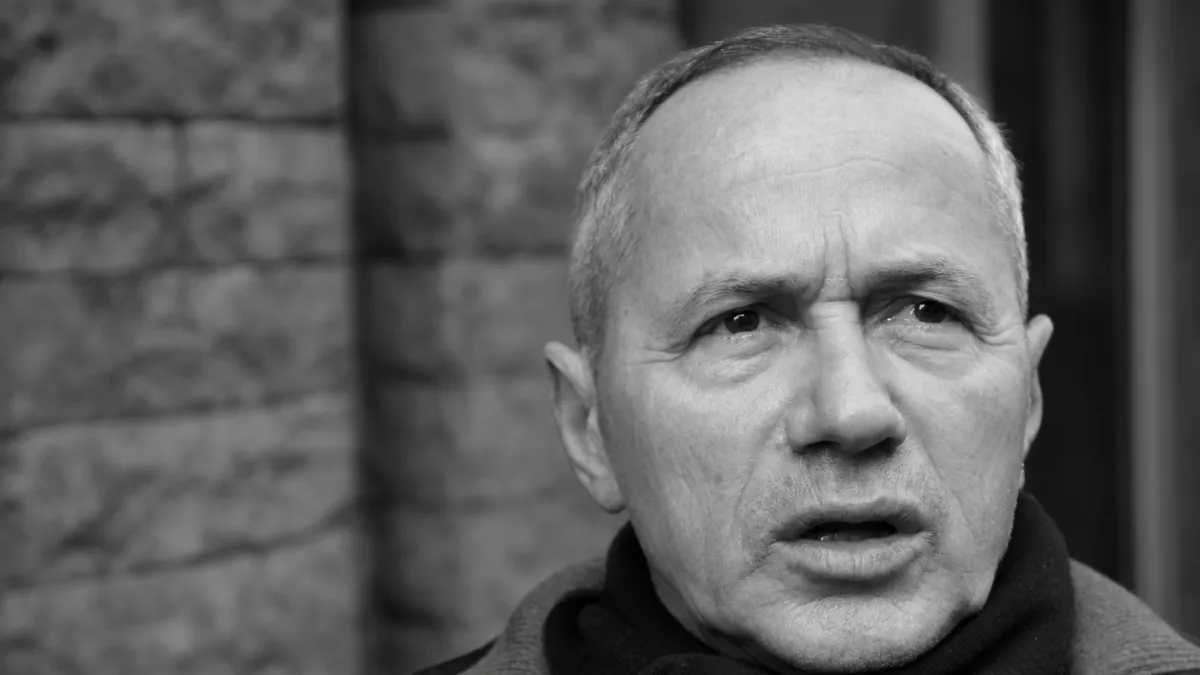
The notice went up on Friday evening, on the Instagram account of the Belgrade Drama Theatre, a few lines long and paired with a black and white house portrait. Dragisa Milojkovic, for years a member of that ensemble, died at 55, at the clinical centre in Kragujevac, after a short illness. The nature of the illness was not disclosed, not in the theatre’s post and not since.
Theatres usually see their actors off with a paragraph that tries to hold an entire career. This one held less than that:
Dragisa Milojkovic, a long-time member of the ensemble of the Belgrade Drama Theatre, has died in the 55th year of his life. The time and place of the funeral will be announced later.
That last sentence means the arrangements are still being made. By Saturday morning nothing further had been said, so even the location of the service is still open.
Who was Milutin in Seljaci?
Milutin is a character in the sitcom Seljaci, and his is the name that comes up first whenever Milojkovic is mentioned, in headlines and in the comments underneath them. Television works that way. Years of stage work seen by a few hundred people a night lose the memory contest to a single series role seen by a great many more. Milojkovic had both, except the stage was the job and the series was his address with the public.
He also appeared in the series M(j)esoviti brak and Zvezdara, the kind of domestic production that keeps returning to Serbian schedules in reruns long after the premiere. That is the only reason viewers who never saw him on a stage will go on seeing him at all.
Petar Banicevic’s class, and decades in one house
He was born on May 12, 1971, in Jagodina. He graduated in acting from the Academy of Arts in Novi Sad, in the class of Professor Petar Banicevic. From there he came to the Belgrade Drama Theatre and stayed as part of the permanent ensemble, rather than as a guest who signs for one season and moves on.
The lists of titles compiled alongside his name after the news broke include:
- Teatar u Srba
- Pokondirena tikva
- Stari vruskavac
- Sve je za ljude
- Hotel sa 7 zvezdica
- Privatni zivoti
- Rekonvalescenti
- Bozicna pecenica
- Maska
- Poslednja audijencija
The same list also carries Seljaci, M(j)esoviti brak and Zvezdara, so stage plays and television sit in it side by side. That is roughly what an ensemble actor’s week looks like anyway: rehearsal in the morning, a shoot in the afternoon, a performance at night.
The book he published in 2008
In 2008 he published a book, Ja, moj otac, which translates as I, My Father. In press coverage it tends to get a single sentence at the bottom of the credits list, although it is the one title he signed as an author rather than as a performer of somebody else’s text. The title is personal and needs no gloss.
The second cultural obituary in a matter of days
Serbian culture had already filed one obituary this week. A few days ago we wrote about the death of Vlatko Gilic, the documentary director who drew with the frame, from a different generation and a different corner of the field entirely. Two names, documentary film and a theatre ensemble, days apart.
The time and place of Dragisa Milojkovic’s funeral will be known when the theatre says so. Until then his name sits in the Belgrade Drama Theatre’s repertoire books next to a decade’s worth of work, and Milutin stays in the reruns, unchanged.