Kolarac Tonight: 124 Icons Arrive From 18 Countries
The Svetlost Logosa exhibition opens tonight at the Kolarac Endowment Gallery: 124 icons from 18 countries, backed by UNESCO, with three icons from Minsk never before shown in Belgrade.

Tonight at 7 p.m., the Gallery of the Ilija M. Kolarac Endowment opens its doors to an exhibition that will hold, for the next two weeks, 124 icons by 103 artists from 18 countries, from Cuba to Latvia, from the Philippines to Belarus. Rarely does a single Belgrade gallery bring together so many different icon painting schools under one roof, and that is what makes Svetlost Logosa, an international juried exhibition of contemporary sacred art, a geographic event first and an artistic one only second.
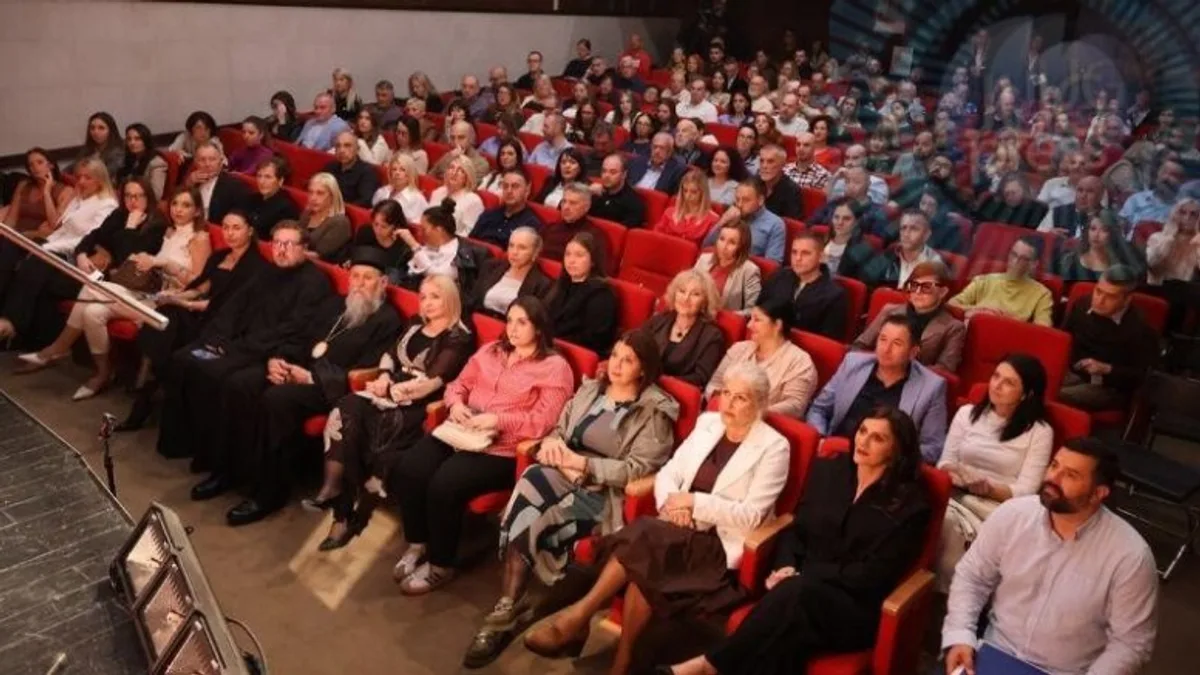
Behind the number 124 lies a long process of selection. This year’s open call drew 305 icons by 208 artists from 23 countries across four continents, the largest response since the exhibition began. After judging, the International Art Council chose 109 works by 91 artists, and the display was rounded out with another 15 icons by 12 honorary exhibitors. That selection also produced the detail organizers are proudest of: more than 20 exhibitors traveled to Belgrade in person for the opening, from the United States to Lebanon, a turnout few domestic exhibitions of sacred art can match.
The concept behind the exhibition, and behind the wider project, was authored by painter and conservator Luka Novakovic, a doctoral candidate at the University of Belgrade, while the curator is art historian Vera Vitorovic. The organizer is the Kaleidoscope Cultural Center, and the project is supported by UNESCO through the International Fund for Cultural Diversity. Competition for that support was steep: of 881 projects submitted worldwide, only 11 were chosen, and Svetlost Logosa placed second in the final ranking.
What sets this display apart from the usual gallery fare of icon painting are three works Belgrade has never had the chance to see: icons of the Most Holy Mother of God the Quick to Hear, Christ the Savior, and Saint Nicholas, made in the workshop of the Convent of St. Elisabeth in Minsk. That workshop, where nuns and lay artists work side by side, is known throughout the Orthodox world as much for its icon painting as for its rizas, embroidered covers of textile, metal, pearls, and gilded thread laid over the painted surface. That this is an address taken seriously is underscored by another guest at the opening: professor Yorgos Kordis of Athens, who taught Byzantine painting at the National and Kapodistrian University and is regarded as one of the most influential icon painters working today.
Kordis’s presence is not merely ceremonial. On September 2 and 3, from 3 to 7 p.m., in the Music Gallery of the Kolarac Endowment, he will lead a wood panel icon painting masterclass together with professor Todor Mitrovic, while Romanian professor Andrej Musat and Novakovic demonstrate fresco painting on fresh plaster, and Kristina and Andrej Raileanu show two techniques for making icons in stone, painting and carving. Six artists from Serbia, Greece, and Romania will work in front of the public for two days, from preparing materials to the final brushstroke, and the pieces made on site will join the display and stay until it closes on September 16.
Svetlost Logosa, blessed by Serbian Patriarch Porfirije, is only the first public segment of a project that aims, by 2028, to connect artists and institutions through international gatherings and a digital platform for virtual exhibitions and professional training. Alongside UNESCO, support comes from the Ilija M. Kolarac Endowment, the Museum of the Serbian Orthodox Church, the embassies of Greece and Romania, and the Romanian Cultural Institute. For one evening in a gallery on Student Square, that is a lot of institutions standing behind the same wall of icons, and it may, in the end, be the clearest sign of how much the organizers want this project to outlast September 16.