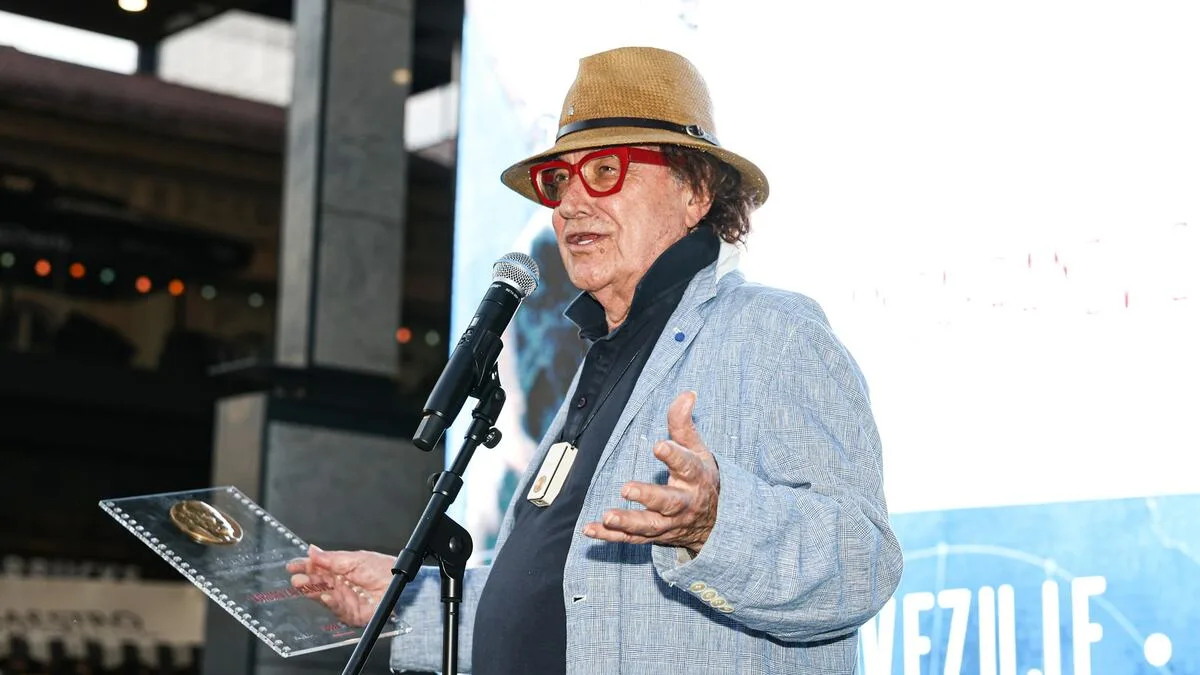
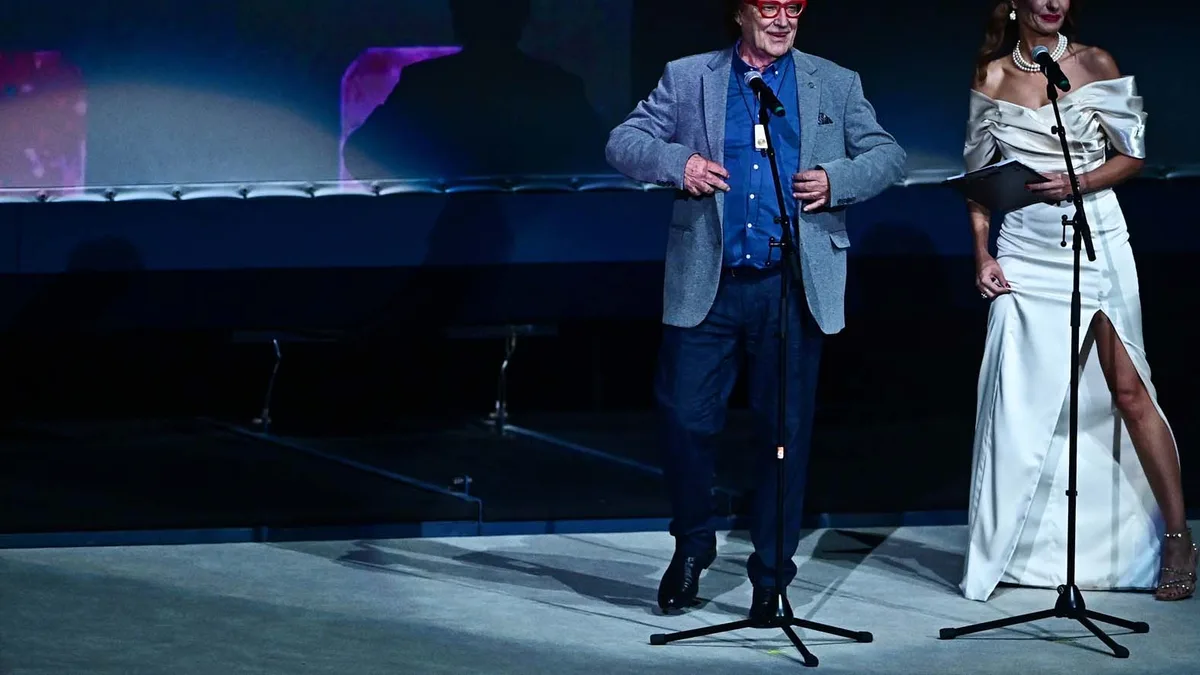
FEST 2026: A Hundred Films and One Sleepless Night
From October 2 to 11, Sava Centar and Dom Omladine split the program of the 53rd FEST: over 100 films from about fifty countries, a new late night TBC strand and a selection called Game of Thrones.

Sometime past midnight, once the Gala program at Sava Centar has already been sent off with applause and taxis, Dom Omladine will light a different kind of screening fire this year. It is called “TBC (Trash, Bizarre, Cult) in the Small Hours,” and the organizers themselves admit it was built on the model of “Vidici,” the program Dusan Makavejev once ran, a slate for audiences who do not go to the cinema to sleep well afterward. That detail says more than anything else about what the 53rd FEST is trying to be: tame enough for the Gala crowd in the evening, unruly enough for the second shift.
The festival unveiled its full program today, and the numbers match across every outlet that reported them: from October 2 to 11, in Belgrade, more than one hundred films from over fifty national cinemas. The opening is set for October 2 at Sava Centar, with Lordan Zafranovic’s “Zlatni rez 42 (Djeca Kozare),” the very hall where FEST spent decades being what it is, and to which it now returns as host of its own opening after years of moving between other venues. Ticket prices and the sale start date have not yet been announced.
Behind the program split stands Dragan Jelicic, program selector for the 53rd edition, whose statement is the only official assessment the festival has offered of itself so far:
“With more than 100 films from over 50 national cinematographies, FEST will once again be a celebration of film, some ten days that will probably not change the world, but that will make that world feel closer to us than ever, and help us understand it just a little better.”
That is a more modest claim than festival announcements usually allow themselves, which is exactly why it is worth dwelling on: Jelicic is not promising a turning point, he is promising ten or so days of closeness with a world that is, by default, distant. A line like that is easier to defend with a program than with a slogan.
And judging by what has been published, the program itself reads as a deliberate game of contrasts. Three competition selections share the spotlight equally between films from the European Union, the world and the region, with no hierarchy naming one of them the main event. Alongside them come two selections devoted to Anglo-American film, and this is where the selection team clearly had the most fun with names: “Travis Bickle and the Sundance Kid” for independent American cinema out of Sundance and Tribeca, and “Game of Thrones” for British and Commonwealth production, a title that bets audiences will recognize the show about the iron throne faster than they will recognize the word Commonwealth, and that is not a criticism, it is a trick that works on paper.
A more serious tone runs through “Farewell to the 20th Century,” a strand devoted to films about people and events that defined the past century, from the Holocaust and the Heysel disaster to biographical portraits of Milica Tomic, Constantin Brancusi, Sergiu Celibidache, Bill Evans, David Lean and Umm Kulthum. Placing a sculptor and a jazz pianist in the same strand suggests the selection is not chasing a common genre but a common feeling, that a century has only just ended and we are already watching it as a closed story. Alongside it, this year’s “FEST Pantheon” pays tribute to Volker Schlondorff, Pupi Avati and Robert Guediguian, and for the youngest viewers there is the “Children’s Parade” in Sava Centar’s Blue Hall, proof that the festival is not giving up the family-friendly part of its old role even as it builds new ones.
What this program really shows is that FEST is no longer trying to be one thing. The Gala program in the main hall and TBC in the midnight slot at Dom Omladine are not two festivals in conflict, but an admission that today’s film festival audience is not a single audience, and that an institution which fails to recognize that loses one of the two. As we wrote earlier this month, the festival’s slogan “Love That Lasts,” borrowed from the film by Dinko Tucakovic, organized by the Belgrade Festival Center (Cebef), only makes sense if that love is confirmed by details of the program like these, not by a red carpet.
Whether this double offer, a prestige competition in the daytime and a trash program after midnight, manages to hold on to both audiences, or ends up splitting them across two parts of the city and two moods, will only be shown by ten days in October. For now, all that is known is that tickets are on the way, and that the program already has a clearer identity than FEST has had in its last several editions.