Brankovina Marks 200 Years of Ljubomir Nenadovic
Nikola Selakovic announced the central celebration in Brankovina: what 200 years since writer and diplomat Ljubomir Nenadovic's birth means for Valjevo, Belgrade and the region.

When a son was born into the household of archpriest Mateja Nenadovic in Brankovina on the evening of September 26, 1826, the family did not need to invent a memorable origin for him. It already existed, written twenty two years earlier, on the night the dahis’ blade cut short the life of Knez Aleksa Nenadovic and, as history would later record, set off the First Serbian Uprising. The child was named Ljubomir. Literary history would remember him as Chika Ljuba. Today marks exactly two centuries since his birth, and this evening Brankovina, a village some ten kilometers north of Valjevo, hosts the central celebration in his honor.
Who Is Organizing the Celebration and Where It Is Taking Place
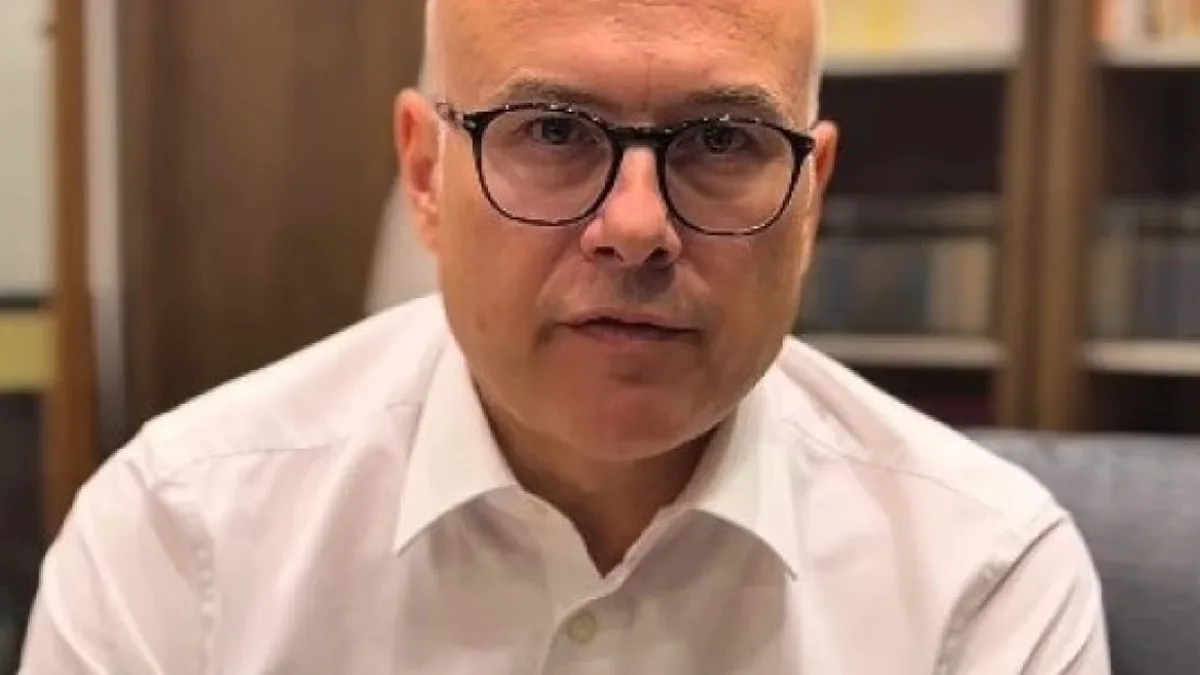
Culture Minister Nikola Selakovic, who heads the Organizing Committee formed for the anniversary, announced the celebration for the evening of September 26. The hosts are the City of Valjevo, the Ljubomir Nenadovic Central Library, and the National Theatre in Belgrade. Alongside the central event in Brankovina, the Valjevo City Gallery is opening an exhibition by the Archives of Serbia dedicated to Nenadovic, and a similar exhibition has been announced at other locations as well:
- the Archives of Serbia in Belgrade
- Republika Srpska, in Banja Luka
- Trebinje
- the gallery of the Serbian Orthodox Church community in Trieste
For Montenegro, where Nenadovic spent a significant part of his life and witnessed Petar II Petrovic Njegos’s final years, an exhibition has not yet been confirmed.
The Family That Wrote History Before Ljubomir Wrote a Single Line
His father, archpriest Matija Nenadovic (1777 to 1854), was the first president of the Serbian government, the Praviteljstvujusci Sovjet. His grandfather, Knez Aleksa Nenadovic (1749 to 1804), was executed in the Slaughter of the Knezes, an execution that itself set off the uprising that shaped the modern Serbian state. A third man from that lineage mentioned in connection with the anniversary is Jakov Nenadovic (circa 1765 to 1836), a vojvoda and one of Karadjordje’s closest associates, who also presided over the Praviteljstvujusci Sovjet. Jakov was not Ljubomir’s uncle, as the story is sometimes simplified in the retelling, but the younger brother of Knez Aleksa: Ljubomir’s great uncle on his grandfather’s side, and his father Matija’s uncle. A difference of one generation, but in a family whose entire history was bound up with the uprising, even that difference was not a small thing.
Ljubomir Nenadovic himself was a writer, diplomat, professor and minister, president of the Society of Serbian Letters and a member of the Serbian Royal Academy, one of the representative voices of Serbian romanticism. He left behind, as the Culture Minister put it, an impressive body of literary work, as well as the biography of a man who turned a diplomatic posting and a journey through Montenegro into years of close acquaintance with Njegos, at a time when the poet bishop was already nearing the end of his life.
What Was Said at the Session in Valjevo
The decision on the place and date was made at the Organizing Committee’s constitutive session in Valjevo in early August. Selakovic explained then, according to a report by Tanjug, why the evening of September 26 was chosen as the focal point of the commemoration:
“The Organizing Committee that I chaired today has decided to organize a series of events and manifestations, and the most important ones will take place at the end of September this year.”
The session was attended, alongside the minister, by the mayor of Valjevo, the directors of the Archives of Serbia, the National Library of Serbia and the National Museum of Serbia, the director of the National Theatre in Belgrade, and the director of the Central Public Library in Valjevo, an institution that has carried Nenadovic’s name for years. According to the announcement, the program leading up to tonight’s celebration also includes a series of scholarly, literary and artistic events, not only in Valjevo but more broadly across the Serbian cultural space.
For a city that already has a library bearing Nenadovic’s name, tonight’s evening in Brankovina is more than a ceremonial obligation tied to the anniversary. It returns to the birthplace of a writer whose family history overlaps with the earliest history of modern Serbia, and it does so in a village that, two centuries later, still stands where it always has.