

Blacklist festival opens tonight in four Serbian cities
The festival of artists on blacklists opens on October 14 in Belgrade, Novi Sad, Pozega and Sabac, with free entry and a program in more than 25 cities through October 21.
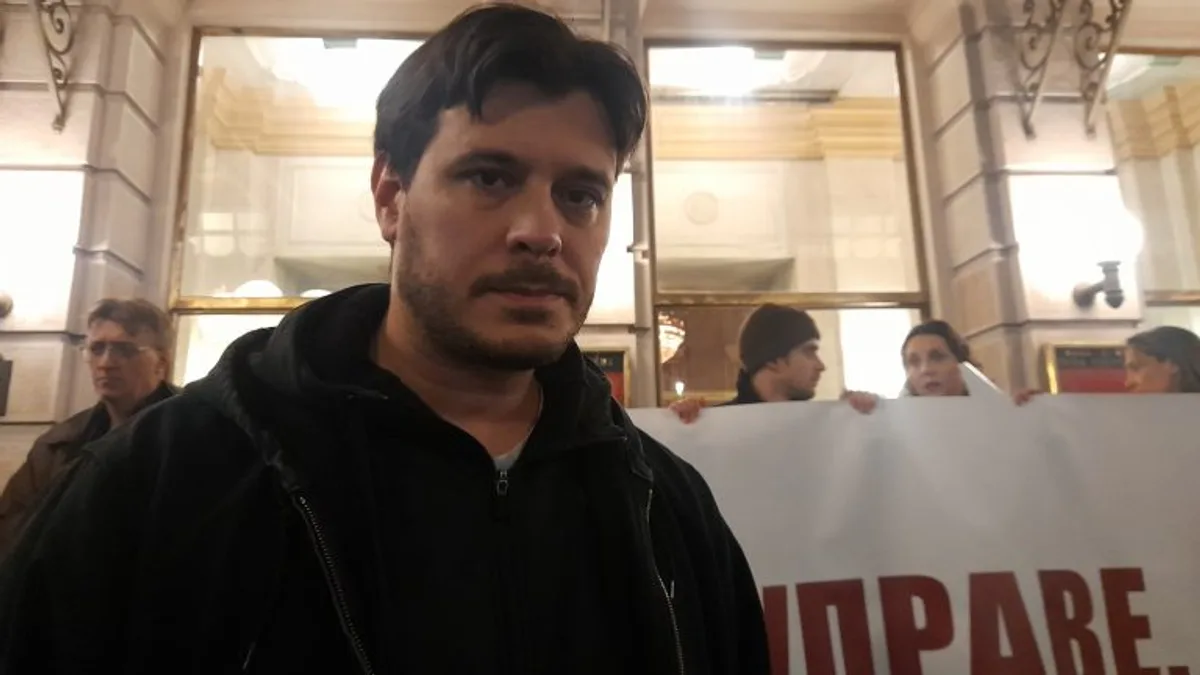
The play that opens the Blacklist festival tonight at the Center for Cultural Decontamination in Belgrade was paid for entirely by donations, which are its only source of funding. “This Is Not a Play” is performed by the Informal Group Sabac Theatre on a Thread, formed out of a dispute between employees and the management of that institution, and it is one of four evenings opening at the same time today, October 14, in four cities.
The festival was started by artists who, according to the organizers’ announcement, lost work, rehearsal space or project funding because they criticized the authorities. Entry to every program is free.
What is playing today, and where?
The organizers announced openings at four locations:
- Belgrade: the play “This Is Not a Play” at the Center for Cultural Decontamination (CZKD)
- Novi Sad: “Petria’s Wreath” with Mirjana Karanovic at the Promena theatre
- Pozega: a screening of the documentary “Precedent” by director Tamara Acimovic, about police brutality
- Sabac: a concert by King of Cacak
Start times were not listed in the announcements available to us.
The festival runs through October 21 and, as the organizers said, covers more than 25 cities. Its slogan is “What culture can do, it also dares to do.” One report gives October 25 as the end date in its headline, while the body of the same text says October 21, as does the interview published by Danas, so that is the date we use. The program includes plays, films, panel discussions, literary evenings, concerts, podcasts and stand-up shows.
In the coming days the lineup includes actors Natasa Ninkovic, Dragan Micanovic, Anita Mancic, Milan Maric and Nikola Kojo, as well as comedians Zoran Kesic and Nesa Bridzis. Concerts organized by Exit festival, which was not held in Serbia this year, have also been announced.
Who is performing in the CZKD play?
Belgrade audiences first saw “This Is Not a Play” in early March this year, on the same stage where it is performed tonight. The text and direction are credited to members of the group, and on stage, along with Milos Vojnovic, are Aneta Tomasevic, Vladimir Milojevic, Aleksandra Ristic, Sonja Milojevic, Strahinja Barovic, Sladjana Pajcic, Deana Kostic, Kosta Pavlovic, Mirjana Neziri, Danijela Dragojevic and Jelena Ivetic.
Vojnovic is an actor at the Sabac Theatre and a member of Nezavisnost, the branch union of culture, art and media. He told Danas that the performance grew out of a dismissal that, as he puts it, a colleague received unlawfully, and out of pressure on the institution’s employees. In his account, protests, strikes, petitions against the director and appeals to the city, the Ministry of Culture and the courts produced no result, so they turned to what they know, and an hour of stage material is the outcome of that choice.
Seasons at the Sabac Theatre now look different than before, by his count: the institution once staged seven or eight premieres a year, and last season it staged two, “even though the program budget has never been larger.”
Why does the actor think the festival is needed?
Asked whether the festival also signals support for the Student List ahead of the elections scheduled for October 25, Vojnovic answered that he can speak only for himself. He cited solidarity with colleagues as his reason for taking part, and he describes the festival this way:
I think Blacklist is a very important and good solidarity ‘fuel’ ahead of these elections for all of us.
On what he expects from his colleagues, he said:
We have to learn that we alone are responsible for our actions, and that we have to secure the present and some kind of future for ourselves.
Asked whether the group has added events from this year to the performance since March, Vojnovic said they simply did not have time, because a group without a space of its own struggles to get together. There is material, though: “But we remember, we write things down and we collect material,” he told Danas.


