Vuletic: I Resigned Before the Philharmonic Union Letter
The former chair of the Belgrade Philharmonic's Board cites a postal return receipt, and says the reason was an incident after a Kolarac concert, not the union's demand.
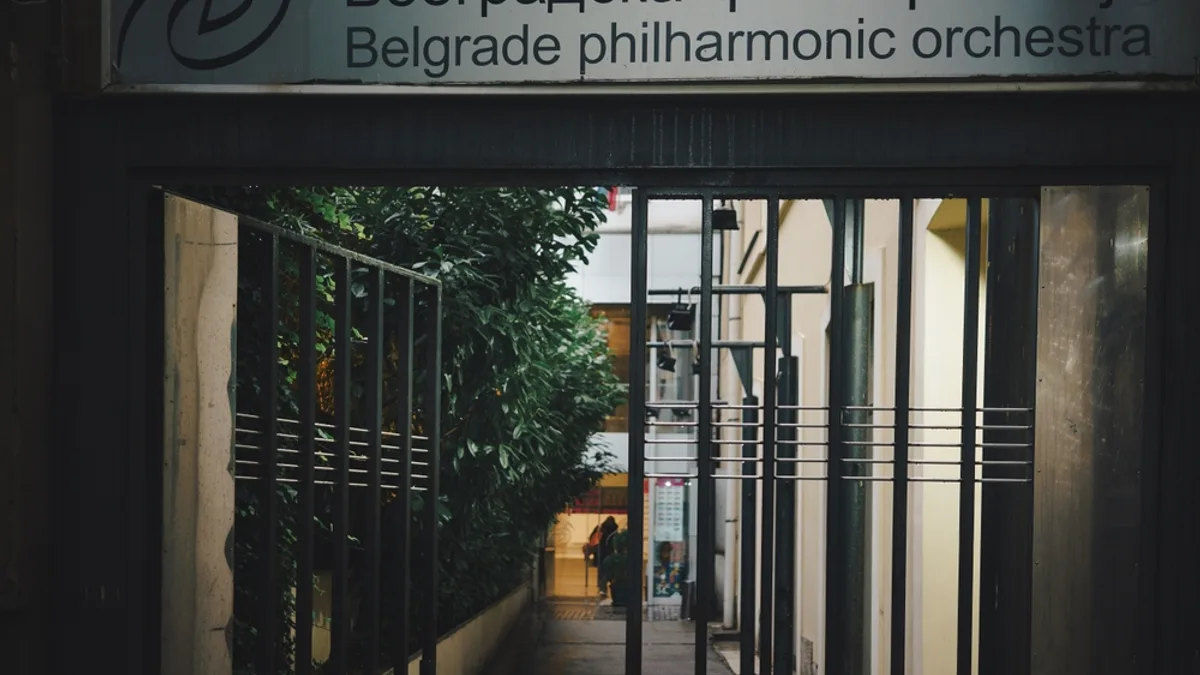
A postal return receipt rarely becomes a piece of evidence in a dispute over culture, but in the row over the Belgrade Philharmonic, Vladimir Vuletic is now pointing to one. A full professor at the Faculty of Philosophy in Belgrade and, until recently, chair of the Philharmonic’s Board, he says he sent his irrevocable resignation on October 29, before the Belgrade Philharmonic Musicians’ Union demanded in an open letter that the acting director and the entire Board step down.
We reported earlier on the union’s demand. Vuletic’s written reply was published in the daily Danas on November 4, and he opens it by saying the letter, which the same paper ran on November 2, came late. “I inform the public that this initiative, at least as far as the chair of the Board is concerned, came too late,” he wrote.
What reason did Vuletic give for resigning?
The reason is not what the union has raised against the leadership. In his reply Vuletic says nothing about how the institution is run. He writes instead about an event after a concert held on October 23 at the Kolarac Endowment. He dates the resignation in a single sentence: “Namely, on October 29 (as the postal return receipt attests) I sent my irrevocable resignation from the post of chair of the Board.” Right after, he adds: “The reason is personal in nature, motivated by the unwillingness of the [Philharmonic] to stand up for civilizational principles and the dignity of its audience.”
By his account, the Philharmonic refused to condemn the incident. He claims that a venue where the Philharmonic and conductors of world renown perform was used for secret photography, public insults to visitors on political grounds, and the later posting of offensive content on social media. He also names a journalist: “On that occasion, journalist Pavle Jaksic violated the privacy, dignity and safety of several guests.”
Vuletic concludes that he cannot head an institution that, in “troubled times,” does not recognize culture as a bridge between people of different views. His text contains no response from the Philharmonic or the journalist to these claims, so for now they stand as his allegation.
What does the union want, and how does Sudjic respond?
The union demands the resignations of Bojan Sudjic and the whole Board, along with a public competition for the post of director. Its letter also says that “any clear and long-term strategy for the development of the Belgrade Philharmonic was absent.” The government appointed Sudjic and the new Board in January 2026 without a public competition. At the time, 102 of the 114 members of the ensemble had asked for the leadership to be chosen through a competition. Sudjic signed his contract with the Philharmonic on January 29, 2026, and only then officially became acting director.
Sudjic told Danas he does not accept the call to resign and that, on his side, a competition for the director’s post was never in dispute. He also announced legal action, and rejected the letter’s claims with these words: “The truth and justice have nothing in common with the allegations and malicious constructions in the text, and I reject them in full with indignation.” The two sides do not even agree on the length of his tenure: the union writes of ten months in charge, Sudjic of eight months as acting director.
Besides Vuletic, the Board includes Ana Stefanovic and Aleksandar Serdar, both full professors at the Faculty of Music Arts, violinist Jovan Kolundzija and Aleksandar Radulovic. Vuletic’s reply does not say whether the Board formally accepted his resignation, so the union’s demand regarding the other members and the acting director remains open.