

Tavern sociology: why exhaustion has already voted
In the Trandafilovic tavern by the Main Post Office, one Wednesday morning, three pensioners talk about the autumn elections. No one mentions parties. Everyone mentions exhaustion. That is already a vote, with or without a ballot.
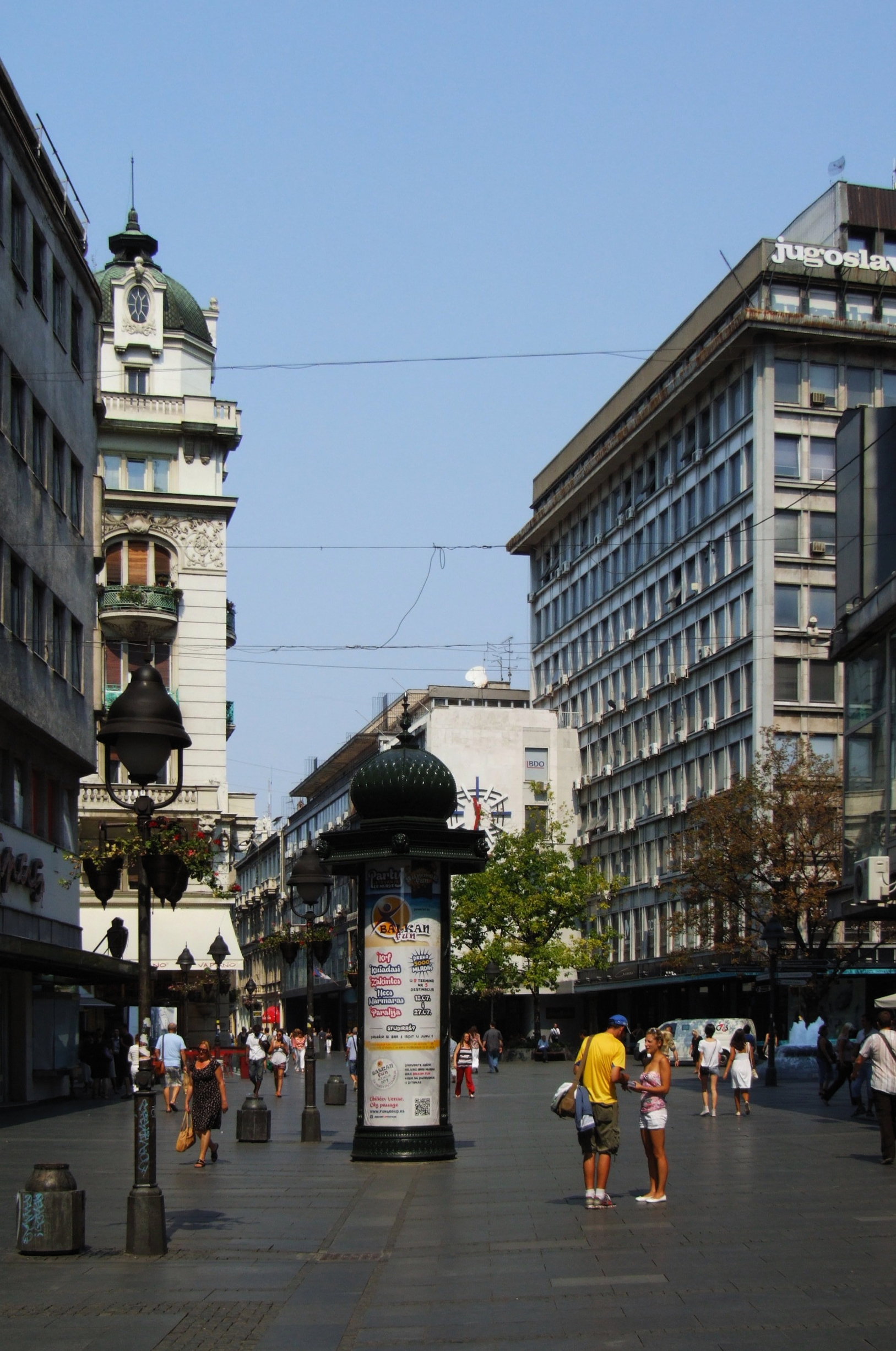
The Trandafilovic tavern by the Main Post Office in Belgrade, Wednesday 22 May 2026, around 11:00. Three pensioners at the next table, one with a coffee and a plum brandy, the second with a coffee and a mineral water, the third with only a newspaper. The first sentence I overheard, after sitting there for ten minutes: “Well, there’s something about these elections, they won’t happen before October, I hear.” The second: “What do you need them for, things will be worse.” The third: “I voted for everyone, I won’t vote for any of them any more.” A pause of four minutes. Then the same conversation restarts, with the same lineup.
I bring this scene not as reportage, but as a sociological sample. In every smaller Belgrade tavern, especially those that during working hours are full of pensioners, this conversation unfolds with variations but with the same outcome. From it one cannot extract a party preference, because all the possibilities have been used up. From it one can extract a phenomenon, which I would call “pre-election exhaustion”, and which sociologically is considerably more serious than the standard category of “the disinterested voter”.
The standard voter apathy, of the kind described by American political scientists like Wattenberg and Aldrich in various studies of the decline of turnout from the 1960s to today, comes from a feeling that an individual vote makes no difference. That is an instrumental calculation. Pre-election exhaustion, of the kind that exists in Serbia in 2026, comes from another place. It comes from the experience that every election over the past twenty years (parliamentary 2008, 2012, 2014, 2016, 2020, 2022, 2024, local and presidential 2012, 2017, 2022) has produced the same operating framework, with variations in faces. The three pensioners in Trandafilovic are not saying “there will be no difference”. They are saying “it will be worse”. That is an important distinction. A voter who thinks there will be no difference rationally chooses not to go. A voter who thinks it will be worse does not choose, they wait.
President Aleksandar Vucic stated, according to several sources from early May, that early parliamentary elections would be called for some time between September and November 2026. That is a time frame of about five to seven months, enough for a campaign that cannot generate serious competition, but long enough for the opposition to splinter over tactics. Prime Minister Djuro Macut, a few weeks later, said that it was “a matter of judgement” and that there was no hurry. Those two statements are, viewed sociologically, part of the same communication strategy: postponing the date of the election until the moment of maximum pre-election exhaustion. The greater the exhaustion, the higher the probability that only those whom party apparatuses bring to the polling stations will vote, and the lower the probability that a diverse, critical voter contingent will turn up.
Here I bring in the counter-argument, which in this case is not easy. There is a reading, particularly present in opposition circles, according to which pre-election exhaustion in Serbia in 2026 is different from the historical model, because the past eighteen months have produced a student movement that has mobilised a new generation that did not previously turn out. By that logic, some old pensioners’ tavern does not represent the urban and younger population that has been mobilised. Demostat’s April 2026 research (published on the Autonomija portal) does indeed show that “civic activism” has increased to a degree not recorded since 2000. That is true. But activism and turnout are not the same category. Students who protest may, but need not, become voters who vote. The difference between the two is institutional, not motivational.
What Serbian politics loses when the voter waits
The sociologist Pierre Bourdieu, in his collection “Political Essays” (Plon, 1981, Serbian translation by Slobodanka Glisic, Centre for Publishing Activity of the Faculty of Philosophy 2017), develops the idea of “political incompetence”, a concept that describes the state in which voters, burdened by the complexity of the system, hand over decision-making to experts or local intermediaries. That, says Bourdieu, is not a lack of intelligence, but the consequence of structural barriers the system places between the citizen and the institutions. Pre-election exhaustion is precisely such a structural barrier, only it is no longer about political incompetence, but about learned helplessness. The three pensioners in Trandafilovic have, in the course of their lives, voted for Milosevic, for Djindjic, for Kostunica, for Tadic, for Nikolic, for Vucic. Each time they thought they were voting for change. When that did not produce structural change (and in some cases it did, but in directions they had not chosen), they learned helplessness as a posture.
What a political system can do in such a situation is not to assemble a “winning coalition”. Machines promising that have been promising it for twenty years. What sociology can do is recognise the existence of exhaustion as a political factor and respond to it with formats that are not electoral. Concretely: citizens’ assemblies on control of public spending, public hearings of officials by citizens, local referendums on concrete projects (not on “the conduct of government”, which only tires the voter further, but on whether a car park will be built in Krunska or not). These are formats in which a vote makes a difference within six months, not within four years. Without that parallel politics, the 2026 elections will be elections of political exhaustion, with a result that will confirm what the three pensioners already know.
I return to Trandafilovic. After that first round of conversation, around 11:25, the second pensioner said one more sentence, which seemed to me like a conclusion for the entire day: “If it’s that same crew again, why go. If it’s someone else, I don’t know who they are. Let a computer choose then, it would choose the same.” The third was silent. The first paid for two coffees and a plum brandy, stood up and left. The remainder of the morning the second and third spent in silence, leafing through the paper from time to time. The computer will not choose. The party machines that know pre-election exhaustion is their chief ally will choose. The sociologist who understands this has to write it down, and if no one reads it, that is the only way at least to have it recorded, even if not changed.


