NASA's Roman Space Telescope Arrives in Florida for Launch
NASA's newest space telescope arrived on June 22 at the Kennedy Space Center in Florida, beginning final preparations for a launch targeted for late summer.

- The Nancy Grace Roman Space Telescope arrived on June 21 at the Kennedy Space Center in Florida.
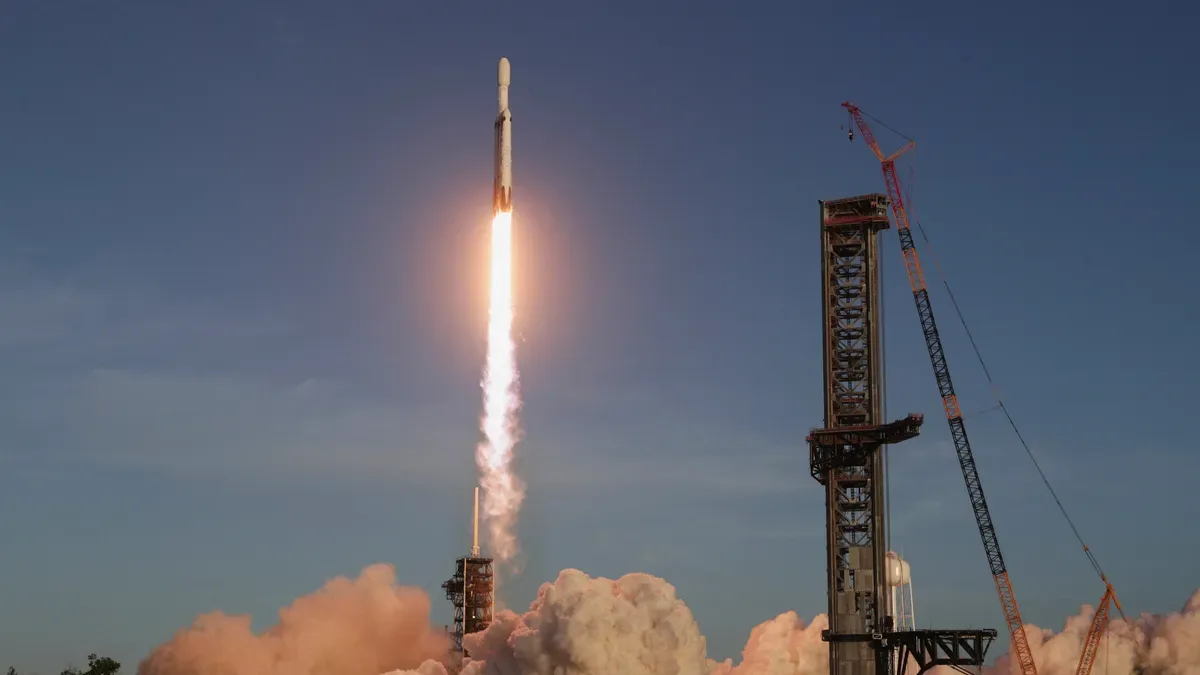
- Launch is targeted for no earlier than August 30 on a SpaceX Falcon Heavy from pad 39A.
- The mission will study dark matter, dark energy, exoplanets and distant galaxies.
- Roman could discover roughly 100,000 exoplanets over its lifetime.
The Nancy Grace Roman Space Telescope arrived on June 21 at the Kennedy Space Center in Florida, opening the final stretch of preparations before a launch planned for late summer. According to NASA, the instrument was delivered ahead of the last phase of integration and testing at the launch complex. The next step is a technical procedure to move the observatory into conditions suited for preparation, followed by a series of checks before it is mated to its rocket.
Roman is designed as a next-generation observatory for wide-field surveys of the sky. Unlike telescopes that examine narrow slices of space in great detail, this instrument is meant to image large areas at once, enabling statistical studies of vast numbers of objects. The plan is to map dark matter and dark energy, two components of the cosmos that are not seen directly but whose influence is measured through the arrangement and motion of galaxies. The mission also targets exoplanets and galaxies at the edge of the visible universe.
Technicians planned for June 22 to remove the cover of the transport container and move the telescope into a high bay, where preparation work continues. Launch is targeted for no earlier than August 30 on a SpaceX Falcon Heavy from Launch Complex 39A, the same pad that sent historic missions toward the Moon. As with other complex missions, the date is subject to change depending on the results of final checks.
What is Roman actually meant to measure?
The observatory’s main scientific task touches a question physicists have worked on for decades, the nature of the accelerating expansion of the universe. By measuring the positions and shapes of large numbers of galaxies, Roman should provide more precise data on how the structure of the cosmos has changed over time. That data is then compared against different theoretical models of dark energy. It is worth noting that a single mission, however powerful, does not deliver a final answer on its own, but adds a layer of measurement that combines with other observations.
The second part of the program concerns exoplanets. NASA says Roman could discover around 100,000 planets beyond the Solar System over its lifetime, more than previous missions have recorded combined. Much of that rests on a method that tracks brief brightenings of stars when another star or planet passes in front of them. That approach is especially sensitive to planets at greater distances from their stars, so the resulting catalog could fill a gap in earlier surveys.
When might we expect the first results?
After launch comes a commissioning period during which the instruments are calibrated and checked in the conditions of space, so the first science data does not usually arrive immediately. Experience with earlier large observatories shows that months of careful tuning are needed before measurements become reliable enough to publish. Roman is designed to operate for several years, and the volume of data it collects will require new processing tools on the side of the science teams.
For now, the most important point is that the hardware has reached its destination and that preparations are proceeding as planned. The coming weeks will show whether the targeted launch date holds and how the final testing unfolds. What interests you most about this mission, the mapping of dark energy or the hunt for new exoplanets?