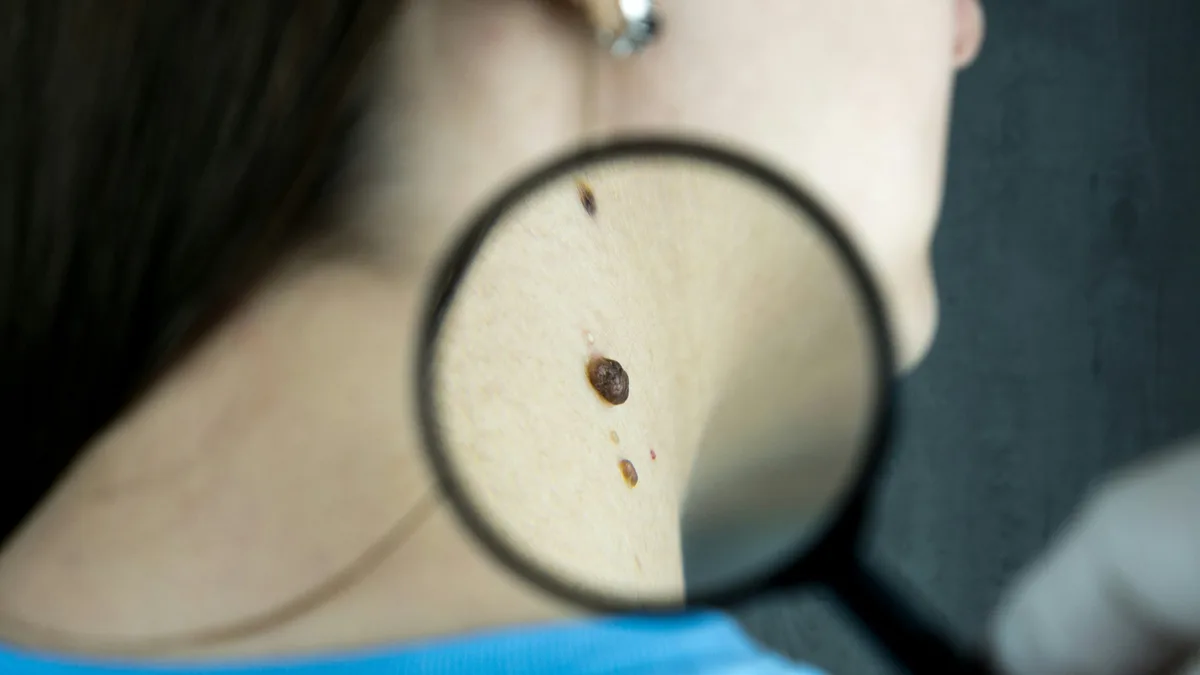
Serbia among Europe's highest melanoma death rates
About 700 people in Serbia are diagnosed with melanoma each year and around 300 die. The Serbian Patients Association says incidence is average but mortality is not, and late diagnosis is why.

- About 700 people in Serbia are diagnosed with melanoma every year, and around 300 die of it.
- Serbia is close to the European average on new cases, but at the very top on deaths.
- Most skin lesions are found late, once the tumour has already spread through the lymphatic system.
- Risk factors include family history, fair skin, a large number of moles and tanning bed use.
The Serbian Patients Association has said that Serbia sits at the very top of Europe for deaths from malignant skin tumours, and it said so in the middle of the season when sun exposure peaks. Savo Pilipovic, the association’s president, framed the problem through one ratio: on incidence, meaning the number of new cases, Serbia is not badly ranked, but on mortality it is first. Roughly 700 people are diagnosed with melanoma in Serbia each year and around 300 die.
That gap is the story. When a country records an ordinary number of cases but an above-average number of deaths, the explanation is rarely the disease itself. It lies in when the disease was found and how quickly the patient reached a doctor. Melanoma starts in the pigment-producing cells of the skin and belongs to the group of tumours that send cells into the lymph nodes and onwards to other organs early. Caught while the lesion is still superficial, it is treated by surgical removal. Caught after it has spread, the outlook changes substantially.
Why is melanoma caught so late in Serbia?
Pilipovic points to a weak health system and poor access to dermatologists, compounded by patients who are afraid of going to a doctor at all and postpone the appointment. Most skin changes, according to the association, are found only once the tumour has already spread through the lymphatic system. That is the clinically most expensive moment: treatment becomes more complex and the chance of a cure drops.
Public awareness of UV radiation belongs in the same picture. Tanning beds are still widely treated as harmless and a tan as a sign of health. Melanoma used to be a disease of older people and is now appearing more often in younger patients. The risk factors the association singles out are well known and measurable: melanoma in the family, fair skin, a large number of moles and tanning bed use. None of them can be cancelled out by sunscreen, but each of them changes how often a person should have their moles examined.
Two separate things tend to get blurred in this debate. One is individual behaviour: midday sun, tanning beds, no protection. The other is how the system is organised, meaning waiting times for a dermatologist, whether any routine screening exists and how many dermatoscopes are available outside the large centres. The death toll says more about the second than the first, because it concerns people who have already developed the disease.
What these numbers show, and what they do not
The figures cited by the Serbian Patients Association describe an outcome, not a cause. The ratio of 700 cases to 300 deaths cannot tell us how much of the gap is due to late diagnosis and how much comes from other factors, such as the age profile of patients, access to modern immunotherapy, or differences in how countries record cause of death. Comparisons between European countries are also sensitive to the quality of cancer registries, so part of the difference may originate there.
What the numbers do support is that the distance between cases and deaths in Serbia is not the same as in countries with comparable incidence. That signal is measured in one place: the time between a suspicious lesion appearing and the first examination. Early detection and better access to care are the only part of the chain that can be improved without new drugs.
The practical conclusion is unglamorous, which is exactly why it gets ignored. A mole that changes shape, colour, border or size, or that itches or bleeds, is a reason to book an appointment rather than to wait for the season to end. When did you last have your moles checked?