

Asteroid Vesta at opposition on October 13: look in Cetus
Vesta sits opposite the Sun and stays up all night, in the constellation Cetus. Sources disagree on its brightness, from magnitude +6.4 to +6.8.
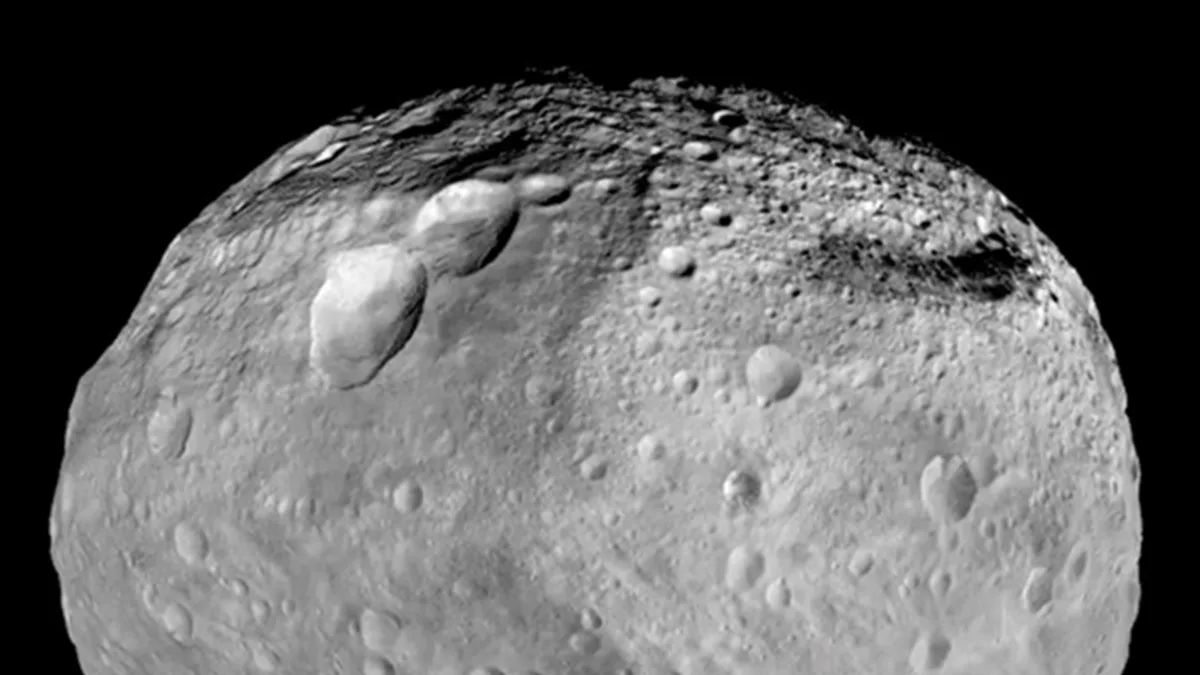
The asteroid 4 Vesta reaches opposition on Tuesday, October 13, 2026, at 8:16 a.m. Central European Summer Time, which is also the time in Serbia. That means it appears on the opposite side of the sky from the Sun as seen from Earth, so it is above the horizon all night. New moon falls on October 10, so the nights around that date are free of moonlight.
Opposition happens in the middle of the day, so it cannot be seen itself. Observers watch in the nights before and after it.
Where is Vesta in the sky?
At the moment of opposition, Vesta sits at right ascension 01h 31m 28s and declination -3° 13’ 15”, in the constellation Cetus. The British magazine describes that part of the sky, between Cetus and Pisces, as inconspicuous, unlike the easier-to-recognize part of Cetus that Pallas travels through. Vesta is 1.4827 astronomical units from Earth and 2.4677 from the Sun.
BBC Sky at Night Magazine says Vesta is bright enough to be seen with binoculars. The Dutch site hemel.waarnemen.com, maintained by Marc van der Sluys, publishes an ephemeris table covering the whole period around opposition. Its times are for Utrecht: Vesta rises at 7:54 p.m., reaches its highest point at 1:45 a.m. at an altitude of 34.7 degrees, and sets at 7:31 a.m. The source gives no times for Serbia, so they will differ from these and should be checked in a local planetarium or a sky-map program.
During October, Vesta moves 7.2 degrees across the sky. On a single evening that motion cannot be noticed.
“Over the course of one evening, Vesta, and Pallas too, will look like stars that are not moving,” BBC Sky at Night Magazine writes.
The magazine therefore advises recording the position with a sketch or a photograph and comparing the results over several nights. A point that shifts against the fixed stars from night to night is the asteroid.
How bright is Vesta?
Here the sources disagree. Hemel.waarnemen.com gives an apparent magnitude of +6.4 at opposition, while BBC Sky at Night Magazine gives +6.8. The higher the number, the fainter the object, and a difference of 0.4 magnitudes matters for an observation at the edge of visibility. Neither source explains the gap, so we cannot attribute it to any specific cause.
What about Pallas, the other asteroid in the same part of the sky?
The asteroid 2 Pallas is also at opposition in October, also in Cetus, which makes it a handy comparison. It is fainter than Vesta: magnitude +8.2 on October 1, falling to +8.5 by the end of the month. Seeing it takes a small telescope.
Early in the month Pallas lies just north of the star 47 Ceti (+5.2), then moves toward the southwest. On October 20 it passes midway between the stars Tau Ceti (+3.5) and Diphda, also called Beta Ceti. Over a month it covers 8.7 degrees, somewhat more than Vesta.
Because the two asteroids are relatively close together, they can be captured in the same frame. The British magazine says an ordinary camera with a lens of about 65 millimeters focal length or shorter is enough, with an exposure that records stars down to ninth magnitude.
What this preview does not tell you
The position and distance figures come from an ephemeris, and the brightness figures from two sources that disagree. Neither says how Vesta will look from the Serbian sky, because that depends on light pollution, weather and the observer’s equipment. The rise, culmination and set times in this article are for Utrecht, not for Serbia.


