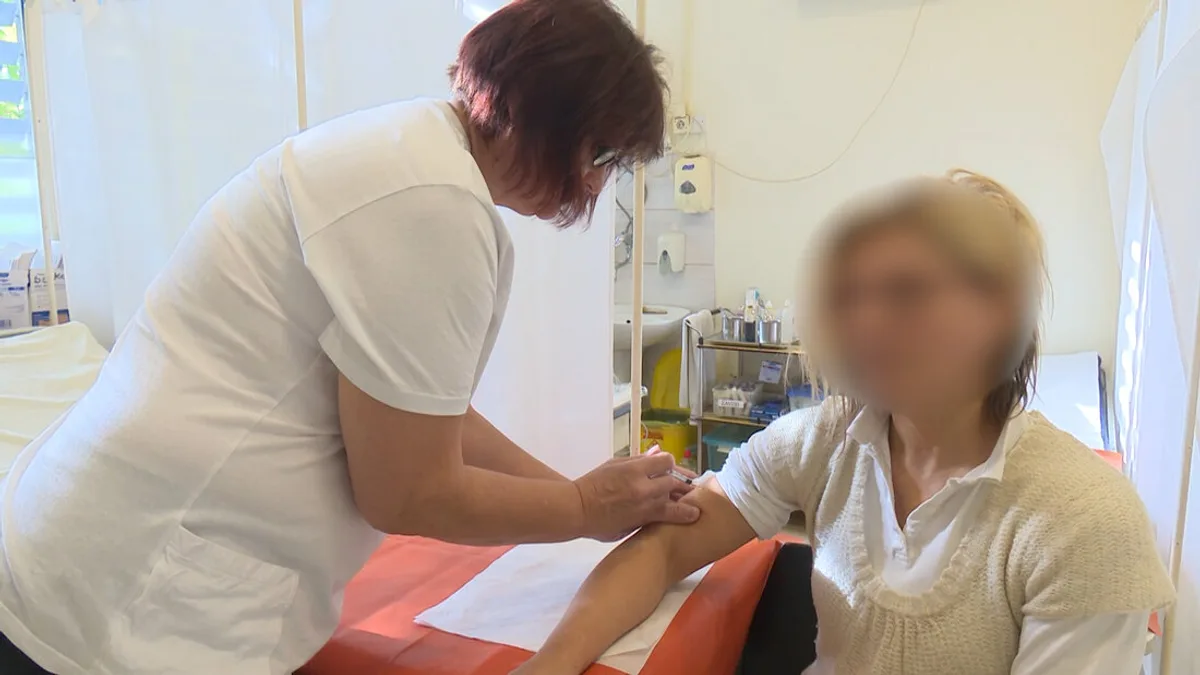
Measles Cases in Children Under 5 Reach 15.6 Million
A University of Queensland study in Nature Medicine estimates global cases rose 40 percent since 2019, and 23.7 million infants missed their first dose in 2023.
The estimated number of measles cases among children under five rose by 40 percent worldwide in four years, from 11.1 million in 2019 to 15.6 million in 2023. The figure comes from a study by researchers at the University of Queensland, published in the journal Nature Medicine. The first author is Benn Sartorius, an associate professor at the university’s Frazer Institute.
What exactly was measured
The team covered 204 countries and territories from 1990 to 2023, drawing on data from the Global Burden of Disease 2023 study, which measures the burden of disease worldwide. They looked at cases, deaths and vaccination gaps among children up to age five. The paper is titled “Global and regional burden of measles and vaccine coverage among children under 5 years” and carries the DOI 10.1038/s41591-026-04661-7.
The picture before 2019 looked different. From 1990 to 2019, the number of cases worldwide fell by almost 80 percent. Sartorius, as quoted in a University of Queensland statement, describes the rise as a loss of that progress:
“This has contributed to the global resurgence of measles in young children. It reverses decades of progress, during which cases fell by almost 80 percent worldwide between 1990 and 2019.”
Measles is, the statement notes, a vaccine-preventable disease, but it spreads easily through the air and can lead to complications and death, mostly in young children. According to World Health Organization estimates, one case can cause up to 18 new infections where immunity is low. A study published in 2023 in The Lancet Global Health estimated that in 2019, up to three in every hundred infected children under one year of age died in low- and middle-income countries.
How many infants missed their first vaccine dose?
By the authors’ estimate, about 23.7 million infants, or one in five, did not receive a first dose in 2023. Two doses of vaccine in childhood are the most effective protection and, as the statement puts it, prevented nearly 59 million deaths between 2000 and 2024.
The missed doses are distributed unevenly. Sartorius said in the statement:
“Sub-Saharan Africa, which had the highest mortality rate throughout the study period, accounts for 50 percent of those missed doses, followed by South Asia with 20 percent.”
He links the rise to the pandemic:
“The resurgence coincides with disruptions to immunization programs, health systems and funding caused by the COVID-19 pandemic, and reflects both the fragility of measles control and the vulnerability of children in lower-resource areas.”
What do the United States and Australasia show?
The heaviest burden falls on lower-resource settings, but Sartorius warns that this is not the only place where the disease is coming back:
“The greatest burden falls on lower-resource settings, but recent outbreaks in the United States show that measles can return even to high-income countries where gaps in immunity develop.”
Coverage with the measles, mumps and rubella (MMR) vaccine among US kindergartners fell from 95 to 92 percent. Sartorius added: “We have also seen a rise in misinformation in parts of the population after the COVID-19 pandemic, and the United States has not helped in that story.”
At the other end of the scale is Australasia. Despite pandemic disruptions, the region had the highest coverage of any region in 2023: about 96 percent of children under five had received a second dose of the vaccine.
What the authors call for, and what the study does not prove
The authors say the data should help authorities identify under-vaccinated groups. Sartorius said:
“Our study shows that urgent action is needed to restore routine immunization programs and build resilient health systems that can sustain high coverage during global crises. We hope the data from our study will be used for targeted catch-up vaccination campaigns and to strengthen immunization where support is needed most.”
The figures should be read for what they are. They are an estimated number of cases and an estimated level of coverage, not a count of people who fell ill. According to the authors, the rise coincides with pandemic-era disruptions, but that is an overlap in time, not proof that the pandemic itself was the cause. The university’s statement gives no data for Europe or Serbia, so it does not show what the situation is here.