Senjak case pushes the electoral calendar towards autumn 2026
The arrest of Belgrade police chief Veselin Milic and the Slavija protest sharply cut the chances of summer elections, with the calendar moving towards October and November.

The calendar for Serbia’s snap parliamentary elections is shifting more decisively towards autumn 2026, according to several political analysts and sources close to the top of the Serbian Progressive Party. By their shared assessment, the Senjak case, with the arrest of Belgrade Police Directorate chief Veselin Milic, and the student protest at Slavija Square on 23 May, which gathered more than a hundred thousand people, have made the scenario of an early-July vote politically unfavourable for the ruling coalition.
Speaker of Parliament Ana Brnabic on 25 May announced that the debate on changes to four electoral laws will continue in June, with intensive parliamentary work. On the technical calendar, if the laws are adopted by 28 June, the elections could be called only in the second half of July, with the vote itself falling between 15 September and 30 November, the statutory window between the call and the holding of elections.
What do the analysts say?
Sociologist Aleksandar Ivkovic of the Centre for Policy Research told the weekly Vreme that the shift in timing has two underlying drivers. The first is institutional: the statutory intervals between the adoption of laws and elections do not allow a summer vote. The second is political, since “no ruling coalition wants elections at a moment when links between the police, politics and organised crime are being exposed in public”. By Ivkovic’s assessment, the most likely date falls between 18 October and 8 November.
Dejan Bursac, a senior fellow at the Institute for Political Studies, told N1 that pushing back the vote “is not without risk for the ruling coalition”. In his view, the longer the gap between the Senjak case and the elections, the more room there is for “fresh scandals to break that would further erode ratings”. Bursac added that the central factor, beyond the Senjak case, is a municipality-level trend: “the emergence of local lists that can pull part of the voters out of the SNS base”.
Sociologist Ivan Zivkov, based in Belgrade, observed that for Vucic the question of elections “has moved from the realm of electoral arithmetic into the realm of preserving control over clans and factions inside the party, the state and the security apparatus”. By Zivkov’s reading, the Senjak case showed that Vucic “does not control every segment of the security structure in the way he had until recently believed”. In his view, an “operation of consolidation” inside the Interior Ministry will have to be carried out before the vote.
What does it mean for the opposition?
From the opposition’s standpoint, pushing back the date opens space to draft a joint electoral platform. Party of Freedom and Justice deputy leader Marinika Tepic said a window of four to five months would be “sufficient to draw up a programmatic coalition” with the People’s Movement of Serbia, the Green-Left Front, Serbia Centre and the Free Citizens’ Movement. For Tepic, the coalition formula “remains open” and depends in part on the Democratic Party’s stance.
Democratic Party leader Zoran Lutovac, who in May several times rejected a formal coalition with the Party of Freedom and Justice, left room for “cooperation on joint candidates”. Lutovac stressed that the Democratic Party’s “primary goal is to have elections called”, but that the formula for running them remains a matter of discussion.
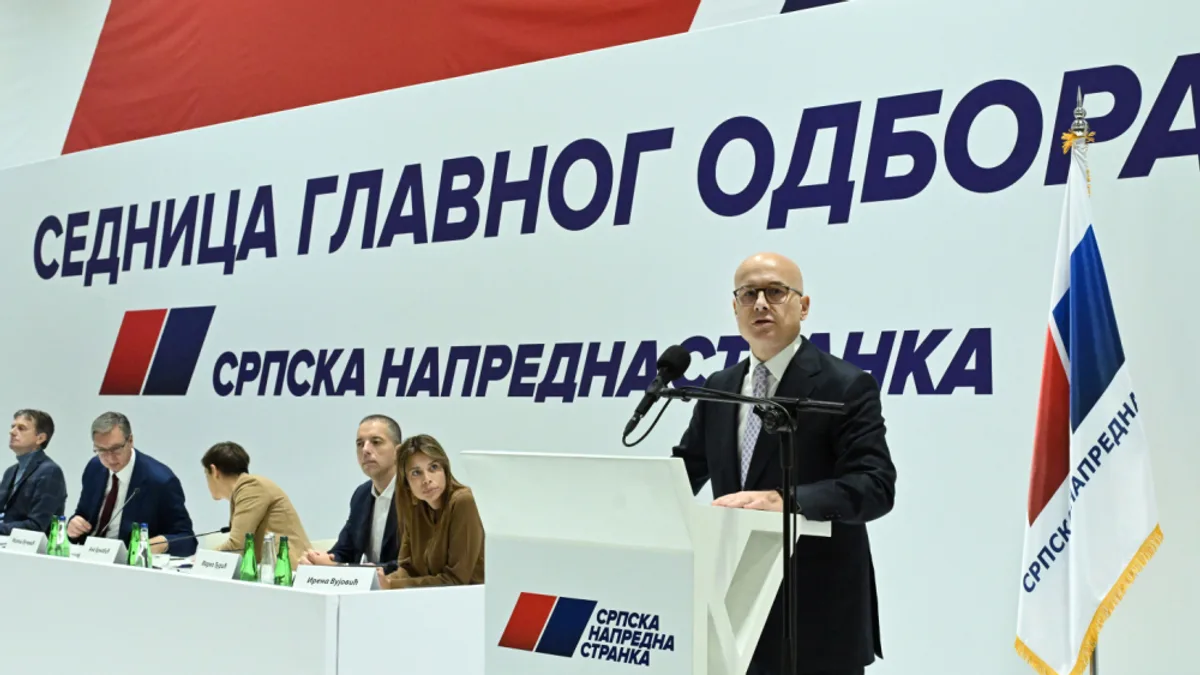
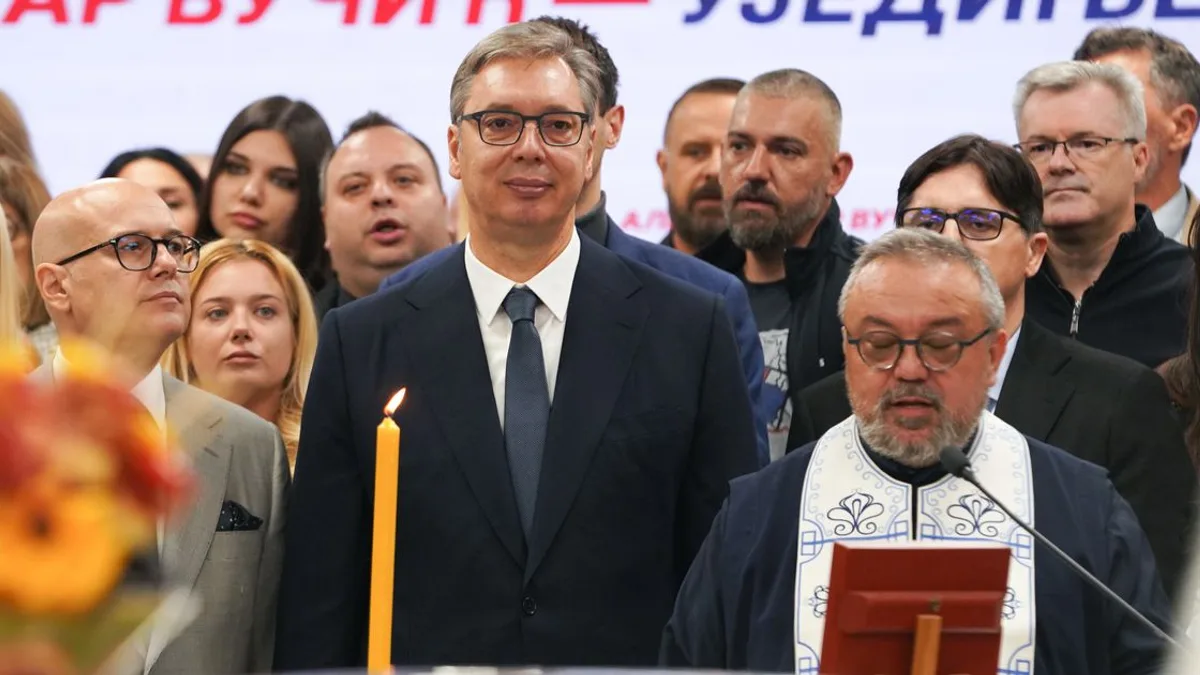
At the top of the Serbian Progressive Party, a Main Board session on 17 June is expected to decide on the electoral list. According to a source close to the party leadership, the list could, for the first time since 2014, include pre-election coalition partners, with five to eight places for smaller parties’ representatives. President Aleksandar Vucic, who on 23 May on RTS openly mentioned a law on cleansing the police, thereby signalled the ruling coalition’s campaign narrative: “renewing institutions from within”.
The student plenums, which have scheduled a general plenum on 30 May with an item on adopting a written declaration, are also entering a period of discussion on their own political exposure. The plenums reject forming a party but leave open the option of backing a particular electoral list under certain programme conditions.
According to figures from the Belgrade-based Centre for Policy Research, polling carried out from 18 to 22 May, just before the Slavija protest, puts the Serbian Progressive Party at 31.4 per cent, down 4.2 percentage points from the same institute’s February poll. The Socialist Party of Serbia stands at 5.8 per cent, while the combined rating of the opposition parties that called for Vasiljevic’s dismissal exceeds 38 per cent, which the institute’s director Aleksandar Ivkovic judges “leaves room for an uncertain electoral outcome if the vote is held in autumn 2026 without further crises”.
Will the SNS Main Board session on 17 June announce a concrete election date?