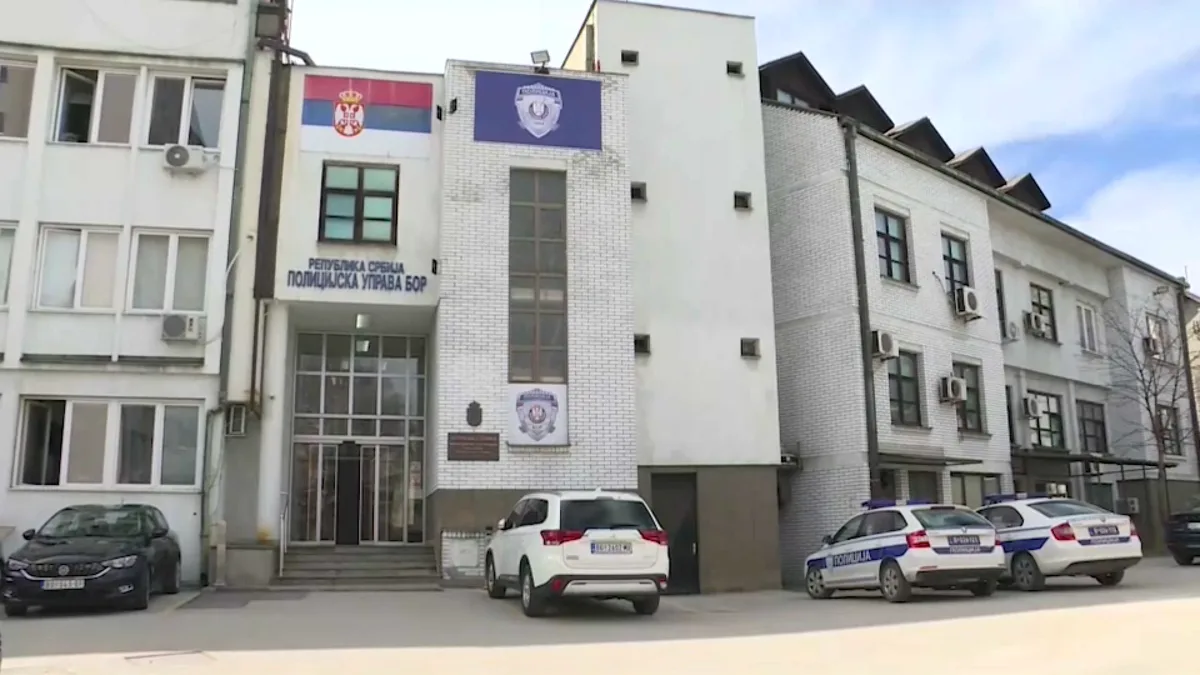
Serbia's anti-corruption department upgraded to a Service
Through a change to the staffing structure, the former Department for Combating Corruption has become a Service within the Criminal Police Directorate, with more specialized officers.

- The former Department for Combating Corruption has been upgraded to a Service for Combating Corruption.
- The Service remains within the Criminal Police Directorate (UKP).
- The change comes through a revised staffing structure adopted by the Serbian government.
- The Ministry announced a higher number of officers specialized in corruption and financial crime.
The former Department for Combating Corruption has been upgraded to a Service for Combating Corruption within the Criminal Police Directorate (UKP), the Ministry of Internal Affairs announced on 28 May. The change follows a revised staffing structure at the Ministry, adopted by the Government of Serbia. According to the Ministry, the aim is to further strengthen its personnel and operational capacities in tackling corruption and financial crime.
In practical terms, this is an organizational reform rather than a single police operation. The unit that had until now existed as a department within the criminal police gains the status of a Service, which in the police hierarchy means a higher organizational rank and, per the statement, additional positions for officers specialized in such cases. The Service remains part of the UKP, that is, under the umbrella of the criminal police, rather than as a separate agency outside the Ministry.
Why this matters
The rank of an organizational unit in the police is not merely an administrative question. A higher rank typically brings a broader mandate, more staff and greater autonomy in handling complex investigations. Corruption and financial crime are the kind of cases that require sustained operational work, financial analysis and coordination with prosecutors, so the number of specialized personnel is directly tied to the capacity to bring cases to a conclusion at all.
The Ministry described the creation of the Service as a continuation of the systematic strengthening of the state’s institutional response to corruption and financial crime. It cited the results of the former Department, as well as the increasingly complex challenges in detecting and prosecuting such offenses.
It is worth separating two things that are easily conflated in public debate. One is this reorganization, that is, the change in the unit’s rank and headcount. The other is individual police operations and arrests, which follow their own pace and are not the subject of this decision. The Ministry’s statement of 28 May concerns only the organizational change and the record of work, not any new, individual case.
What do the former Department’s numbers show?
Alongside the announcement, the Ministry released a record of the former Department’s work since its establishment. According to those figures, it filed 3,705 criminal complaints against 7,975 persons, while 3,673 people were arrested on suspicion of committing offenses in the area of corruption and financial crime.
In total, the Ministry says, 7,633 criminal offenses were uncovered, causing material damage of more than 47.5 billion dinars, while unlawful proceeds were estimated at over 45.3 billion dinars. The Ministry presents these figures as an argument in support of the decision to upgrade the Department into a Service.
The creation of the Service for Combating Corruption represents a continuation of the systematic strengthening of the state’s institutional response to corruption and financial crime.
Based on the available statements, it remains an open question exactly how many new staff the Service will receive and over what time frame, as those details were not specified in the public announcements. Likewise, the available sources do not indicate that the reorganization changes the reporting line: the Service continues to operate within the Criminal Police Directorate, which is part of the Police Directorate of the Ministry of Internal Affairs.
The limits of such a move should also be kept in mind. The shift from Department to Service is an organizational decision taken within the executive branch, through a staffing act, rather than through a law passed in parliament. That means its durability is tied to a government decision, which can alter the unit’s scope and structure by the same procedure. The announced increase in specialized officers is a precondition, but not a guarantee, of more effective work, since the outcome of investigations also depends on cooperation with prosecutors, the quality of evidence and court proceedings that lie beyond the police’s remit.
Reorganizing personnel and organizational units does not in itself guarantee results. Will the move from Department to Service, with the announced increase in specialized officers, actually raise the number of prosecuted corruption cases, or will the effect remain at the level of administrative rank?