Police Ignore Prosecutor Orders, Reform Demanded
From the General Staff case to the Novi Sad canopy collapse, the Interior Ministry increasingly fails to act on prosecutor orders. Prosecutors have sought a prosecutorial police for twenty years.

- The Prosecutor's Office for Organised Crime sent eight requests for evidence in the Novi Sad canopy collapse case between September 2025 and March 2026, and all went unanswered.
- In the General Staff case, the police did not act on the prosecution's arrest orders.
- Lidija Komlen Nikolic of the Prosecutors' Association says appeals to superiors, the minister, the government or parliament produce no results.
- In February 2026 CEPRIS proposed specialised investigative units, while prosecutors have spent more than twenty years calling for a prosecutorial police answerable to the prosecution.
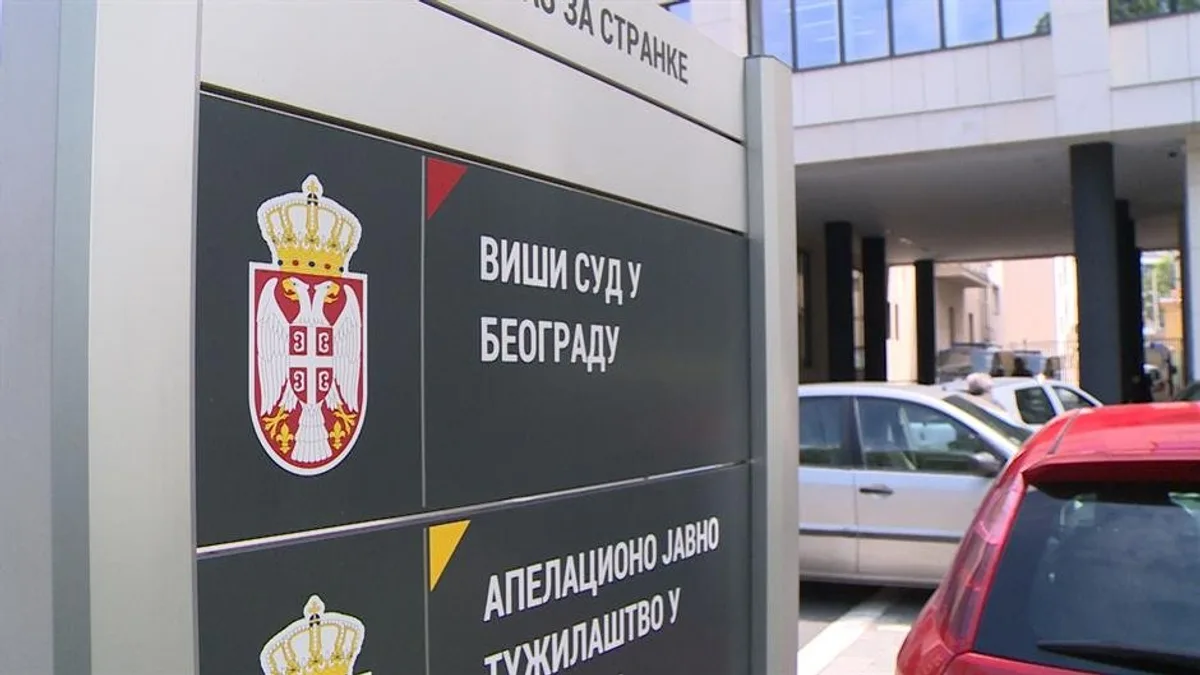
A problem that has smouldered in Serbia’s justice system for years comes down to one simple picture: a prosecutor signs an order, and the police do not carry it out. With growing frequency, the Interior Ministry fails to act on requests and orders from the prosecution, and the result is that investigations stall before they have properly begun.
The Serbian Prosecutors’ Association warns that this is not a matter of isolated cases but of a system in which a prosecutor nominally directs the investigation yet has no apparatus of his own to enforce his orders. By its account, the blockage stretches from the General Staff case to the Novi Sad canopy collapse, two investigations that have dominated recent months.
How many orders go unanswered?
The figures tell the clearest story. The Prosecutor’s Office for Organised Crime sent eight requests to gather evidence in the Novi Sad canopy collapse case between September 2025 and March 2026, and not one received a reply. In the General Staff case the police did not act even on arrest orders, which effectively halted the investigation at the very point when procedural steps were due.
What goes unchecked also goes unproven. When a prosecutor has no way to enforce an order, evidence is not gathered in time, witnesses are not questioned, and the file simply sits. The Prosecutors’ Association says the usual channels of pressure on the police yield nothing:
Appeals to superior officers, the minister, the government or parliament produce no results.
That is how Lidija Komlen Nikolic of the Prosecutors’ Association described the situation, noting that prosecutors have no lever to compel the police to act. It raises the question of what the legal provision making the prosecutor the head of the pre-trial procedure actually means, if there is no one to execute what he orders.
Why is a prosecutorial police being sought?
The proposal that keeps returning, for more than two decades, is the creation of a prosecutorial police, a unit subordinate to the prosecution and acting solely on its orders. Prosecutors have pushed this idea for over twenty years, arguing that it is the only way to keep their direction of investigations from existing on paper alone. In February 2026 CEPRIS proposed forming specialised investigative units operating under the control of the prosecution, as a possible step toward the same goal.
The arguments come down to a few points:
- a prosecutor leading an investigation must have an executive arm that carries out his orders,
- specialised units would reduce the dependence of investigations on the will of police leadership,
- a clear line of accountability would end the situation in which no one answers for an order left unexecuted.
The counterargument heard from part of the profession is that a new unit would require staff, funding and a firm legal footing, and that without broader judicial reform it risks becoming yet another institution without real powers. The government has so far offered no concrete response to the proposals, nor announced legal changes that would alter the relationship between the police and the prosecution.
In the meantime, cases such as the General Staff and the Novi Sad canopy remain a test for the whole system. If prosecution orders continue to be ignored, the question ceases to be legal and becomes political: who in Serbia really decides which investigations move forward and which stall?
Would a prosecutorial police finally let a prosecutor who signs an order also receive an answer, or does the problem run deeper than any organisational chart?