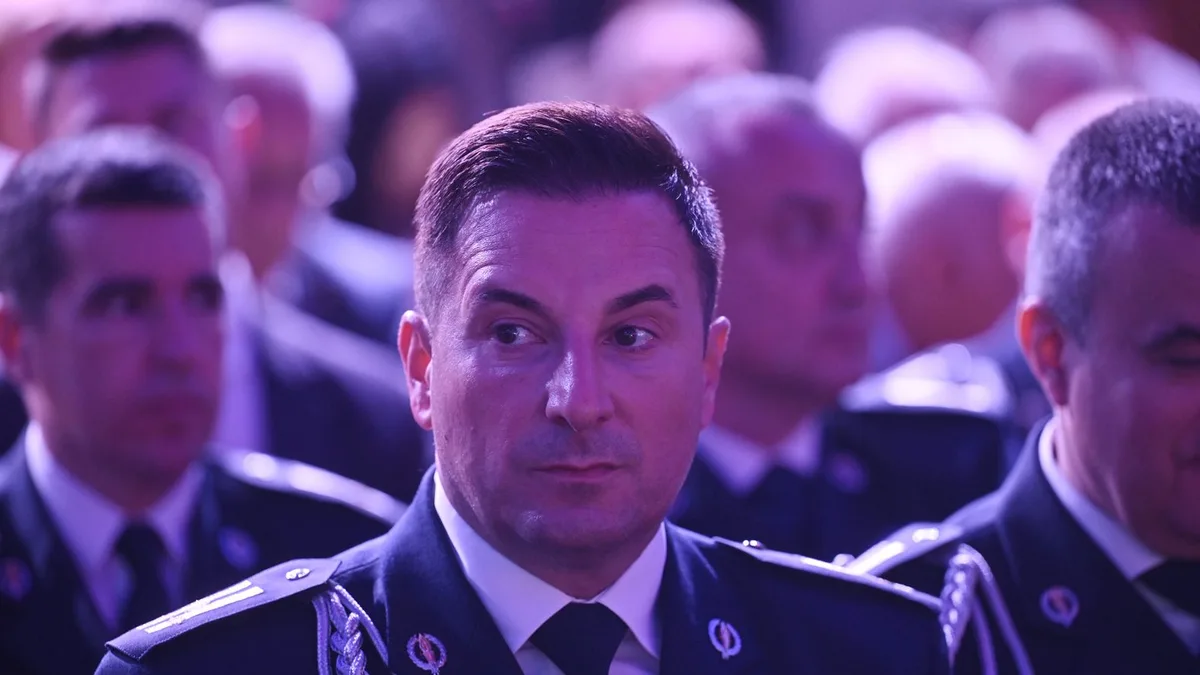
Milic's aiding complaint dismissed, inquiry continues
Belgrade's Higher Public Prosecutor's Office dismissed the complaint against Veselin Milic for aiding the perpetrator, as he was not in restaurant 27, but continues the inquiry into failure to report the crime.

- Belgrade's Higher Public Prosecutor's Office dismissed the criminal complaint against Veselin Milic for aiding the perpetrator after the crime.
- Prosecutors say there is no evidence and that Milic was not in restaurant "27" on Senjak when the murder occurred on May 12.
- The case is not closed: prosecutors continue gathering evidence on failure to report the crime and its perpetrator.
- Milic is suspected of having learned of the event that night, after the restaurant owner informed him between May 12 and 13.
Belgrade’s Higher Public Prosecutor’s Office dismissed the criminal complaint against Veselin Milic, the removed chief of Belgrade police, for the criminal offense of aiding the perpetrator after a crime was committed. The decision concerns one part of the case tied to the murder in restaurant “27” on Senjak.
Prosecutors stated that there are no grounds for suspicion that a criminal offense prosecuted ex officio was committed. By that assessment, there is no evidence that Milic aided the perpetrator, because he was not at the scene at the time of the crime.
Why was the aiding complaint dismissed?
Prosecutors say that, based on the collected evidence, it was established that Veselin Milic was not in restaurant “27” when the murder took place. Aleksandar Nesovic, better known as Baja, was killed on Senjak on May 12, and part of the complaint charged Milic with helping the perpetrator avoid detection after the crime.
Since, in the prosecution’s assessment, he was not present at the time of the crime, the suspicion that he could have taken part in concealing or aiding immediately after the murder fell away. It is important to define the scope of this decision. It concerns one segment of the case, not an assessment of the whole matter.
There is no evidence indicating that the accused committed the criminal offense of aiding the perpetrator after a crime was committed, the Higher Public Prosecutor’s Office in Belgrade states in its position.
What prosecutors are still investigating
Dismissing this part of the complaint does not mean the case is closed. For the offense of failing to report a crime and its perpetrator, prosecutors are continuing to take evidentiary actions. The focus is the question of what Milic knew and when.
According to the investigation, evidence suggests that Milic had knowledge of the event in restaurant “27” on the night of May 12. He is suspected of being informed of the incident by the restaurant owner between May 12 and 13, and of failing to report that event as a public official.
The Senjak murder inquiry is being conducted against several persons. On June 3, prosecutors dismissed the complaint against three officers from Milic’s security detail, reasoning that they were not at the scene when the murder occurred. The decision on Milic’s part of the case now separates, in a similar way, what has been proven from what is yet to be established.
This shifts the inquiry from the question of direct involvement to the duties Milic held as a senior police official. At this stage these are suspicions and prosecution claims, so the presumption of innocence applies until any indictment is confirmed and the court rules.
How will separating these two questions, presence at the scene and the duty to report, affect the further course of the Senjak inquiry?