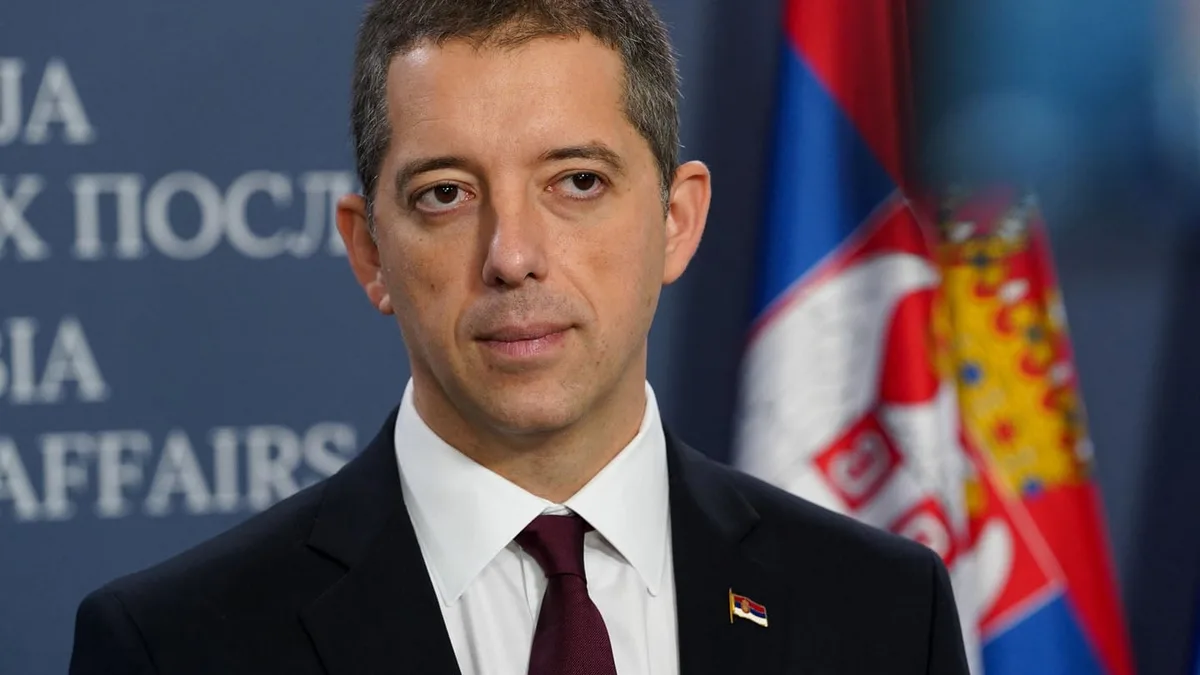
Djuric in Washington: Serbia Joins Artemis, a New Era Opens
Foreign Minister Marko Djuric signed Serbia's accession to NASA's Artemis program in Washington, as the State Department signals a new era of relations ahead of the first strategic dialogue session.

- Serbia became the 69th signatory of NASA's Artemis program in Washington, with Minister Marko Djuric signing the accession.
- Djuric took part in a summit on countering terrorism and political extremism hosted by Secretary of State Marco Rubio.
- The first session of the Serbia-U.S. strategic dialogue is set for Friday, July 17.
- The State Department says the dialogue reflects a new era of relations between the two countries.
Foreign Minister Marko Djuric signed Serbia’s accession to the Artemis program in Washington, making the country the sixty-ninth signatory of the accords that bring together nations around space exploration under the U.S. space agency NASA. The signature came on Wednesday, a day before the official opening of the first strategic dialogue between Belgrade and Washington.
In the American capital, Djuric also attended a summit on countering terrorism and political extremism, hosted by Secretary of State Marco Rubio. The gathering drew ministers from around sixty countries, and the meeting between the two top diplomats took place inside the State Department, framed by the flags of both nations.
A single diplomatic day thus brought together two tracks that Belgrade has pursued in parallel for years: technological and scientific cooperation with the United States, and a political conversation about the state of relations. Joining the Artemis Accords is more than a symbolic gesture. It formally brings Serbian scientific and technological institutions into a framework where space-related data, standards, and research projects are shared.
What does the strategic dialogue deliver?
The first session of the Serbia-U.S. strategic dialogue is scheduled for Friday, July 17. It is a format that, according to the announcements, is meant to institutionalize communication between the two governments and move talks out of the realm of individual visits into a standing mechanism.
The State Department says the strategic dialogue reflects a new era in relations between the United States and Serbia. As the American side described it, the talks will span three broad areas: regional peace and stability, strengthening business and educational ties, and cooperation in energy and technology. Each of those themes carries its own weight. Regional peace also touches on Western Balkans questions on which Washington and Belgrade have held differing positions for years, while energy and technology cooperation opens the door to concrete business arrangements.
Djuric described the accession to Artemis as a historic moment for Serbian science. His message from Washington was that the step writes a new page in the country’s space exploration, while also widening a web of partnerships that reach beyond any single project.
Why this step differs from earlier visits
Relations between Belgrade and Washington have moved in waves in recent years, from tension to thaw, often tied to the question of Kosovo and Metohija. What sets this week apart is that the cooperation is being formalized through two written frameworks, the Artemis agreement and the strategic dialogue mechanism, rather than remaining at the level of goodwill statements.
For Serbian diplomacy, that means a commitment to sustain the talks continuously, without relying on occasional visits. For Washington, which called the dialogue a sign of a new era, it is an attempt to place the relationship with Belgrade on a more predictable footing. How those announcements translate into concrete results will become clearer with the first topics the two sides open on Friday.
Whether the strategic dialogue produces tangible progress in the economy and science, or remains a framework without substance, will depend on how closely both sides stick to the agreed schedule. What do you expect from this new chapter in Belgrade-Washington relations?