Ministry Orders Special Review of Belgrade University
After the University Council voted to change how the rector is elected, the Ministry of Education announced an extraordinary inspection over alleged irregularities in the procedure.

- The Ministry of Education announced an extraordinary inspection of the University of Belgrade; the statement was published around 1:46 p.m.
- The trigger was the University Council's vote to change the procedure for electing a rector.
- Under the new rules a candidate must win a majority in the Senate before reaching the Council, where previously a third was enough.
- The Ministry cites the Law on Higher Education, which bans political activity at universities.
The Ministry of Education announced on July 20 an extraordinary inspection of the University of Belgrade, saying it will examine all relevant facts and circumstances of the process that amended the university’s statute. The statement was published around 1:46 p.m., a day after the University Council voted to change the way the rector is elected.
The Ministry says the inspection was prompted by suspected irregularities in the vote itself. At the center of the dispute is a provision that raises the bar for candidates: instead of the previous one third, a prospective rector must now win a majority in the Senate before the name even reaches the Council, which makes the final decision.
What exactly changes in the procedure
The statute amendments tighten the condition for entering the race. Until now, support from one third of Senate members was enough for a candidate to be forwarded to the Council. The new rule demands a qualified majority, which, in the proposers’ design, narrows the field reaching the Council to a single name carrying the broadest backing of the academic body.
Iva Draskic Vicanovic, dean of the Faculty of Philology and one of the initiators of the change, defends the new model as a correct and fair procedure for electing a rector. In her account, the goal is for the Council to receive a candidate who has already secured clear majority support in the Senate, rather than leaving the decision to a body that also seats representatives of the founder, the state.
The Ministry, for its part, puts the question of political activity inside the institution front and center. Its statement stressed that the Law on Higher Education strictly prohibits any political action at universities and other higher education institutions, adding that insisting the rector should come from a particular political camp would run counter to that law.
Is this protecting the law or pressuring autonomy
This is where the constitutional substance lies. University autonomy is a constitutional category, while an inspection is a legal instrument of the state. The question raised in academic corridors is not whether the Ministry has the right to monitor the legality of the university’s work, but whether that instrument is being triggered selectively, at the moment the University changes its own rules of the game.
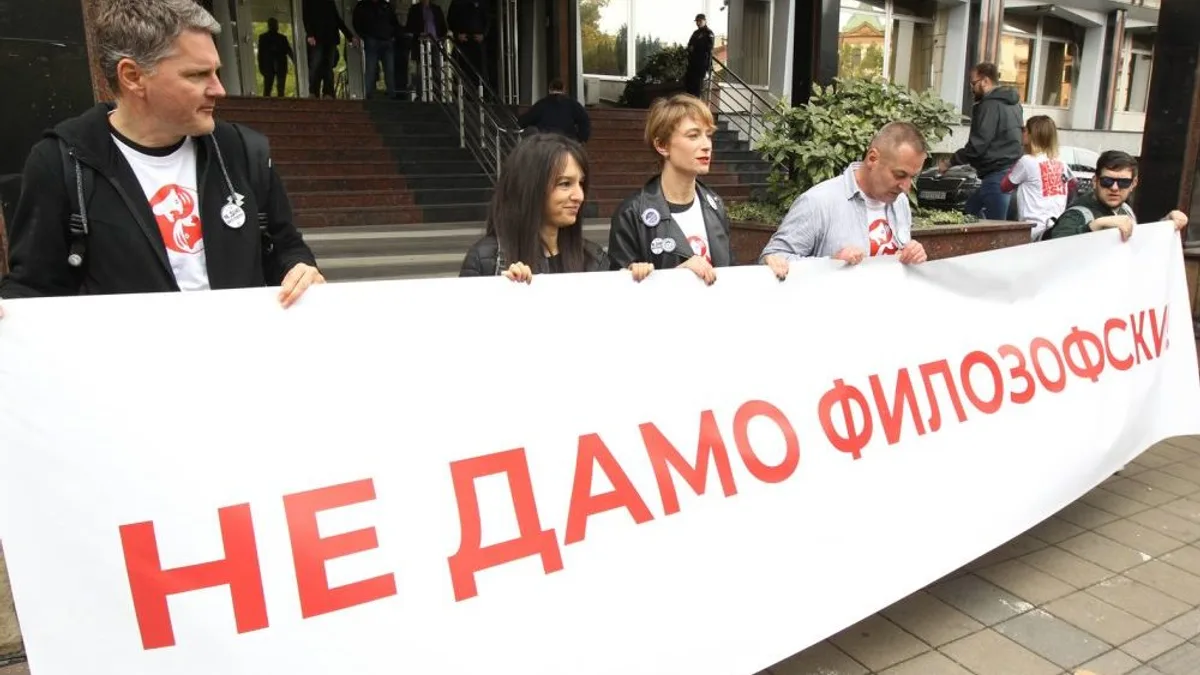
The inspection arrives at a sensitive time, amid a student campaign and months of tension between the academic community and the government. For one side, the Ministry’s move is a legitimate check on whether the procedure followed the law. For the other, it is a fresh wave of pressure on an institution trying to independently arrange the election of its own leadership.
The next step now rests with the inspectors, whose findings could either confirm the legality of the vote or challenge the statute amendments before the process even reaches the election of a new rector. Until then, one question stays open, and neither side has a ready answer: where is the line between the state’s legal oversight and the constitutionally guaranteed autonomy of the university?