Vucic: Government Resigns First, Then I Call Elections
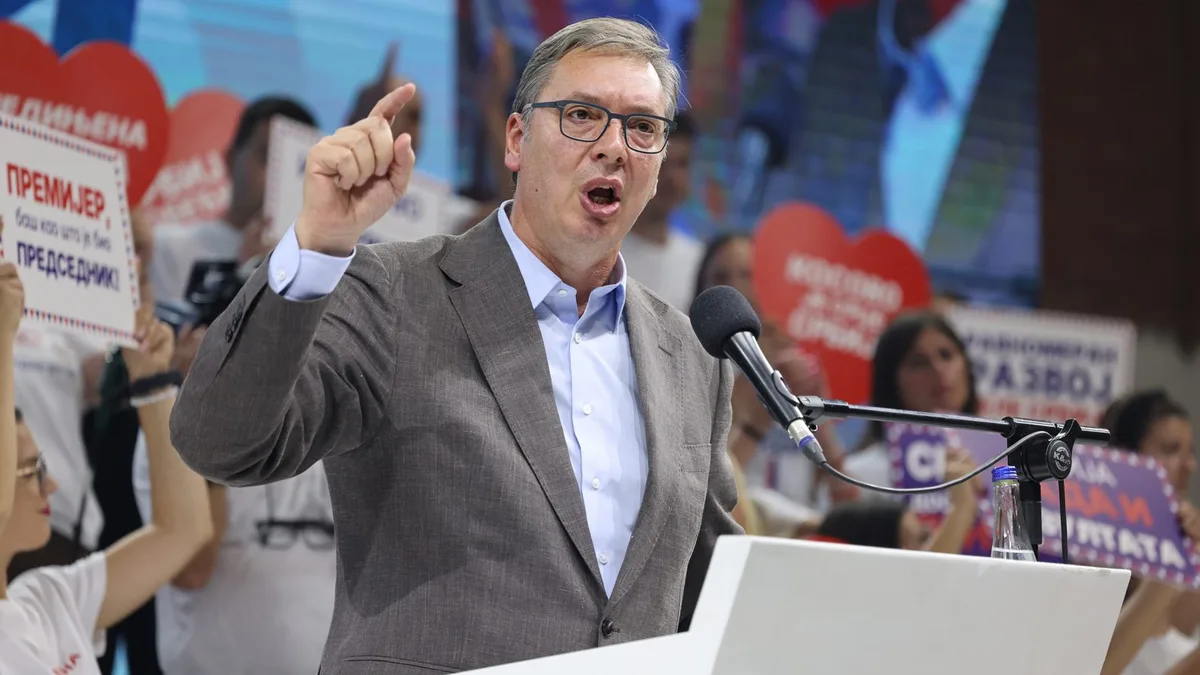
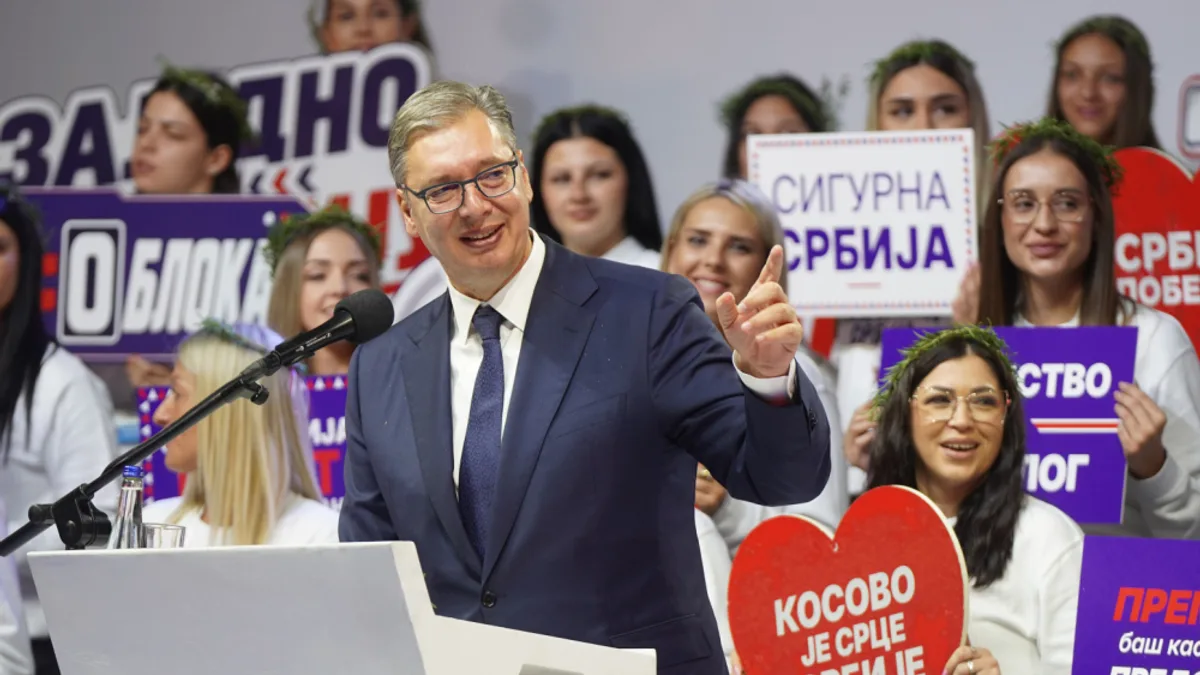
In Svilajnac, the president spelled out the sequence for the first time: the government resigns, then parliamentary elections are called, with his own exit from office soon to follow.

- In Svilajnac, Vucic laid out the sequence for the first time: first the government resigns, then parliamentary elections are called.
- He will remain president only "a few days, or two weeks at most" to finish important state business.
- He rejected the legal option of becoming prime minister without elections: "that is not an option for me," insisting on "a vote from the people."
- He said he will not campaign while president, and will seek support for the "United Serbia" list by touring the country.
Serbian President Aleksandar Vucic said on Sunday in Svilajnac that the coming political transition will follow a precise order. First, he stated, he and the government will resign, and only after that will elections for members of parliament be called. It was the first time he publicly detailed a sequence that had circulated in political circles for weeks.
“At that moment, when I receive notice from the government and the National Assembly, I will call elections for members of parliament,” Vucic said. He added that he would stay in office only briefly, “a few days, or two weeks at most,” because, he said, he has “many important tasks” concerning the state to complete before stepping down.
Why does Vucic choose elections over a shortcut?
Serbia’s constitution allows parliament, where a majority exists, to elect a new prime minister without calling elections. Vucic explicitly rejected that path. “There is an option for me and the government to resign and for the Assembly to elect me prime minister within two days, if I have a majority in the Assembly, but that is not an option for me,” he said.
Instead, the president is insisting on a mandate that comes directly from voters. “When and if I seek a vote from the people for that office, only once I receive that vote from the people can I possibly take it on,” he specified. The message is clear: a return to executive office, should it happen, must pass through an electoral cycle rather than a parliamentary shortcut.
At the same time, Vucic drew a line around his current role. While he remains president, he said, he will not run a campaign. “I will not take part in the campaign,” he said, tying any active push on the ground to the moment he ceases to be head of state.
A calendar that hinges on a single move
The entire schedule, by Vucic’s account, rests on one trigger: the government’s resignation. Until it is submitted and the Assembly and the president are formally notified, the election date stays open. That means the pace of the transition is controlled by the top of the executive itself, not by a fixed calendar.
For the period after he steps down, the president promised a classic ground campaign. “I will get into my car, my Skoda is waiting for me, and I will travel across Serbia from place to place to ask people for support,” he said, referring to the “United Serbia” list around which he plans to rally voters.
An open constitutional question runs through any such transition: where is the line between the office of head of state and a party campaign when only “two weeks at most” separate them. Vucic argues he respects that line by delaying the campaign until his presidential mandate ends. Critics of such arrangements warn that any move by a sitting president into executive office tests the separation of institutions, regardless of the formal order of steps.
Does the sequence Vucic described, resignation first and elections after, read to you as a clear democratic mandate or as a carefully timed political maneuver?