Student list surges to around 40 percent in NSPM poll
A New Serbian Political Thought survey puts the student list near 40 percent among decided voters, a jump of almost 10 points. Editor Djordje Vukadinovic ties part of the rise to a change in methodology.

- The student list draws support of around 40 percent among decided voters, according to the NSPM survey.
- That marks a gain of nearly 10 points over the previous measurement.
- The ruling Serbian Progressive Party held steady, with no significant losses in the same poll.
- NSPM editor Djordje Vukadinovic attributes part of the jump to a removed survey option rather than a real shift of votes.
Support for the so-called student list has climbed to around 40 percent among decided voters, according to the latest survey by New Serbian Political Thought (NSPM). Compared with the previous measurement, that is a rise of nearly ten points, bringing the list within reach of the Serbian Progressive Party (SNS) at a distance that looked out of reach only a few months ago.
The survey was published this week, as the electoral cycle enters its final stretch and both the government and the opposition track every new figure closely. NSPM editor Djordje Vukadinovic, who authored the analysis, was careful to say the result should be read with caution, because part of the jump does not come from an actual change in the mood of the electorate.
Where does the nearly 10-point jump come from?
Vukadinovic noted that earlier surveys included a separate option for voters who were “against the regime, but still undecided” about whom to support. That category was dropped in this cycle, so a good share of those respondents has now shifted toward the student list or toward abstention. In other words, part of the growth is methodological rather than the product of fresh voter mobilization.
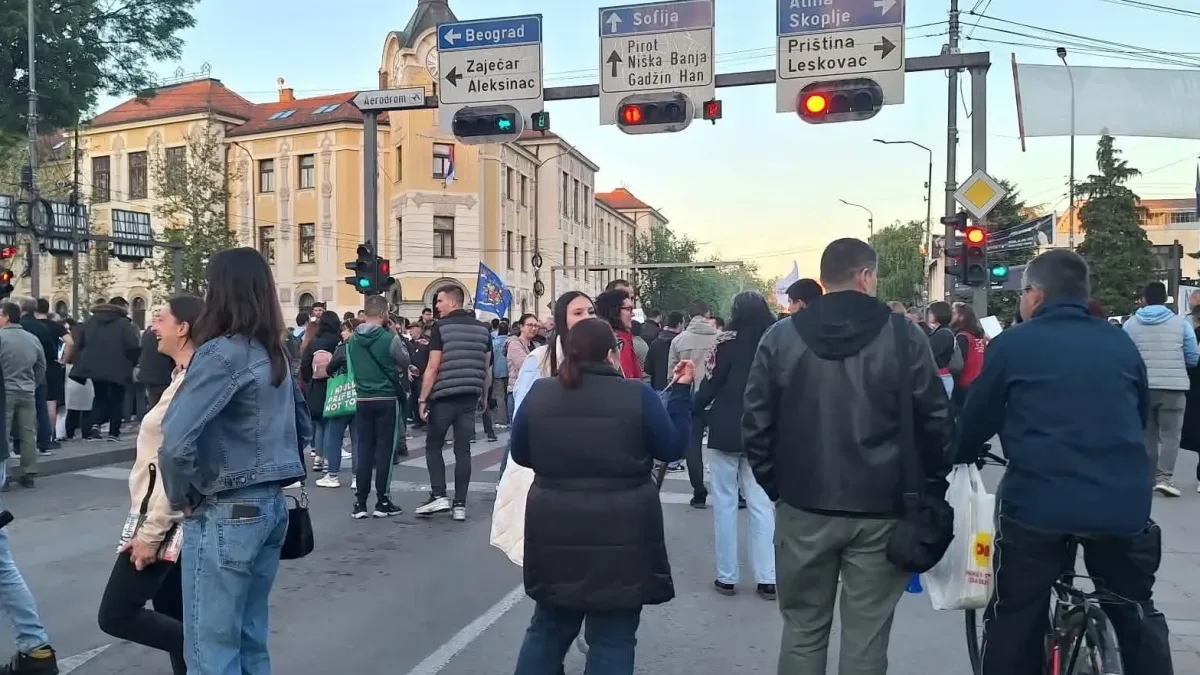
That does not make the trend meaningless. Over the past year, riding a wave of protests that drew large crowds, the student list has built a recognizable political identity and entered a zone where it competes seriously for first place. But the difference between real and statistically driven growth will be decisive for how the coming weeks are read, and for how much room is left for further gains.
The Progressive Party, by contrast, held steady in the same survey and recorded no significant losses. Vukadinovic judges that the government has for now managed to consolidate its own base, while its rivals moved up mainly at the expense of previously undecided voters. That picture describes a tight race, not a collapse on one side.
Why will the end of the campaign decide it?
If the two strongest lists are near parity, the center of gravity shifts to the final weeks of the campaign, to turnout, and to how the still undecided behave. The NSPM analysis draws a parallel with the recent Hungarian elections, where the closing phase, not an early polling trend, shaped the final outcome. The comparison is instructive precisely because it warns that an early surge need not hold until election day.
Within the opposition, the rise of the student list is read as confirmation that change is possible and that the electorate is consolidating around a single alternative. From the government, predictably, the message is that polls are volatile and that the stability of SNS support will decide matters in the end. Both sides, however, concede the same fact: the gap between them has narrowed, and any misstep in the final stretch could cost more than in earlier cycles.
For readers, one question remains that no single survey can settle. Does this figure of around 40 percent describe a genuine turning point in voter sentiment, or is it a statistical shift that will melt away by election day, once voters face an actual ballot?