Central bank: NGOs got 1.3 billion euros from abroad
The National Bank of Serbia broke down foreign inflows to associations and foundations year by year, from 2021 to 2025. It would not say who received the money.

The National Bank of Serbia (NBS) has published a year by year breakdown of foreign currency arriving in the accounts of associations and foundations registered in Serbia. Over five years, from 2021 to 2025, the total comes to 1.3 billion euros. The letter was released on July 30 by Vuksa Dragovic, leader of the Serbian Sovereignists movement, who had asked the question, and by that same evening the Speaker of the National Assembly, Ana Brnabic, had responded to the figure.
The inflows, as listed by the central bank:
- 2021: 215 million euros
- 2022: 230 million euros
- 2023: 288 million euros
- 2024: 310 million euros
- 2025: 265 million euros
Dragovic put three questions to the bank. The first asked for annual totals, the second for the 50 associations and foundations that received the most, the third for the 10 countries the money came from. Only the first was answered. On the other two the NBS said the law does not allow it to release the information.
“This is a very interesting answer,” Dragovic said as he read out the letter.
Why 2024 stands out
The highest figure, 310 million euros, falls in 2024, the year the canopy collapsed in Novi Sad. Between 2021 and that year the inflow grew by 44 percent, without a single dip along the way.
The break comes in 2025, when the amount drops to 265 million, or 45 million euros less than the year before. It is the only decline in the series. That year also coincides with the worldwide freeze on programmes run by the United States Agency for International Development (USAID), but the NBS answer does not separate inflows by country of origin, so the numbers alone can neither confirm nor rule out a connection.
Who received the money
Nothing the central bank released contains a single name. Under Serbian law the category of associations and foundations is broad: it covers sports clubs, humanitarian, cultural, professional and religious organisations, not only groups working on public policy. Without the list of recipients the NBS declined to disclose, the 1.3 billion euro total says nothing about how much went to which kind of organisation.
Reactions from the governing side
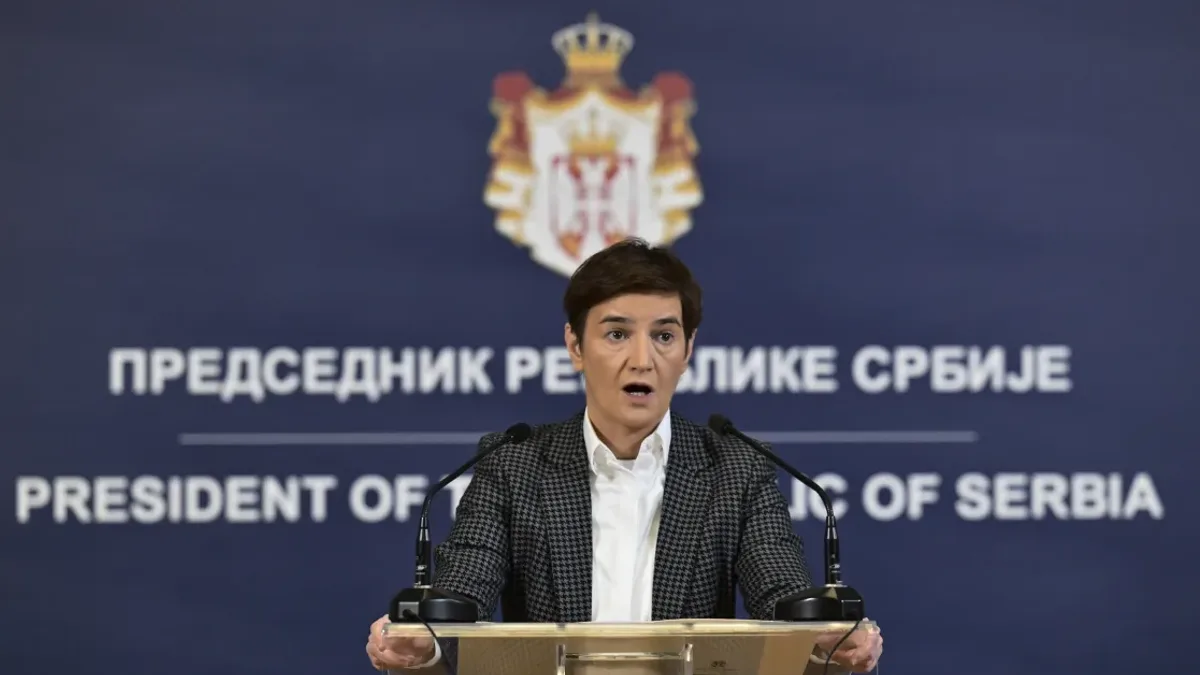
Brnabic spoke at 7.14 p.m. on July 30.
“I had no idea that since 2021 some 1.3 billion euros has come into Serbia purely to finance NGOs.”
The Speaker added that she sees the reason for such inflows in the country’s foreign policy.
“This is happening solely because President Aleksandar Vucic pursues a sovereign and independent policy.”
The following day, at 10.57 a.m. on July 31, Mario Spasic, secretary general of the Anti-Corruption Council, weighed in.
“These are staggering figures. 1.3 billion euros entered certain NGOs in Serbia in only four years, and for what? To make badges with that kind of money, print logos on caps and design flyers? Of course not. This money is being used to bring down Aleksandar Vucic as the sovereign president of the free state of Serbia.”
Spasic also offered an estimate that more than three billion euros has entered Serbia on the same basis since 2014, a calculation of his own rather than a central bank figure. He announced that the Anti-Corruption Council will press for a detailed audit.
No response to those assessments had come from the NGO sector by the time this article was filed. The one piece of information that would move the argument from estimates to names, the list of the top 50 recipients, remains with the institution that says it is not allowed to hand it over.