Sorensen: Dialogue Obligations Don't Stop for Elections
EU envoy Peter Sorensen rejects the who-goes-first logic on Belgrade-Pristina and tells a Kosovo outlet, in his first written interview, that a summit comes only when both leaders deliver results.

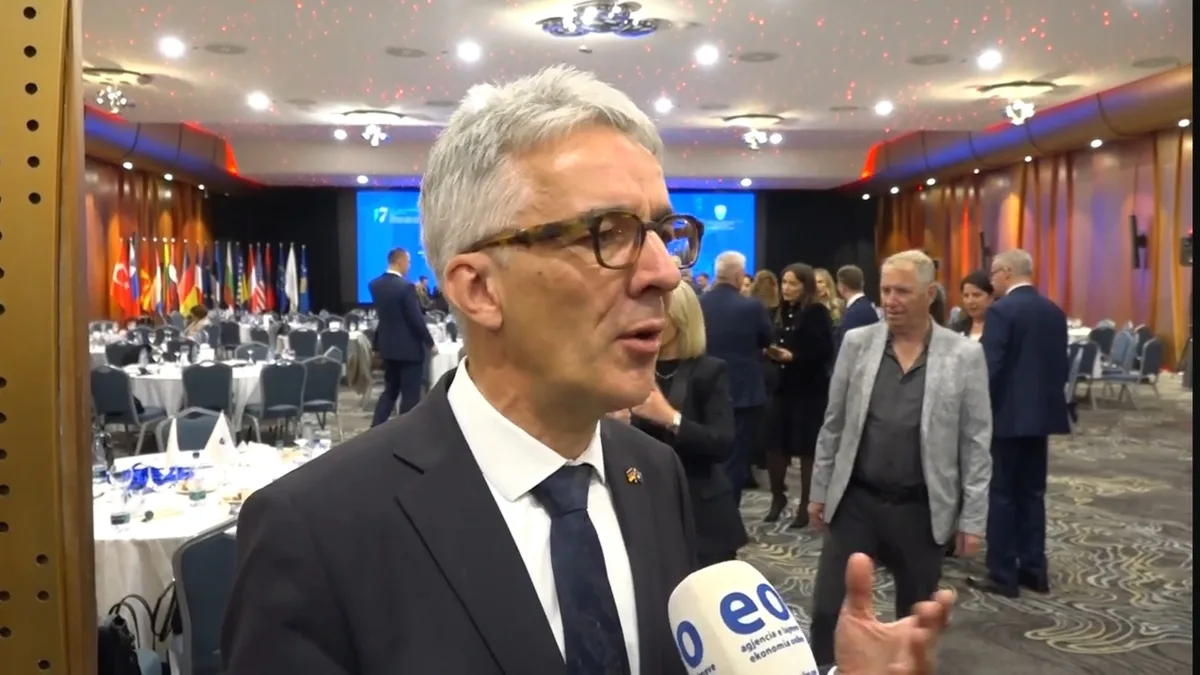
European Union Special Envoy for the Belgrade-Pristina Dialogue Peter Sorensen has rejected the approach in which one side waits for the other to move first on implementing the agreement, saying a new summit at the highest level will not happen until both leaders are ready to walk away from it with a result. He made the point in an interview that Pristina’s Gazeta Express published on August 5, his first written interview with any Kosovo outlet.
The questions were sent to him in July, days after an unannounced visit to Pristina. His assessment of the 2023 Agreement on the Path to Normalization and its Annex is that both remain in force and legally binding on both sides, but that implementation is far below what Belgrade and Pristina committed to. “Implementation is not where it should be. It’s not optional,” Sorensen said. He added that he has told Belgrade and Pristina the same thing.
Who Should Move First?
According to Sorensen, that question is framed the wrong way. “It’s not about who moves first. Neither side should wait for the other,” the EU envoy said.
The obligations he listed run in parallel:
- Under Article 7 of the Annex, Pristina immediately opens talks on concrete arrangements and guarantees for an appropriate level of self-governance for the Serb community
- Belgrade does not oppose Kosovo’s membership in international organizations
- Belgrade accepts Kosovo’s documents and symbols
Sorensen said all three are running late. In doing so, he publicly abandoned the sequence that had operated for years as the dialogue’s working assumption, under which Pristina’s move on Serb self-governance was expected first, with Belgrade’s steps to follow. The political effect of that shift cuts both ways: it strips Pristina of the argument that it is waiting on Belgrade, and it strips Belgrade of the argument that it is waiting for the Community of Serb Municipalities to be formed.
What Brussels Counts as Progress
Sorensen pointed to two concrete results since he took office. The joint commission on missing persons met in a trilateral format for the first time earlier this year, a step that matters to families who have waited decades for answers. The second is a temporary arrangement for Serbian citizens who work and study in Kosovo, who can now obtain work and residence permits.
He also raised the issue of Serbian judges and prosecutors. The European Union, he said, welcomed the withdrawal of their resignations on July 15, then voiced concern over what followed. Accepting resignations that had already been withdrawn, in his assessment, appears incompatible with Kosovo law and with the prescribed procedure. Sorensen said he would not prescribe the process, but that the EU would judge the outcome: whether the judiciary is genuinely multiethnic and whether the Serb community trusts it. He pointed to the 2013 Brussels Agreement and the 2015 Justice Agreement, in force since 2017.
That reminder carries weight. Thirteen years have passed since the Brussels Agreement was signed in April 2013, and the Community of Serb Municipalities still has not been formed. The 2023 Annex uses the word “immediately” for talks on self-governance, and that deadline is now running into its third year.
A Leaders’ Summit Is Not a Reward
Asked when a new meeting between Aleksandar Vucic and Albin Kurti could take place, Sorensen said he would not name a date, and that both sides know exactly what it would take to get there.
“A high-level meeting is not a reward and not a photo opportunity,” Sorensen said, originally in English.
A summit, he said, is convened when it can produce something, large or small. “It will be convened when circumstances allow it and when both leaders are ready to deliver results,” the EU envoy said, adding that the High Representative stands ready to call one under that condition.
Asked about statements coming out of Belgrade, including one on ethnic cleansing, Sorensen repeated the Union’s official position.
“There is no place in Europe for rhetoric that advocates, justifies or relativizes ethnic cleansing,” he said, originally in English.
Such statements, he added, insult victims and survivors, are incompatible with the European path, and run counter to obligations freely undertaken in the dialogue, regardless of which side they come from. The price, he said, is paid by those who have to keep living next to one another long after the statements themselves are forgotten.
An Election Calendar Is No Excuse
A long technical government mandate narrows what can be decided and delivered, Sorensen acknowledged when discussing Kosovo’s political situation. He immediately added that the obligations under the Agreement bind Belgrade and Pristina, not just the governments currently in office.
“Obligations don’t stop applying because of an election calendar or coalition talks,” Sorensen said, originally in English, adding that this holds equally for Pristina and Belgrade.
That sentence is addressed to both capitals, and it is hard to read it as diplomatic courtesy.
Sorensen also addressed expectations that High Representative Kaja Kallas would become more directly involved. He said she is fully briefed, that he reports to her, and that normalization is on her agenda, but he warned against the assumption that engagement from a higher level in Brussels could substitute for decisions that only Belgrade and Pristina can make. No outside actor, he said, can implement the agreements in their place.
The first measurable outcome will not come from a leaders’ summit. It will come from what Kosovo’s institutions do with the resignations of Serbian judges and prosecutors withdrawn on July 15, since Brussels is already grading that, with no date attached and no announcement made.