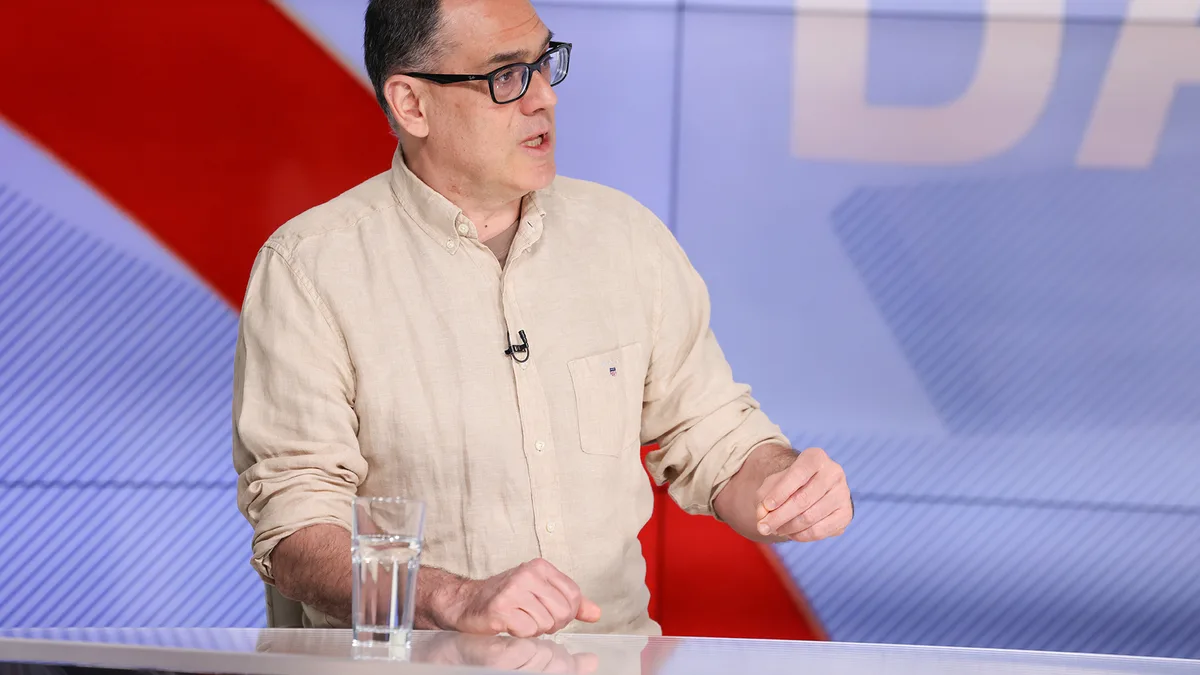
Six Journalists in Exile, Aleksandar Radic Is the Latest
Six journalists have left Serbia in two years, the latest Aleksandar Radic, now wanted on an arrest warrant. Of 111 reported threats against journalists, only one case has been concluded.

Military analyst Aleksandar Radic is the latest name on a list of six journalists in exile, all of whom have left Serbia over the past two years because their safety was under threat. To colleagues and journalist associations he is in exile; to the Higher Public Prosecutor’s Office in Belgrade he is a fugitive. A criminal complaint was filed against him in absentia for preparing acts against the constitutional order and security of the Republic of Serbia and for disclosing classified information, and an arrest warrant has been issued.
The tally has been compiled in one place for the first time, presented by Veran Matic, chairman of the ANEM Governing Board and a member of the Standing Working Group for the Safety of Journalists, who took part in relocating all six cases.
Who Left, and Why
The first to leave the country was writer, columnist and television host Marko Vidojkovic, in early 2023, at the time he was co-hosting the podcast “Dobar, los, zao” (“Good, Bad, Evil”) with Nenad Kulacin. He has been in exile for more than three years.
The names of the remaining four have not been published. Some do not want them released because they are trying to live and work normally, others are in specific legal situations. Matic described their profiles:
- an investigative journalist
- a female journalist subjected to constant threats and insults
- a local journalist who received death threats from a local criminal who had also stood trial for murder
- a journalist and professor who, along with his family, had been threatened for years
What they have in common, Matic says, is years of enduring death threats and organized targeting campaigns while the perpetrators went unpunished. In some cases, suspects fled the country and the endangered journalist was never even notified.
“Exile is not the end of the problem. That is when a new struggle begins: how to secure legal status, a job, housing, schooling for the children,” Veran Matic said.
A second group adds to that count. Six students and activists facing criminal prosecution and political pressure have also been in exile for more than a year. Taken together, twelve people have left the country for the same reason within a short span of time.
Timeline of the Radic Case
Radic’s path from commentator to officially designated fugitive can be traced through dates. He first spoke publicly about the use of a sound cannon against protesters in Belgrade on March 15, 2025. A search of his apartment followed, along with a summons to the Military Police to attend the forensic examination of his seized computers. On June 23, TV Informer aired surveillance footage that included his minor daughter, among it footage of him waiting in a park for her to finish her activities.
“My daughter, who turns 16 in a few days, became a target. On Tuesday, June 23, TV Informer showed her in surveillance footage, and that same day they aired fresh footage of me waiting in a park for her to finish some activities. What do you do when you have that many enemies and they put your child at risk? We left the country,” Radic said, explaining his decision.
The criminal complaint and the arrest warrant came after he had already left. Matic warns that the consequences reach beyond a single name.
“The Radic case goes beyond the fate of one man. It could have long-term consequences for the freedom of journalistic work,” the chairman of the ANEM Governing Board said.
The reasoning behind that assessment is concrete. The prosecution’s statement quoted parts of Radic’s private communication with several journalists, including initials and details that allow identification, turning the confidentiality of source contact into a concern for everyone in the profession.
What the 111-to-One Ratio Shows
Figures previously published by ANEM measure the scale of the institutional response. From the start of 2025 through June of this year, 111 cases of threats against journalists, media workers and newsrooms were reported to the Special Department for High-Tech Crime of the Higher Public Prosecutor’s Office in Belgrade. One has been legally concluded, and only by being transferred to the Juvenile Department. In 51 cases, police failed to identify a suspect even though the prosecution had requested it.
The closure rate for these cases, then, is below one percent, and in nearly half the reports not even the first step was completed. When a threat was directed at the minister of justice and the chief public prosecutor, the same department issued an identification order the very next day, and an arrest followed a day after that.
Journalists leaving the country, then, is not merely a personal decision but a measure of how well institutions do the job they exist to do. The next test is a legal one: how the prosecution will handle an arrest warrant issued against a man who left the country after his minor child ended up in a segment aired by a television station with a national frequency.