Vucevic Says Serbia's Election Is Less Than 100 Days Away
The Serbian Progressive Party leader put the election deadline in days, not months, for the first time. By law, 45 to 60 days must pass between the call and the vote.

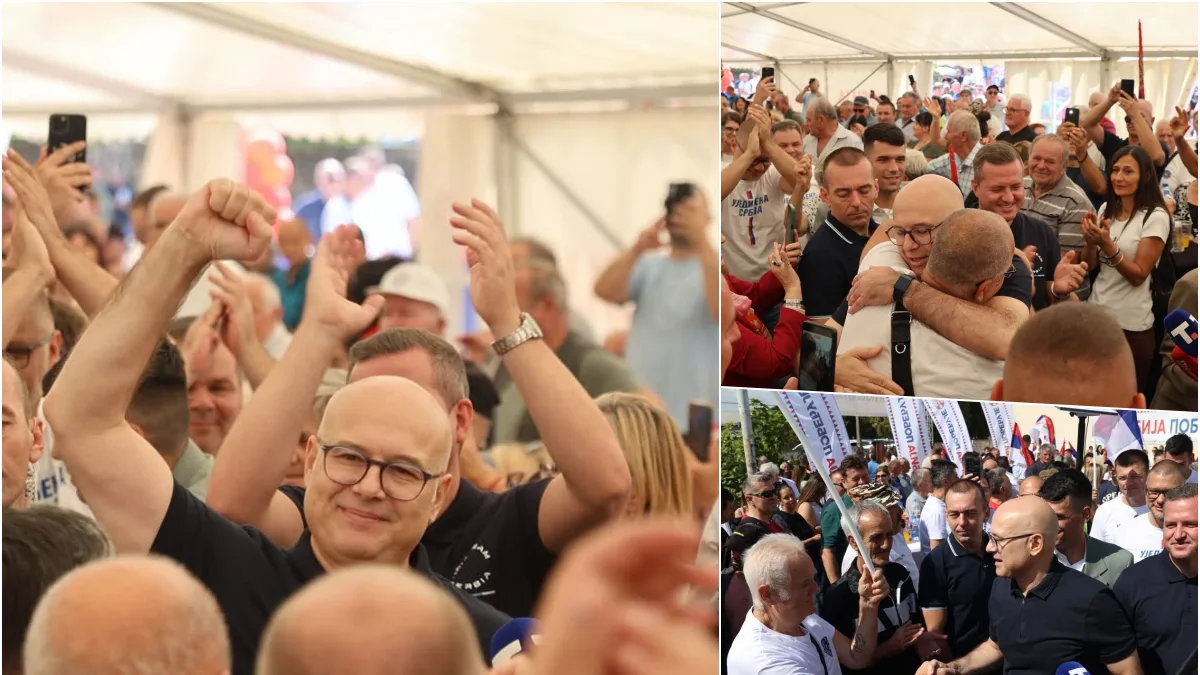
Serbia’s election has, for the first time, been given a deadline counted in days. Milos Vucevic, president of the Serbian Progressive Party (SNS) and adviser to the president of Serbia for regional affairs, said on August 13 on the Morning News program of Radio Television of Serbia (RTS) that he believes fewer than 100 days remain before the vote, and called on everyone planning to turn out to end their summer break and start preparing.
“I believe the election is literally upon us, you can almost smell it in the air. Under the constitution and the law, the president of Serbia is the authority who will call it. I believe fewer than 100 days separate us from the election, so anyone resting should be gearing up if they intend to take part.”
He added that every participant should commit, responsibly, to accept whatever the voters decide. On his own camp he was unequivocal: “On behalf of our list, President Vucic has said we will recognize the election results, whatever they turn out to be. We have not heard the same from the other side,” Vucevic said.
What a 100-day deadline means on the calendar
The math is simple, and it leaves little room to maneuver. A hundred days from August 13 falls on November 21, so by Vucevic’s own reckoning, voting would have to happen before that date. The law narrows the window further: no fewer than 45 and no more than 60 days may pass between the calling of the election and the vote itself.
Put those two figures together and the president’s decree would need to land by early October at the latest, with every week of delay pushing the vote closer to December and outside the frame Vucevic himself just set. If the decree were signed in the coming days, polls would open sometime between late September and mid-October.
Until now, the closest anyone had come was naming a month. Aleksandar Vucic said on August 6 that a snap election would be called within days or weeks, and before that, as previously reported, he had named October or November as possible timing for the first time. Vucevic’s statement was the first to translate that window into days.
The ruling side is banking on the result being recognized
Calling on everyone to accept the outcome in advance is not a new theme in Serbian politics, but this time it was framed as a test of how seriously a campaign is being run. Speaking on TV Pink, Vucevic said the campaign would be tough and the race genuinely uncertain, while insisting that the “Aleksandar Vucic, Serbia Must Not Stop” list would concede defeat, congratulate the winner and continue working from opposition if it lost.
In the same RTS appearance, the SNS leader also looked back on last August. He recalled the clashes in Vrbas on August 12, 2025, which he described as street fighting that lasted until the early morning hours, and the attacks on two Serbian Progressive Party offices in Novi Sad on August 13. He said responsibility for those events was a matter for the prosecution and the courts.
The opposition is talking about conditions, not a date
On the other side of the political divide, the question of a date has been overshadowed by the question of the conditions under which the vote would be held. Three messages pointing in that direction landed on the same day:
- The Party of Freedom and Justice said it had submitted evidence to the OSCE’s Office for Democratic Institutions and Human Rights (ODIHR) showing that scrutiny of the voter roll has been blocked. In a letter signed by the party’s commission members Ana Godjevac and Marko Dimic, the party alleges that the Interior Ministry (MUP) is concealing addresses where large numbers of people have been registered despite not living there.
- The Bureau for Social Research said Vucic’s announcement that he would resign the presidency before the campaign begins confirms that the calls to separate that office from party and campaign activity were justified.
- Srdjan Milivojevic, president of the Democratic Party (DS), told the outlet Simptom that the 2012 election was the last free and fair one held in Serbia, and that vote counters and phantom voters have played a decisive role ever since.
Even part of the ruling coalition is not without reservations. Branko Ruzic, a former education minister and member of the executive board of the Main Board of the Socialist Party of Serbia (SPS), told the Austrian news agency APA that the coming election could mark the start of a new era, adding that he considers a free and fair parliamentary and presidential vote in Serbia unlikely.
The students behind the ongoing blockades, meanwhile, announced a return to the field this week, from Grdelica in the south, through Belgrade, Novi Sad and Stara Pazova, to Loznica and Raska. Their message is the same everywhere: “No one is too small, and no one too far away, for us not to hear them.”
The campaign, in other words, is already under way, just without an election formally called. The only figure spoken so far is fewer than 100 days, and the only signature that turns it into a deadline belongs to the president of the republic. By early October, it will be clear whether that was a firm commitment or simply an estimate.