Sorensen: Ohrid Agreement Binding Even Without Signatures
European Union envoy Peter Sorensen sets no deadline for the Belgrade-Pristina dialogue, insists the Ohrid Agreement binds without signatures, and renews the call for arrests over Banjska.

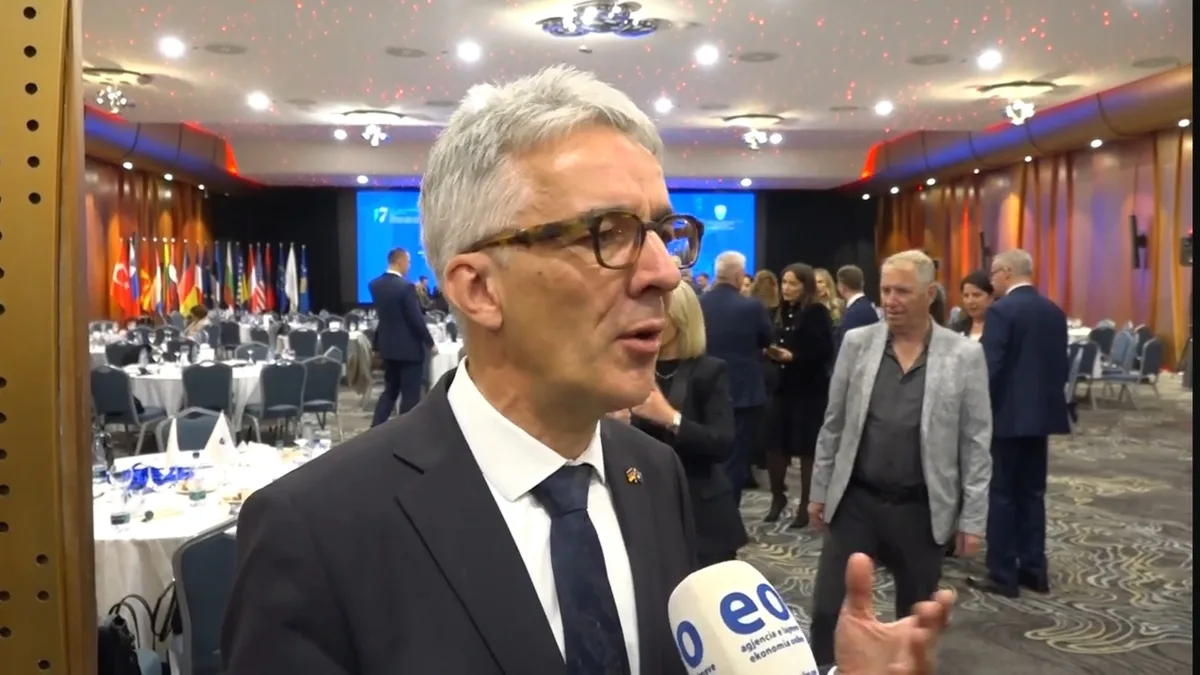
Peter Sorensen, the European Union’s special representative for the Belgrade-Pristina dialogue, says the 2023 Ohrid Agreement is legally binding on both parties even though it carries no signature from Aleksandar Vucic or Albin Kurti. He made the statement in a written interview with the Kosovo news agency KosovaPress, published on August 14, in which he declined to set a deadline for the talks and repeated his call for Serbia to arrest those responsible for the armed attack in Banjska.
In the same interview, Sorensen addressed implementation of the agreement, a possible new meeting between Vucic and Kurti, missing persons, and the human remains recently found at sites in the municipality of Zubin Potok. He did not give a date for the next meeting of chief negotiators, nor for a meeting at the highest political level.
What a Binding Agreement Without a Signature Means
The question of the missing signature has followed the Ohrid Agreement since March 2023 and keeps resurfacing in Serbia’s political debate. Sorensen addressed it in the most sharply worded part of the interview.
“Let me be precise about one thing, because it is often misunderstood: the 2023 Ohrid Agreement is legally binding under international law, with or without signatures,” Sorensen said.
He explained that consent to become a party to an agreement does not necessarily have to be expressed through a signature and can be shown in other ways, adding that this was exactly what happened in this case. According to him, both sides agreed to the text in Ohrid and raised no objection when the European Union determined how their consent would be recorded.
He recalled that the EU’s High Representative at the time confirmed the agreement’s binding nature in writing on March 18, 2023, and that this has been the Union’s position ever since. At the same time, he acknowledged that implementation of what was agreed still falls short of expectations.
“What is missing are not signatures but implementation. That is exactly where energy needs to be directed,” he said.
Sorensen said he had heard Pristina’s concerns and that ways to further reinforce the agreement had been discussed, but that any such steps should serve as an incentive for implementation, not a substitute for it.
Why There Is No Deadline for the Dialogue
The negotiating process has been running for years, and Sorensen refuses to name a date by which it should be concluded. He explained why in a single sentence.
“I will not set a deadline for the dialogue as a whole: what matters is that both sides implement what they have already agreed. Progress, not a calendar, is my yardstick,” he said.
There is no date for a meeting of the chief negotiators either. He said preparations were continuing and that he was in regular contact with both delegations to determine when a meeting could produce results. He applied the same standard to a meeting between the two leaders.
“It is neither a reward nor a photo opportunity. It is convened when it can help produce results, and the High Representative is ready to call it once both leaders are ready to deliver concrete outcomes,” Sorensen said.
Banjska and the Demand on Belgrade
KosovaPress also asked about Kurti’s position that one condition for his participation in a new high-level meeting is the extradition of Milan Radoicic from Serbia to Kosovo. Sorensen replied that high-level meetings serve political engagement in the normalization process, and specified that the prime minister’s absence would not advance the process of establishing accountability.
He repeated the European Union’s demand on Serbia over the armed attack in Banjska in September 2023 without qualification. He called establishing accountability essential and described the Union’s call as clear and consistent, one that is repeated in every contact with the authorities in Belgrade.
“We expect Belgrade to arrest and bring to justice the perpetrators of the 2023 attack,” he said. In that part of his answer, he did not mention Radoicic individually, but spoke of the perpetrators of the attack.
The Missing and the Excavations in Zubin Potok
A significant part of the interview concerned missing persons, following the discovery of human remains in the municipality of Zubin Potok. The agency asked why he had not specifically visited the site in Mala Kaludra, to which he replied that he did not believe such a visit would, on its own, contribute to more effective implementation of the Declaration on Missing Persons.
“The discovery of human remains in Zubin Potok is, above all, about families who can finally get an answer after decades of uncertainty and not knowing,” he said.
According to him, the European Union is following both the excavations themselves and the arrests connected to them.
“I have made it clear to everyone that the pace must speed up and that relevant information must be shared without delay. I raise this issue in Pristina and Belgrade whenever I get the chance,” he said.
For families, he added, what matters most is not a single visit but continuous progress. He called the issue of missing persons a priority since the start of his mandate and refused to treat it as part of the negotiating exchange.
“It is not, and cannot be, a bargaining chip in the dialogue. It is a humanitarian obligation, and I judge it by only one criterion: whether families are finally getting answers,” he said.
Under the Declaration on Missing Persons, Belgrade and Pristina committed to three things:
- cooperating to determine the locations of human remains
- exchanging all relevant information
- handing over classified materials needed to locate and identify people who went missing between 1998 and 2000
Sorensen stressed that the Union expects these obligations to be fulfilled in full. The joint commission on missing persons was formed in January this year and held its first meeting in April in Brussels, and, as he said, the European Union is ready to organize the next one as soon as both sides are ready.
The yardstick he offered is the same across every topic in the interview. The dialogue, he says, is often judged by dates, photographs and headlines, but he measures it by whether it delivers results for the people it is meant to serve.