CASA Survey: 99.4% of Kosovo Serbs Oppose School Integration
A CASA survey finds 99.4 percent of Kosovo Serbs surveyed oppose folding their schools into Kosovo's education system, and nearly 40 percent of parents are considering leaving Kosovo.

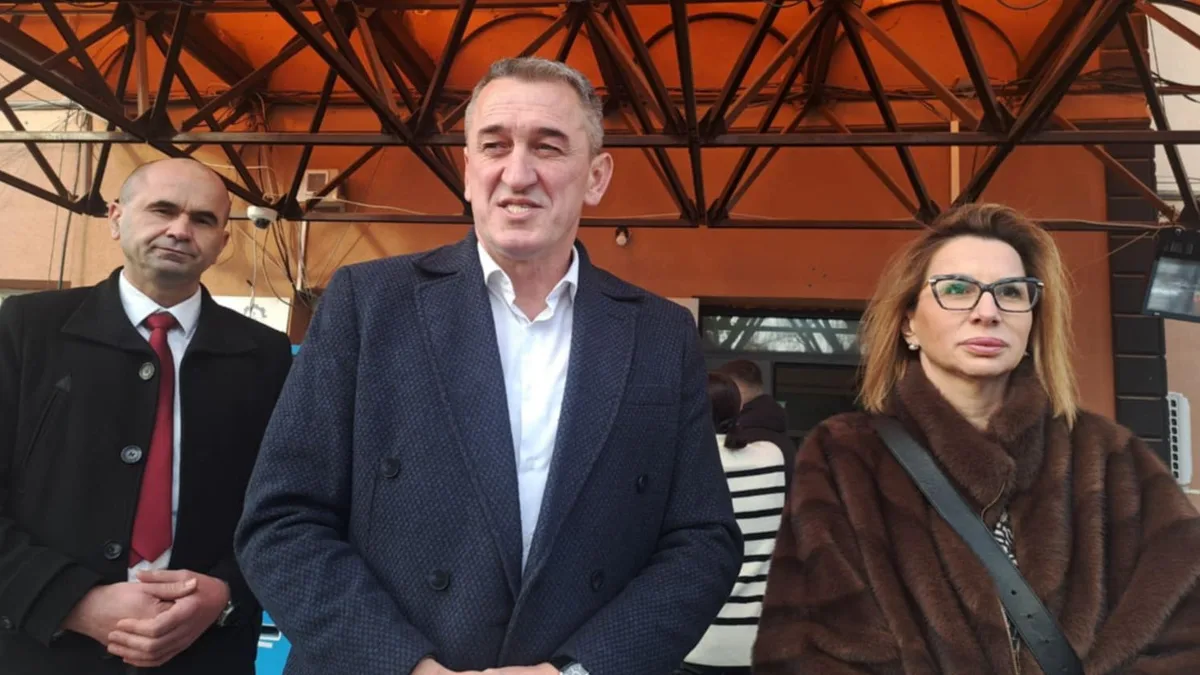
A survey carried out under the NGO CASA has found that almost every Serb respondent in Kosovo opposes folding the Serbian education system into Kosovo’s, while nearly 40 percent of parents say they would consider leaving the province with their families if their children had to be schooled under that system. The findings of the study, “Difficult Questions Ahead: The Education System of Kosovo Serbs,” were presented on September 3, 2026, carried out by political scientist Ognjen Gogic and researcher Ramadan Iljazi of the Kosovo Center for Security Studies (KCSS), each looking at the issue from within his own community.
The survey polled 300 members of the Serb community from various parts of Kosovo and 500 members of the Albanian community. According to figures presented by Tijana Grujic of NGO CASA, 99.4 percent of Serb respondents oppose integrating the Serbian education system into Kosovo’s. “Of that, 90.7 percent are strongly opposed, and 8.7 percent are mostly opposed,” Grujic said.
In brief
- 99.4 percent of Serb respondents oppose integrating education into Kosovo’s system.
- 91.3 percent see keeping the current arrangement as the most acceptable option.
- 97.3 percent have little or no trust that Kosovo institutions would respect the right to education.
- 75 percent of parents would not keep their children in integrated schools; half would enroll them in Serbia, half would leave Kosovo.
- Nearly 40 percent of all parents surveyed are considering leaving Kosovo altogether if integration goes ahead.
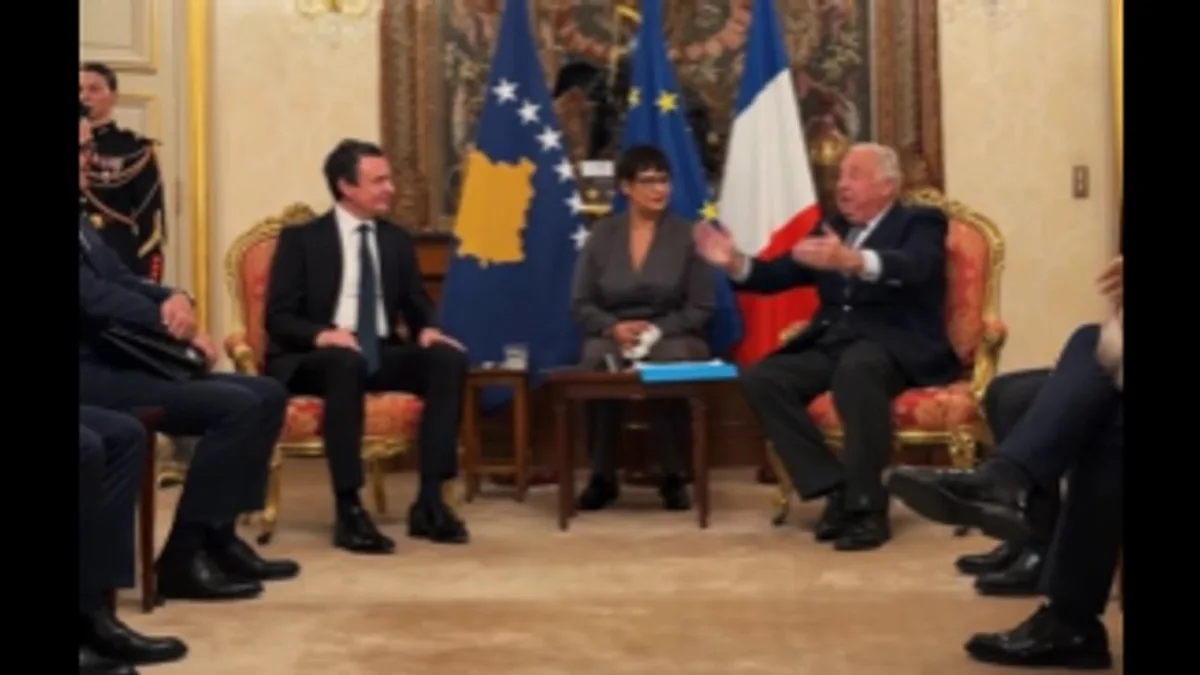
The findings land as Pristina and Brussels signal a possible end to what is known as institutional dualism in education and healthcare. Kosovo Prime Minister Albin Kurti said in September 2025 that “the dualism of the health and education systems is not sustainable” and announced work on folding them into a single system. EU Special Representative for the Belgrade-Pristina dialogue Peter Sorensen said in March 2026 that the Union had “taken note of the Kosovo government’s plans to integrate the Serbia-backed health and education institutions into the Kosovo framework.”
How much do Serbs trust Kosovo’s institutions?
The survey shows that distrust of Kosovo’s institutions is not a fringe view but the prevailing one. Some 97.3 percent of respondents either believe or suspect that Kosovo institutions would fail to respect Serbs’ right to education, three quarters of whom say they have no trust at all, with the remaining 23.3 percent saying they have very little. Some 98 percent of Serb respondents believe integration would worsen the quality of education, and 91.3 percent say keeping the current arrangement is the most acceptable solution. Only 1.3 percent would accept full integration without special status, and 5 percent of Serb respondents would accept partial integration.
The survey’s most concrete finding concerns what integration could mean in practice. If it went ahead, 75 percent of parents surveyed said they would not keep their children in those schools, with half of them saying they would enroll their children in an institution in Serbia and the other half saying they would leave Kosovo. Nearly 40 percent of all parents surveyed are considering leaving Kosovo with their whole family if their children had to study under the Kosovo system, down from 47 percent in an earlier survey of 600 respondents. Even opponents of integration are not all in the same position. Of them, 75.4 percent oppose integration under any conditions, while the rest would accept it only with guarantees, most often a curriculum in Serbian to Serbian standards (37 percent), an institutional link between the schools and Serb municipalities or the Community of Serb Municipalities (30.7 percent), and recognition of diplomas in Serbia (28 percent).
The study’s authors also examined the legal framework stemming from the Brussels dialogue, including Kosovo’s Constitution, the Law on the Use of Languages, the Law on the Protection and Promotion of the Rights of Communities, the Law on Local Self-Government, the Law on Education in Municipalities, and the Law on Higher Education. Grujic pointed out that these laws were written for setting up new institutions, not for transferring an existing system that has functioned for decades, and that the participation of Serb representatives on commissions within the ministry is often only formal, since they can always be outvoted. She also recalled that education was designated as one of the competencies of the Community of Serb Municipalities under the 2013 agreement, that the 2015 agreement spells out financial support from Serbia, and that the 2023 agreement provides for special arrangements and guarantees of self-governance for the Serb community.
How does the Albanian community view integration?
The picture looks different on the Albanian side. Iljazi presented the results of a survey of 500 members of the Albanian community, in which 25 percent of respondents oppose integration, 34 percent support it, and 41 percent remain neutral. In his view, the main point of contention is not language but institutional authority. “Language is not the problem. For Kosovo Albanians, it is not a problem that schools exist in Serbian,” Iljazi said at the presentation of the research.
The numbers bear that out. Some 79.6 percent of Albanian respondents accept that the Serbian language and instruction in Serbian can exist within the Kosovo system, and 64 percent have no problem with teachers coming from Serbia to teach. Between 88 and 89 percent of Albanian respondents believe Serbian students should be taught in their mother tongue. Resistance is stronger only on the question of a Serbian-language university’s status: 55 percent of Albanian respondents oppose the existence of a separate Serbian university, even though 66 percent at the same time want all universities subject to the same accreditation law. Iljazi added that Kosovo’s Ministry of Education determined three years ago that there is no major difference between the two curricula, except when it comes to history and geography, and that the remaining differences mostly concern teachers’ pay levels and accreditation standards.
NGO CASA’s executive director Miodrag Marinkovic presented six points that, in his words, could serve as a basis for further talks: a ban on assimilation, legal clarity ahead of any change in status, consultation with the Kosovo Serb community, consideration of the role of the Community of Serb Municipalities in any future arrangements, mutual recognition of diplomas and qualifications, and balanced public communication in both official languages.
Whether these six points make their way into the Belgrade-Pristina dialogue as a concrete proposal, or whether talk of a single system stays at the level of political rhetoric, will depend on how Pristina and Brussels respond to the finding that almost no Serb in Kosovo accepts integration unconditionally. For now, neither the Kosovo government nor Peter Sorensen’s office has said when the status of Serbian schools might be placed on the dialogue’s agenda.