Pristina Charges 35 Police for Prekaz Massacre, Names Legija
Kosovo's Special Prosecution indicted 35 former Serbian police officers over the 1998 Jasari operation, with Jovica Stanisic and Milorad Ulemek Legija on the list.

Kosovo’s Special Prosecution filed an indictment on September 4 against 35 people and forwarded it to the Special Department of the Basic Court in Pristina. The defendants are charged with war crimes against the civilian population during a police operation carried out from March 5 to 7, 1998, in the Jasari neighborhood, in the village of Donje Prekaze, Srbica municipality. The prosecution says 26 civilians were killed in the operation, including children as young as five, women and elderly people. All 35 defendants are being tried in absentia.
At a press conference in Pristina, prosecutors released only the initials of the accused. Full names surfaced a few hours later, when the Albanian language outlets Koha, Kallxo, Sinjali and Gazeta Lajm, citing access to the document itself, published them. According to those reports, the list includes Jovica Stanisic, former head of the State Security Department, Vlastimir Djordjevic, former head of the Public Security Department, Sreten Lukic, former assistant chief for police affairs at the Interior Affairs Secretariat (SUP) in Belgrade and coordinator of the staff formed in Pristina, Goran Radosavljevic, and Milorad Ulemek, known by the nickname Legija, listed as commander of the Unit for Special Operations.
The first 29 defendants are charged with directly planning, coordinating and commanding the operation, while the remaining six face charges under command responsibility, for failing to prevent violations of international humanitarian law. The prosecution states that around 23 police units took part in the operation, among them the Unit for Special Operations, Public Security, State Security and the Special Anti-Terrorist Unit, and that heavy artillery, tanks and anti-aircraft weapons were used. According to the indictment, the neighborhood had been under surveillance since early January 1998, and Ulemek’s unit is said to have been tasked with directly attacking the house of the Jasari family, headed by Saban Jasari.
Details were presented by chief special prosecutor Bljerim Isufaj and special prosecutor Valdet Gashi.
“The significance of this indictment is particular also because of the fact that it is the first indictment concerning the killings of civilians in the Jasari neighborhood in Prekaz,” Isufaj said.
Gashi added that the investigation, which lasted several years, drew on material and personal evidence to identify “35 defendants in this case, who held high command positions in the structures of the Serbian police’s special units.” According to the newspaper Koha, as carried by Tanjug, Gashi also said the indictment “concerns the killing of civilians.”
KoSSev reports that 13 of the 35 defendants were born in Kosovo. Balkan Insight notes where the defendants currently stand: Stanisic is serving a sentence for war crimes in a separate case, Ulemek is in prison over the assassination of Prime Minister Zoran Djindjic, while Djordjevic and Lukic are free, having already served sentences handed down in other cases.
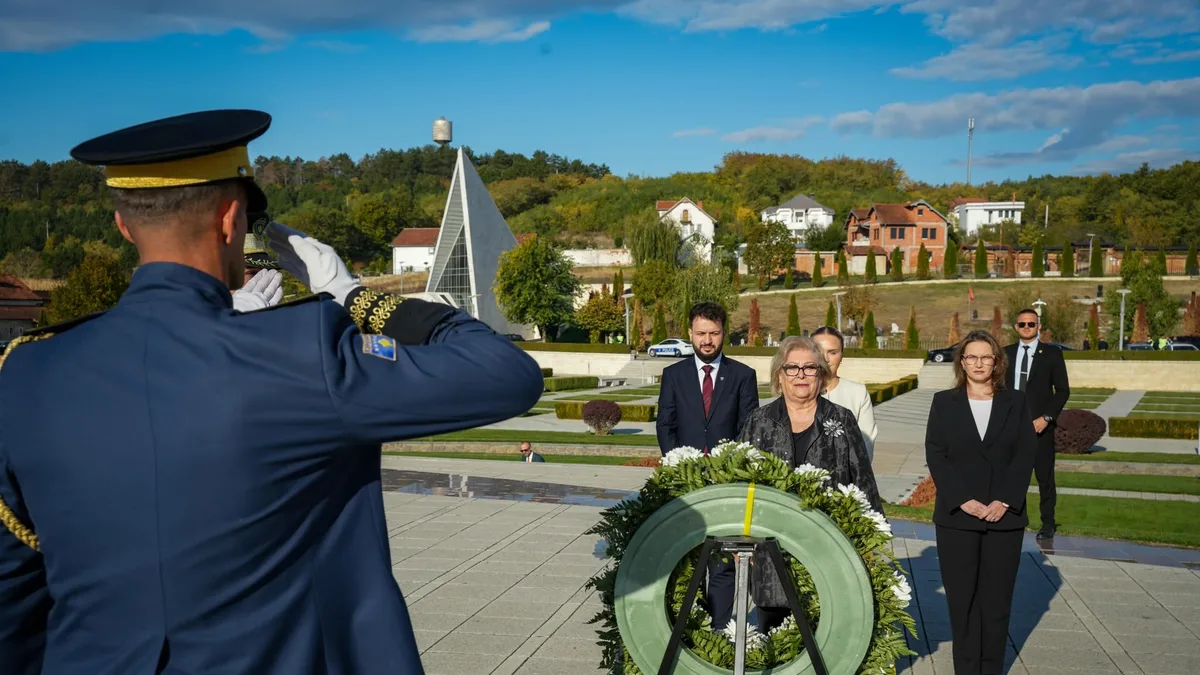
The events in Donje Prekaze, in which, according to Albanian sources, Adem Jasari, his brother Hamez, their father Saban and a large number of extended family members were killed, rank among the central points of Albanian memory of the Kosovo war and are marked every year during a three day commemoration known as the Epic of the Kosovo Liberation Army (KLA). Serbian authorities at the time presented the 1998 action as a police operation against KLA members, portraying Jasari as an armed man who refused to surrender and remained barricaded in the house with his family, while claiming he was holding civilians inside as hostages.
The indictment now brings before Kosovo’s judiciary, for the first time, the claim of criminal responsibility for the killing of civilians in that neighborhood. None of the 35 defendants has been found guilty, and the case now moves to the Basic Court in Pristina, which must assess the indictment and the evidence the prosecution submitted with it.